Following is the list of the most interesting science news and research work completed in 2021:
1. Launch Of The Most Powerful Space Observatory Ever Built
The launch of the
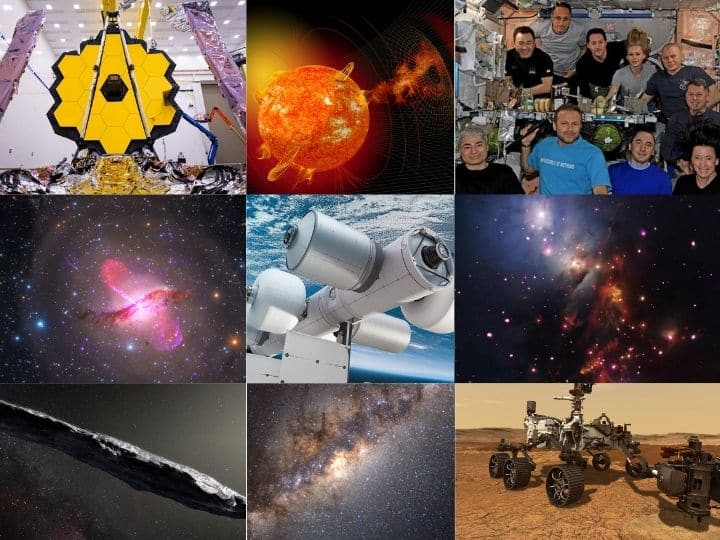
James Webb Space Telescope (J W S T), the most powerful space observatory ever built, is not only the biggest science news of the year, but also one of the biggest news in several years. After years of wait, the J W S T, which is an international collaboration between NASA, the European Space Agency and the Canadian Space Agency, blasted off into space on Christmas day. J W S T, also called Webb, is the successor to the
Hubble Space Telescope will unravel the secrets of the universe, and look to the earliest stars and galaxies.
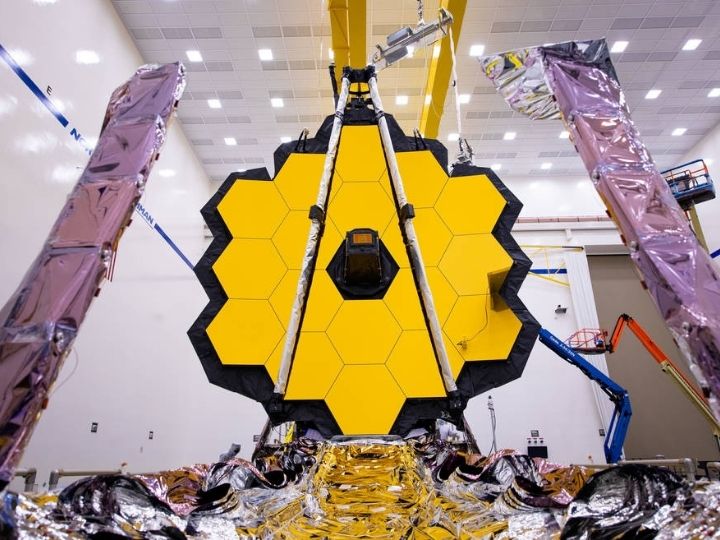
James Webb Space Telescope (Photo: NASA)
2. E i n s t e in's Theory Of General Relativity Faced Its Toughest Test Yet,
Researchers from the University of East Anglia (U E A) helped conduct a 16-year-long experiment to
challenge Einstein's theory of general relativity, by looking at the stars. A pair of extreme stars called pulsars were observed through seven radio telescopes across the globe, as part of the study. The scientists used their observations to challenge Einstein's most famous theory, which states that gravity is a curvature or distortion of space-time, and that gravity affects space-time.
The study revealed new relativistic effects which have been observed for the first time.

Representational image of an abstract gravity wave background (Photo: Getty)
3. Sun In A State Of Unrest
This year, there were several instances of powerful bursts of radiation, or solar flares, erupting from the Sun's surface.
In early November, a strong G3 class
geomagnetic storm occurred, which was triggered by the solar outbursts. This resulted in auroras in Earth's lower latitudes.
In late October, a sunspot unleashed an X1 class solar flare, creating a massive tsunami of plasma which moved across the entire solar disk. Plasma and magnetized particles exploded the sunspot the same day and resulted in a Coronal Mass Ejection (CME).
The Sun's state of unrest in 2021 is surprising because the star had a weaker solar cycle in the last decade, compared to the decade prior, according to a study by Indian scientists. This resulted in weaker solar storms or C M E s during solar cycle 24, which lasted from 2008 t o 2019. Also, the Sun was the
weakest in 2019.
In a new study, Indian astronomers found that the changing structure of the magnetic field on the Sun's surface determines whether the Sun emits a solar flare or a CME, understanding which is believed to be useful in improving
solar weather predictions.
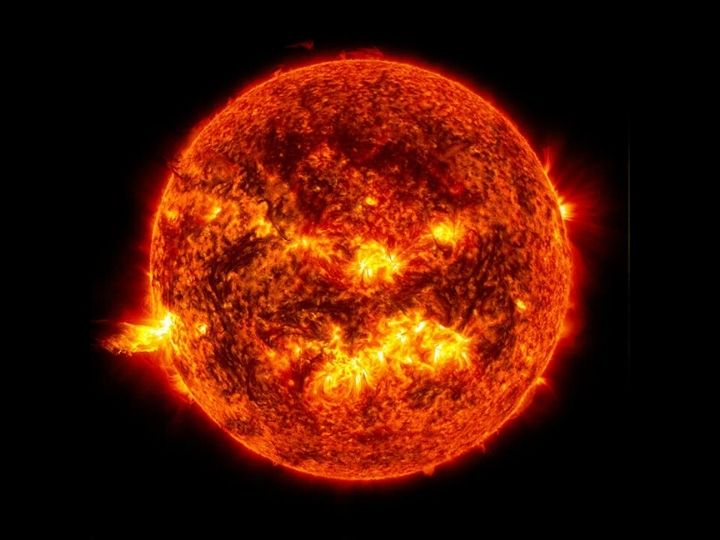
Sun with solar flares (Photo: NASA)
4. Jeff Bezos Aerospace Firm Blue Origin Lost Case Against NASA
Blue Origin had filed a lawsuit against NASA in August over a $2.9 billion lunar lander contract awarded by NASA to Elon Musk's SpaceX for the upcoming
Artemis Mission. In November, the US Court of Federal Claims
ruled against Blue Origin. NASA, in a statement, said that work with SpaceX would be resumed "as soon as possible".
5. Space Tourism Race Heats Up
The year 2021 was an extremely important one for space tourism. A total of seven space tourism missions were completed. These included the SpaceX Inspiration4 mission, which is the world's first all-civilian mission to orbit, and the Soyuz MS-20 mission, which marked the firs t self-funded space tourism mission to the International Space Station (ISS) in a decade.
William Shatner, Star Trek's Captain Kirk, became the oldest man to go to space in October.
Most interestingly, the first feature film was shot in space this year. A Russian film crew stayed aboard the ISS for 12 days to shoot parts of a film called 'V y o z o v', meaning 'The Challenge'.
6. Strange Radio Waves Emitted From Galactic C e n t r e
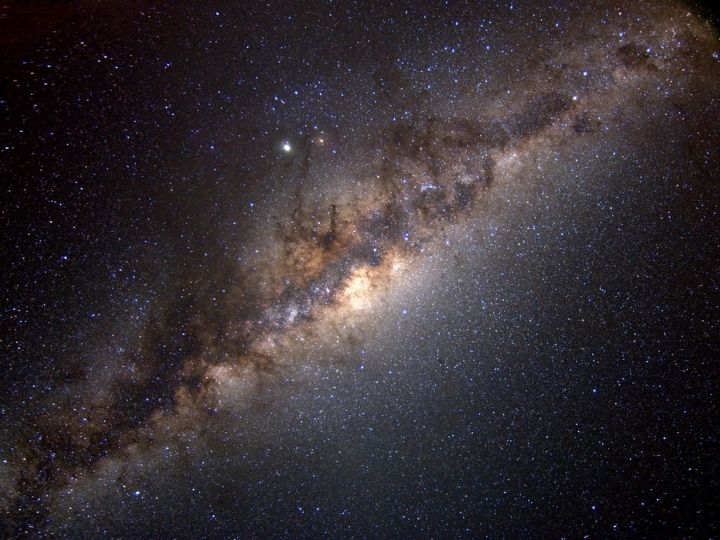
In October, astronomers discovered
strange radio signals coming from the direction of the Milky Way Galaxy's c e n t r e The new radio waves detected did not match any of the previously known patterns.
One of the researchers said that the most unusual thing about the new signal is its “very high polarization”, which means the light oscillates in only one direction, but that direction rotates with time.
The astronomers believe these unusual signals could suggest a new class of stellar object.
7. Commercial Space Station Plans Announced
In October,
Blue Origin and Sierra Space announced their plans for a commercially developed, owned, and operated space station to be built in low Earth orbit. Blue Origin termed the space station as "Orbital Reef" and claimed it will house up to 10 people by the second half of the decade.
Aerospace firm N A N O R A C K S will also be developing its own commercial space station, which it calls "Star lab", and Northrop Grumman is yet to name its space hub. NASA
awarded contracts worth millions to the three private firms.
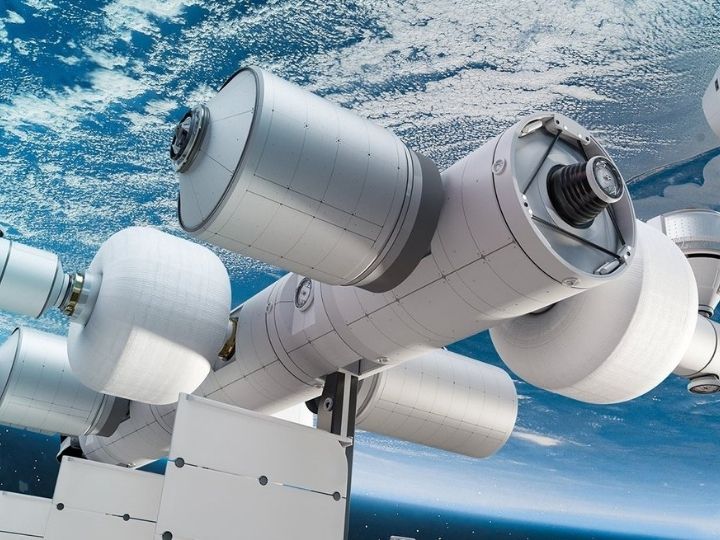
Orbital Reef (Twitter/@OrbitalReef)
8. Commitments Made At COP26 In Glasgow, Scotland
The 26th United Nations Climate Change Conference, commonly referred to as COP26, was held in Glasgow, Scotland in the United Kingdom from October 31 to November 12. Several commitments were made by the participating countries, including India. COP26 concluded with 197 countries agreeing to a new climate deal: the Glasgow Climate Pact, to keep 1.5 degrees Celsius alive and finalize the 2015 Paris Agreement.
Countries made collective commitments to curb methane emissions, align the finance sector with net-zero by 2050, to halt and reverse deforestation, ditch the internal combustion engine, accelerate the phase-out of coal, and end international financing for fossil fuels, to name a few.
United Nations Climate Change Conference in Glasgow (Photo: Getty)
9. America's First Civilization Was Made Up Of Sophisticated Engineers: Research
In September, scientists from the Washington University in St. Louis found new evidence which supports the idea that America's first civilization was made up of "sophisticated engineers." The evidence suggests that America's early indigenous people or Native Americans were highly skilled engineers capable of building massive earthen structures in a few months, and sometimes, even weeks. One of the researchers claimed that these early earthworks have held together for more than 3000 yea rs with no failure or major erosion.
One example is the Poverty Point World Heritage Site in Louisiana, US, which consists of 72-foot-tall earthen mounds and ridges constructed by hunter-gatherers around 3,400 years ago.
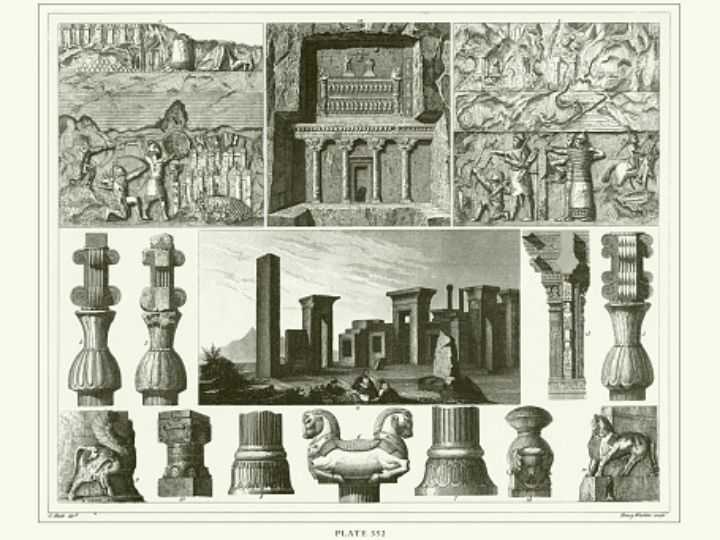
Representational image of an ancient civilization (Photo: Getty)
10. Research On 'The Accident' Near The Milky Way
In 2020, scientists announced the discovery of a strange object that they had found by accident. This year, they found more about the object, which is a 'brown dwarf' nicknamed 'The Accident'. The Accident, as it was found by sheer luck, is unique because it has no resemblance to the other brown dwarfs (over 2,000 of them) discovered so far in the Milky Way Galaxy.
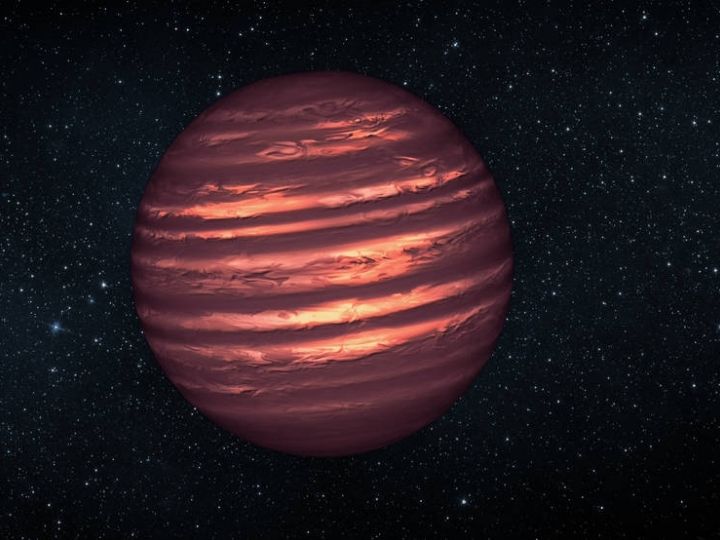
Image of a brown dwarf (Photo: NASA)
 11. Event Horizon Telescope Captures High Resolution Image Of Black Hole
In July, the Event Horizon Telescope (E H T) Collaboration, known for capturing the first image of a black hole in the galaxy Messier 87, captured a high resolution image of the heart of the nearby radio galaxy Centaurus A. The astronomers pinpointed the location of the central supermassive black hole and showed how a gigantic jet is being born. They found that only the outer edges of the jet appeared to emit radiation.
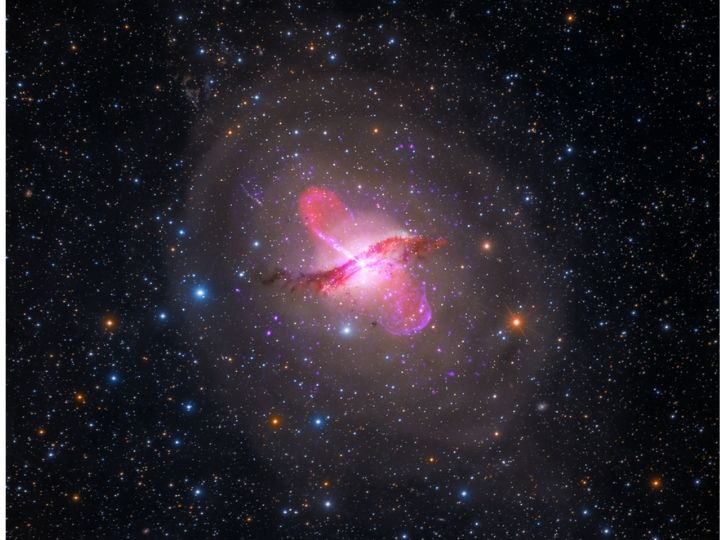
Centaurus A has a supermassive black hole at its heart (Photo: NASA)
12. Arizona State University Researchers Determine Origin Of O U M U A M U A.
In March, two Arizona State University astrophysicists determined the origin of O U M U A U A. the first interstellar object from beyond our solar system. The researchers claimed that O U M U A M U A was likely a piece of a Pluto-like planet from another solar system.
The scientists also hypothesized that the object was made of d i f f e r e n t i c s
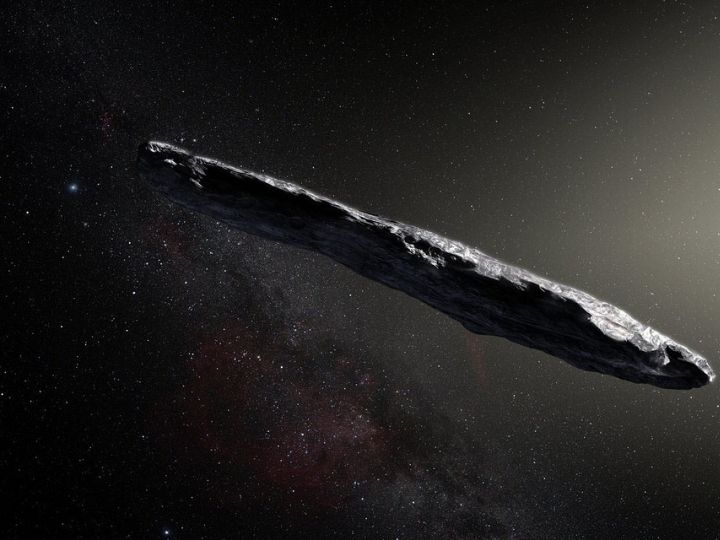
Artist's representation of O U M U A M U A (Photo: NASA)
13. Perseverance Rover And Ingenuity Performed Wonders
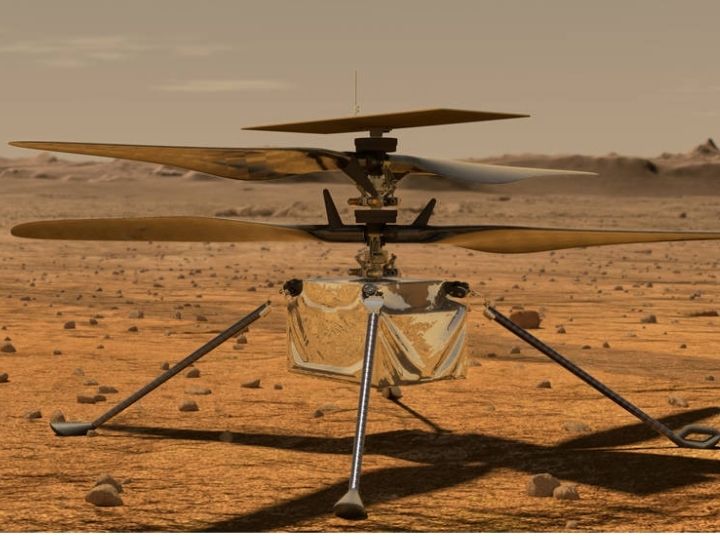
The Mars 2020 Rover or the Perseverance Rover (Percy) landed on the Red Planet in February. Ingenuity, which is a small robotic helicopter operating alongside Percy, took its first flight on Mars in April, and has completed 18 successful flights as of December. Percy
collected its first rock core sample in September.


 Ingenuity helicopter

You must be logged in to post a comment.