

Afghans are living inhumane lives due to Pakistan's anti-illegal immigration campaign. They spend the day in worn-out clothes in the bone-shaking winter, without enough food. In this situation, the victims have drawn the attention of international organizations.
Home Minister Sarfraz Bugti of the country's interim caretaker government recently ordered undocumented Afghan refugees to leave Pakistan, setting a deadline. Otherwise, the administration threatened to detain them and release them at the border. Since then, Afghan refugees have been seen crowding the border to return home. Al Jazeera news.
Victims say, 'We can't ask the Taliban for help because their own position is shaky.' International organizations should help us with food and shelter. There are many families here who have no houses, no land and nothing. They live under the open sky. We need help.'
From January to June this year, at least 271 suicide bombings and gun attacks took place in various parts of Pakistan. 389 people lost their lives and 656 others were injured in these attacks. 14 of these attacks have been attributed to Afghan refugees living in Pakistan.
Afghan Hazara who fled to Pakistan face an uncertain future
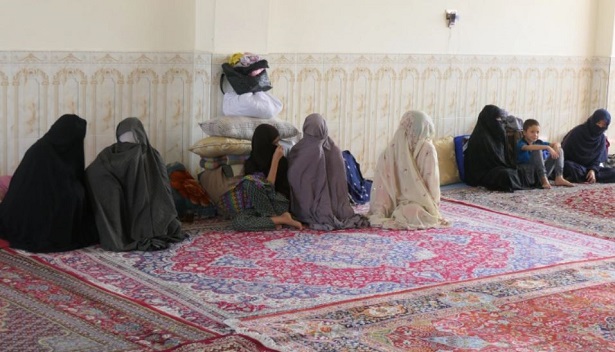
When the Taliban besieged the northern city of Mazar-e-Sharif in Afghanistan, Fatima, a member of the Hazara minority, realizes that she must leave the country to save herself and her husband and two young children from the Taliban. He said, 'The war was starting again. So we decided to throw everything away.' Like other Hazara Afghans, they fled to Pakistan. Where their lives are now in the face of uncertainty. Because Pakistan has officially announced that they will not accept any new refugees.
Liaquat Shahwani, the spokesperson of the provincial government of Balochistan said, "There are already three to four million Afghan refugees in Pakistan, so the Balochistan administration and the central government have decided that no new refugees will be given shelter." Why only Pakistan, there are many neighboring countries of Afghanistan, they should also give shelter to refugees.'
Another provincial official, Jummadad Khan Mandhokhail, said that after the fall of the Afghan government on August 15, a new influx of refugees came from the country to Pakistan. But already 250 of the newly arrived refugees have been returned.
And Liaquat Shahwani, spokesman for the Balochistan provincial government, said, "We sent them back because the Pakistani government has not built any new camps for Afghan refugees at the moment."
He further said, "Our decision is that we will not allow them to stay anymore."
The Hazaras are one of Afghanistan's largest ethnic minorities. Hazaras make up 20 percent of the country's nearly 40 million population. Characteristic of the people of the Asian region, the Persian influence on the language set them apart from other Afghans. But the most notable feature is that they are Shia Muslims. Most people in Afghanistan are Sunni. It is mainly because of this that they are persecuted as a religious minority.
The Taliban, who are in power in Afghanistan for a second term, carried out heavy repression against the minority Hazaras during their first term. As a result, when the Taliban surrounded Mazar-i Sharif on August 14, a day before the capture of Kabul on August 15, Fatima fled to Pakistan with her family to save her life. Last August, human rights organization Amnesty International found evidence that Taliban fighters killed nine Hazaras after taking control of Ghazni province last July. In addition, IS has carried out large-scale bombings targeting Hazaras in recent years. As a result, thousands of minorities like Fatima left the country because of the insecurity of such groups coming to power.

You must be logged in to post a comment.