
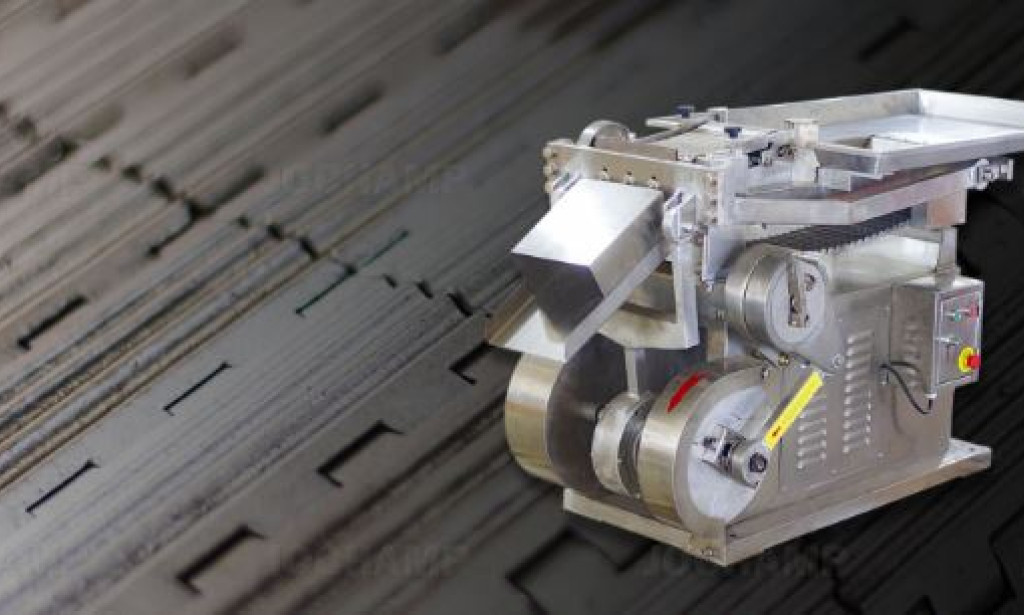
The market for shisha machine technology has developed significantly in response to the global growth of the hookah tobacco market. Equipment manufacturers now offer solutions ranging from semi-automated machines appropriate for small to medium producers, where machine-assisted processing reduces labor while maintaining some manual operations, to fully automated production lines capable of processing hundreds of kilograms per hour with minimal operator involvement beyond raw material loading and finished product handling. Understanding the technology landscape enables producers to select the level of automation appropriate for their production scale, capital budget, labor cost environment, and quality requirements.
Tobacco Cutting and Preparation Technologies
The first step in shisha tobacco production is preparing the tobacco leaf to the particle size and cut type appropriate for the product's intended smoking characteristics. Different shisha tobacco styles use different cut types — some products use finely cut tobacco for dense packing, while others use coarser cuts for airier bowl setups. Shisha machines for tobacco preparation use rotating blade systems with adjustable cutting gaps that allow the cut size to be varied by changing the blade configuration or cutting gap setting. Consistent cut size is important for uniform smoking characteristics and for consistent behavior in the mixing and blending steps that follow. Blade sharpness maintenance through regular inspection and replacement or resharpening keeps cut quality consistent over time.
Mixing and Blending Systems for Flavor Homogeneity
The mixing and blending step is the heart of shisha tobacco production, where the flavor character, moisture content, and texture of the finished product are determined by the thorough, uniform incorporation of molasses, glycerin, flavorings, and other ingredients into the tobacco base. Different shisha machine designs use paddle mixers, ribbon blenders, or tumbling drum systems to achieve this blending, each with distinct advantages for different batch sizes and product consistencies. The key performance requirements of the mixing system are thoroughness — ensuring that no unmixed pockets remain in the batch — and gentleness — avoiding excessive mechanical action that could degrade the tobacco texture or cause ingredient segregation. Process parameters including mixing time, speed, and temperature must be optimized for each specific product recipe to achieve consistent results.
Moisture Control and Product Standardization
Moisture content is a critical quality attribute of finished shisha tobacco that affects both the smoking experience and the shelf life of the product. Too high moisture content creates a product that may mold during storage and produces a harsh, steamy smoke. Too low moisture content produces a product that burns too quickly and harshly and may crumble when handled. A shisha machine system that includes moisture measurement and control capability allows the finished product's moisture content to be verified and adjusted before packaging, ensuring that every batch meets the moisture specification regardless of natural variations in incoming raw material moisture content. Moisture adjustment may involve controlled drying or the addition of a moisture correction to bring the batch to target before the quality approval for packaging.
Market Expansion Opportunities Enabled by Shisha Automation
Automated shisha machine production creates market expansion opportunities that are simply not accessible through manual production methods. The volume consistency and production capacity of automated systems enable hookah tobacco producers to supply large retail chains, export markets, and bulk wholesale customers who require consistent supply of consistent products in volumes that manual production cannot sustain. Export market development in particular benefits from automated production — international markets demand that products meet documented quality standards consistently across all batches, a requirement that automated production with documented process controls can demonstrate and manual production cannot. For ambitious hookah tobacco brands, the shisha machine investment is the enabling step for the market expansion strategies that will drive the next phase of business growth.

You must be logged in to post a comment.