
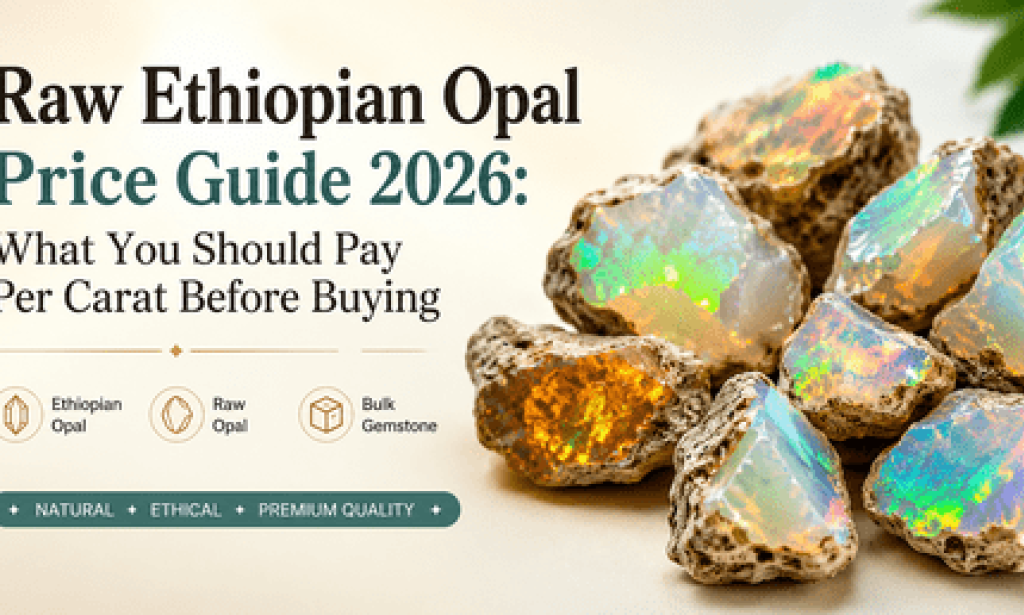
If you've ever searched for raw Ethiopian opal online and felt completely lost staring at prices ranging from $10 to $1,000+ per carat — you're not alone. It's confusing, and honestly, a lot of buyers either overpay or walk away from a genuinely great stone because they just didn't know what they were looking at.
Let's fix that.
This guide breaks down exactly what raw opals from Ethiopia cost in 2026, what makes one stone worth ten times more than another, and what you should watch out for before spending a single dollar.
Why Raw Ethiopian Opal Is Having a Moment in 2026
There's a real shift happening in the gemstone market right now. Buyers — especially in the US — are moving away from flashy, over-processed stones and gravitating toward something more honest. Raw, uncut, natural. That's exactly why raw Ethiopian opal is trending so hard this year.
These stones come primarily from the Welo (Wollo) Province in northern Ethiopia. They're known for their incredible play-of-color — those fiery flashes of red, green, blue, and orange that seem to move when you tilt the stone under light. And unlike Australian opals, they're still relatively affordable. For now.
Raw Ethiopian Opal Price Breakdown (Per Carat, 2026)
Here's an honest look at where prices sit in today's market:
| Grade | Price Per Carat | What You're Getting |
|---|---|---|
| Low Grade | $1 – $10 | Weak or no fire, mostly collector/matrix pieces |
| Mid Grade | $10 – $50 per stone | Visible color play, good for beginner buyers |
| High Grade | $100 – $500+ | Strong fire, clean structure, vibrant multi-color |
| Exceptional | $500 – $1,000+ | Full-body fire, red dominance, rare patterns |
Important: Raw opals are priced differently than cut cabochons. When you buy rough or raw, you're paying for potential — the fire you can see in the uncut stone, plus what a skilled cutter can bring out of it.
What Actually Drives the Price of Raw Opals
This is the part most guides skip over, and it's the most important thing to understand.
Play-of-Color (Fire) — This is everything. A raw Ethiopian opal with bright, full-body fire that shows red and orange flashes is worth dramatically more than one with faint blue-only color visible only from one angle. Red is the rarest color in opal, so any raw stone showing dominant red fire sits at the top of the price range.
Transparency — Crystal-clear raw opals allow light to travel deeper into the stone, making the fire appear sharper and brighter. Milky or cloudy raw opals are still beautiful, but they almost never command the same price. When you hold a crystal Ethiopian opal up to a light source, it should look almost alive.
Size and Weight — Bigger isn't always better with raw opals. A 3-carat piece with intense fire will outsell a 10-carat piece with dull color every single time. Don't get distracted by weight.
Pattern — Certain color patterns are rarer and more valuable. Harlequin (large, angular mosaic-like patches) is the most prized and hardest to find. Honeycomb and broad flash patterns also command premiums. Pinpoint patterns — tiny scattered dots of color — are more common and sit lower on the price scale.
Stability — Ethiopian opals are hydrophane, meaning they can absorb water and temporarily change appearance. This is natural, not a defect. However, stones that show crazing (fine cracks) should be priced lower and avoided for jewelry use.
Red Flags When Buying Raw Ethiopian Opal
A few things to watch for before you commit to a purchase:
- Prices that seem too low for the fire shown (could be synthetic or glass imitations)
- No mention of origin or mining region — reputable sellers always disclose Welo Province
- Stones stored in water to artificially enhance color (dries out and looks dull later)
- No return policy on a significant purchase
Is 2026 a Good Time to Buy?
Short answer — yes. Supply from Ethiopian mines remains steady right now, which keeps prices more accessible than Australian opals. But collectors and jewelry designers in the US are buying more aggressively than ever before, and prices on high-grade material are already climbing.
If you've been on the fence about adding raw Ethiopian opal to your collection or jewelry line, the window of true affordability may not stay open much longer.
Buy with your eyes, not just your budget. Find the stone where the fire finds you first.

You must be logged in to post a comment.