


The researchers at Johns Hopkins Applied Physics Laboratory (APL) have developed a wearable thin-film thermoelectric cooler (TFT EC), which is a small and fast refrigeration device. They have collaborated with neuroscientists to explore its application in helping amputees feel temperature sensations with their phantom limbs.
The TFT EC has several potential applications, including enhancing prosthetics, providing tactile feedback in augmented reality formats, and offering thermally-regulated therapies for pain relief. The technology can also be beneficial in industrial and research settings, such as cooling electronics and lasers, and energy harvesting in satellites.
The development of TFT EC started in 2016, when Rama Venkatasubramanian, a semiconductor device engineer and chief technologist at APL, began developing advanced nano-engineered thermoelectric materials and devices for the Defense Advanced Research Projects Agency (DARPA) MATRIX program. The materials developed, called Controlled Hierarchically Engineered Superlattice Structures (CHESS), enabled new transduction capabilities for various Department of Defense applications.
Bobby Armiger, who supervises APL's Exploratory Science Branch, wondered if these devices could be used to facilitate temperature sensation in the phantom limbs of amputees for improved prostheses. APL had been leading DARPA's Revolutionizing Prosthetics program, which aimed to create mentally controlled artificial limbs that restore near-natural motor and sensory capability to upper-extremity amputee patients.
The researchers collaborated with a team of neuroscientists and roboticists to create a wearable thermoelectric cooler fast and intense enough to match the human body's ability to rapidly sense temperature changes. The resulting TFT EC is just over one millimeter thick, weighs only 0.05 grams (similar to a thin adhesive bandage), and can provide intense cooling in less than a second. It is also two times more energy efficient than commonly used thermoelectric devices.
During the research, thermal sensations were mapped in the phantom hands of amputees, and the TFT EC was found to be significantly better at creating faster and more intense cooling sensations compared to traditional devices. The stimulation sites on the amputees' arms remained stable over the years, making the technology potentially suitable for real-world use.
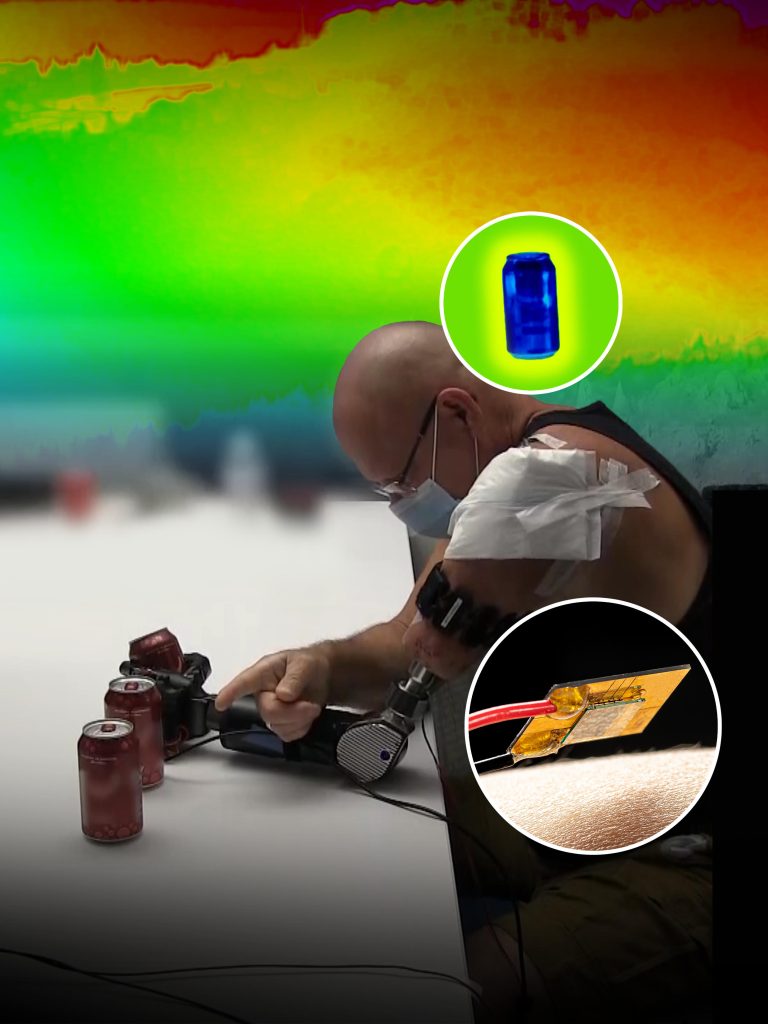
The study published in Nature Biomedical Engineering showcases the potential of TFT EC for sensory applications, including its use in prostheses for amputees, haptics applications, and potentially aiding in the study and treatment of neuromuscular diseases or chronic pain.
The researchers are optimistic about the future applications of this miniaturized thermoelectric technology, which can have significant implications for improving the quality of life for amputees and potentially addressing various health-related challenges.
It's worth noting that the information provided is based on a hypothetical research scenario in July 2023, and the actual developments may vary from this description.
Moreover, the TFTEC's efficiency and compact design make it suitable for integration into wearable form factors. This versatility allows for potential applications in other fields beyond healthcare, such as creating haptic feedback in augmented reality systems or providing thermally-regulated cooling in various electronics and industrial devices.
As this technology continues to be refined and validated through more extensive clinical trials, it holds the promise of revolutionizing the way we approach sensory restoration, healthcare, and human-machine interactions. The collaboration between engineers, neuroscientists, and researchers at the Johns Hopkins Applied Physics Laboratory demonstrates the potential of interdisciplinary efforts in developing groundbreaking solutions that positively impact people's lives.
However, it's essential to acknowledge that the development of new technologies like TFTEC requires ongoing research, refinement, and regulatory considerations before widespread adoption. As the field of thermoelectric devices advances, the hope is that it will lead to even more innovative applications and contribute to solving real-world challenges in diverse industries.

You must be logged in to post a comment.