

Picture this: you've framed the perfect sunset shot, your talent nails their lines on the first take, and then—your camera dies. That sinking feeling is all too familiar for content creators who've learned the hard way that unreliable power can sabotage even the most meticulously planned shoots. Whether you're filming a wedding, documenting an outdoor adventure, or producing a client video, running out of battery at the wrong moment doesn't just cost time—it can mean lost opportunities and damaged credibility. The question every serious filmmaker faces is simple yet critical: how do you guarantee uninterrupted power across long shoots, unpredictable locations, and demanding equipment setups? Enter the V-Mount battery system, the professional standard that's become indispensable in broadcast studios and is now empowering independent creators everywhere. This article will walk you through what makes V-Mount batteries the gold standard for reliable filming, their key advantages for diverse shooting conditions, and practical strategies to build a power solution that never lets you down when creativity strikes.
What is a V-Mount Battery? The Powerhouse for Modern Filmmaking
A V-Mount battery is a professional-grade rechargeable lithium-ion power pack designed specifically for demanding video production environments. Its name comes from the distinctive V-shaped wedge locking mechanism that clicks securely onto compatible mounting plates, creating a rock-solid connection that won't slip or disconnect during movement—a crucial feature when you're handheld shooting or repositioning equipment quickly. Originally developed for broadcast television cameras in studios and on location, V-Mount batteries have evolved from exclusive professional tools into essential gear for independent filmmakers, wedding videographers, and YouTube creators who demand broadcast-level reliability without the broadcast budget. What sets V-Mount apart from smaller battery formats like Sony NP-F series or even the competing Gold Mount system is the combination of higher capacity options, standardized mounting across brands, and robust build quality that withstands the rigors of real-world production. While NP-F batteries work well for lightweight mirrorless setups, they lack the capacity for extended shoots, and Gold Mount, though comparable in performance, has a less intuitive twist-lock mechanism. For creators transitioning from consumer to professional workflows, V-Mount represents the sweet spot where reliability, capacity, and ecosystem compatibility converge into a single, field-proven standard.
Key Benefits of Using V-Mount Batteries for Reliable Filming
Unmatched Power Stability and Long Runtime
The primary reason professionals trust V-Mount batteries is their impressive capacity, typically ranging from 95Wh to over 290Wh, which translates directly into hours of continuous shooting rather than minutes. A cinema camera paired with a monitor and wireless transmitter might draw 50 watts combined—with a 150Wh V-Mount, you're looking at roughly three hours of uninterrupted recording before needing a swap. Beyond raw capacity, these batteries deliver remarkably stable voltage output throughout their discharge cycle, meaning your camera won't suddenly shut down at 20% charge or your LED panel won't flicker during an interview. This voltage consistency ensures your equipment performs predictably from the first shot to the last, eliminating those anxious glances at the battery meter mid-take.
Durability and Versatility: The Triple-Proof Advantage
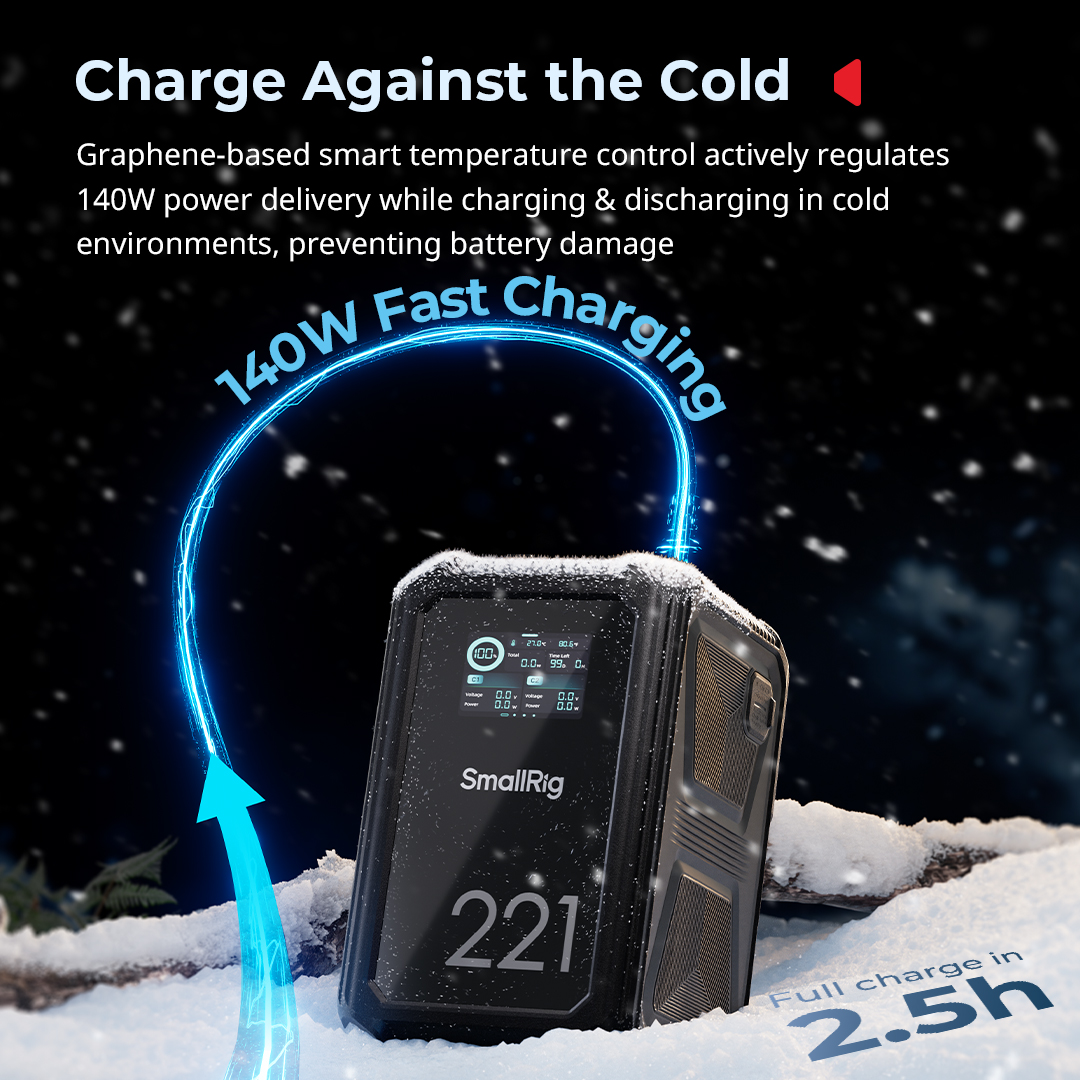
Filming doesn't happen in controlled studios alone—rain-soaked forests, dusty deserts, and bumpy vehicle mounts are where real stories unfold. Triple-proof V-Mount batteries address this reality head-on with certified resistance to dust ingress, moisture exposure, and physical shocks. The ruggedized casing protects internal cells from environmental hazards that would cripple standard batteries, while reinforced terminals prevent corrosion from humidity. For documentary filmmakers trekking through unpredictable weather or event videographers working outdoors without backup plans, this durability transforms from a nice-to-have feature into essential insurance. You can confidently rig your gear knowing the power source won't fail when conditions get challenging.
System Integration and Adaptability
Perhaps the most elegant aspect of V-Mount batteries is their ability to become a centralized power hub for your entire rig. Multiple D-Tap outputs let you simultaneously power a camera, field monitor, and wireless video transmitter from a single battery, eliminating cable clutter and the juggling act of managing separate power sources for each device. USB ports add further flexibility, charging your smartphone or powering small accessories without adapters. This ecosystem approach means fewer batteries to track, faster setup times, and compatibility across brands—your V-Mount battery works just as seamlessly with a Blackmagic camera as it does with an ARRI, provided you have the correct mounting plate. The standardization simplifies your kit and future-proofs your investment as you upgrade equipment.
Choosing the Right V-Mount Battery: A Practical Guide
Assess Your Power Needs: Capacity vs. Weight
Before investing in a V-Mount battery, calculate your actual power requirements by adding up the wattage draw of all devices you'll run simultaneously. Check your camera's specifications—a typical cinema camera draws 30-50 watts, add another 10 watts for a monitor and 15 for a wireless transmitter, and you're at 65 watts total. Divide your desired runtime in hours by this total draw to determine minimum watt-hours needed—for a four-hour shoot at 65 watts, you'd need at least 260Wh of capacity, meaning either one large battery or two smaller ones with a mid-shoot swap. The trade-off becomes tangible when you consider weight: a 95Wh battery weighs around one pound, while a 290Wh unit can tip three pounds or more. For gimbal work or handheld run-and-gun shooting, that extra weight creates fatigue and throws off balance, making multiple smaller batteries the smarter choice despite more frequent changes. Conversely, stationary interviews or tripod-mounted documentary work benefits from one high-capacity battery that eliminates interruptions entirely.
Understanding Specifications: Voltage, Plates, and Safety
V-Mount batteries typically output 14.4V or 14.8V nominal voltage, with both standards functionally interchangeable for most equipment—what matters more is that your camera accepts this voltage range natively or through a regulating cable. Look for batteries featuring multiple output options: D-Tap ports deliver the full voltage for cameras and lights, while integrated USB-A or USB-C ports provide regulated 5V for phones and accessories without adapters. Smart batteries with LCD screens display remaining percentage, voltage, and runtime estimates in real-time, eliminating guesswork during shoots. The V-Mount plate itself deserves equal attention—cheap plates with loose tolerances create wobbly connections that interrupt power or damage battery contacts over time. Invest in a quality plate from reputable manufacturers like SmallRig that matches your camera's form factor, whether that's a direct camera plate, a cheese plate for cage systems, or a shoulder rig mount. Built-in safety circuits protecting against overcharge, over-discharge, and short circuits aren't optional features—they're essential safeguards that prevent catastrophic failures and extend battery lifespan significantly.
Investing in Reliability: Brand Reputation and Warranty
The battery market spans from premium manufacturers using top-tier cells with rigorous quality control to budget alternatives that cut corners on protection circuits and cell matching. While the temptation to save money is understandable, professional reliability demands batteries built with genuine high-grade lithium cells that maintain capacity through hundreds of charge cycles rather than degrading rapidly after a few months. Established brands in the cinema world have earned their reputation through consistent performance under demanding conditions—their batteries undergo extensive testing and feature sophisticated battery management systems that balance cells properly and prevent premature failure. Equally important is warranty coverage: a solid two to three-year warranty signals manufacturer confidence and provides recourse if defects emerge during critical production periods. For creators whose income depends on equipment reliability, the modest premium for proven brands represents insurance against the far costlier scenario of failed shoots, missed deadlines, and damaged client relationships that result from power failures at crucial moments.
Practical V-Mount Battery Solutions for Uninterrupted Filming
Solution Steps for Steady Power and No Interruptions
Building a foolproof power system starts with honest math and strategic redundancy. First, calculate your rig's total power consumption by adding every device's wattage—if your camera draws 40W, monitor 12W, and wireless transmitter 18W, that's 70W combined. For a six-hour shoot, you'd need 420Wh minimum, but professionals carry two to three times that calculated capacity to account for cold weather performance drops, aging battery degradation, and unexpected overtime. Second, establish a rotating charging station at your base or in your vehicle with a multi-bay charger that cycles through batteries continuously—as one depletes on set, a fresh replacement finishes charging. Third, exclusively use batteries with clear LCD displays showing precise percentage and estimated runtime rather than vague LED bars that leave you guessing whether you have five minutes or fifty remaining. Fourth, invest in a V-Mount plate system with dual battery inputs that enables hot-swapping—when the first battery hits 10%, slide in the second while the camera keeps rolling, then remove the depleted one without a single frame lost. This combination of calculated capacity, continuous charging rotation, real-time monitoring, and seamless swapping eliminates power anxiety entirely.
Solution Steps for Versatile Filming Environments
Adapting your power solution to challenging conditions requires selecting the right protection level and configuration upfront. First, for shoots in rain, dust storms, or extreme temperatures, prioritize batteries with certified IP ratings confirming dust and water resistance alongside shock-proof housings—these triple-proof models cost more but prevent catastrophic failures when nature doesn't cooperate with your production schedule. Second, add physical protection through padded battery sleeves or protective cages when working in high-impact scenarios like vehicle-mounted shoots or crowded event spaces where equipment takes accidental bumps. Third, for complex multi-device rigs common in documentary or corporate work, choose batteries featuring at least two D-Tap outputs plus USB-A and USB-C ports, allowing you to power camera, monitor, audio recorder, and charge your phone simultaneously from one central source without daisy-chaining adapters. Fourth, when traveling by air, navigate airline regulations smartly by carrying batteries under 100Wh in unlimited quantities or obtaining airline approval for up to two batteries between 100-160Wh—this often means traveling with three 95Wh batteries rather than one 290Wh unit, sacrificing some convenience for regulatory compliance and ensuring your gear arrives ready to shoot internationally.
Maintaining Your V-Mount Battery for Long-Term Reliability
Even the most robust V-Mount battery requires thoughtful maintenance to deliver years of dependable service rather than degrading into an unreliable liability after a few dozen shoots. Start with intelligent charging habits: avoid leaving batteries plugged into chargers for days after they've reached 100%, as constant trickle charging accelerates cell degradation—unplug within an hour of the indicator showing full charge. Lithium-ion cells thrive on partial discharge cycles rather than complete drain-to-empty usage, so swap batteries around 20% remaining rather than running them to zero, which stresses the cells and shortens overall lifespan. For storage between projects, maintain batteries at roughly 40-60% charge in a cool, dry location away from direct sunlight or heat sources—fully charged batteries stored long-term lose capacity faster, while completely depleted ones risk entering deep discharge states that prevent recharging entirely. Clean the V-Mount contacts every few weeks with isopropyl alcohol and a soft cloth to remove dust and oxidation that creates resistance and poor connections. Watch for warning signs of battery aging: noticeably shorter runtimes than when new, unusual warmth during charging or use, swelling or deformation of the battery casing, or the LCD displaying erratic percentage readings. When these symptoms appear, retire that battery from critical production use immediately—the modest cost of replacement beats catastrophically losing power mid-shoot or, worse, a thermal event damaging expensive equipment. Treat your V-Mount batteries as the professional tools they are, and they'll reward you with the reliability your filmmaking demands.
Power Your Creative Vision with Professional Reliability
V-Mount batteries represent the definitive power solution for content creators who refuse to let technical limitations compromise their creative vision. Throughout this article, we've established how these professional-grade power packs deliver the trifecta every filmmaker needs: extended runtime with stable voltage that keeps cameras rolling through multi-hour shoots, rugged triple-proof construction that withstands rain, dust, and physical abuse in unpredictable environments, and intelligent system integration that powers entire rigs from a single source while eliminating cable chaos. The transition from consumer batteries to a V-Mount ecosystem isn't merely an equipment upgrade—it's a fundamental shift toward professional reliability that protects your reputation, preserves unrepeatable moments, and eliminates the anxiety of mid-shoot power failures. Yes, quality V-Mount batteries require upfront investment, but frame that cost against a single lost client opportunity, a missed once-in-a-lifetime shot, or the cumulative frustration of unreliable gear holding back your potential. When you power your filmmaking with proven V-Mount solutions, you're not just buying batteries—you're purchasing the freedom to pursue ambitious projects in any location, the confidence to accept challenging assignments without power concerns, and the foundation upon which truly professional work is built. Your creative vision deserves power that never quits.

You must be logged in to post a comment.