

Introduction:
The world's magnificent mountain ranges serve as enduring sentinels and protectors of the grandeur and difficulty of the Earth. These mountains inspire awe and veneration, from the lofty tops of the Himalayas to the untamed peaks of the Karakoram. We set out on a quest to find the top ten mountains in our adventure, each of which is a monument to the unadulterated might of nature and the human spirit. For decades, mountaineers and explorers have been drawn to these snow-capped, enigmatic summits, which have come to represent both spiritual and physical heights.
1.Mount Everest
With a stunning elevation of 8,848 meters (29,029 feet), Mount Everest is the world's highest summit and the crown gem of the Himalayas. Everest, also known as Sagarmatha in Nepali and Chomolungma in Tibetan, is a mountain that lies on the border between Nepal and Tibet. It represents human perseverance at its best and the unwavering pursuit of the remarkable.
Its dangerous ascent, marked by the dangerous Khumbu Icefall, the precarious Lhotse Face, and the difficult South Col, adds to the mountain's formidable reputation. The mountain is all the more dangerous and mysterious because of its tremendous heights, unpredictable weather, and intimidating ice formations. Beyond the physical world, Everest's attraction draws adventurers and climbers from all over the world who are eager to push themselves to the limit and reach the highest peak.
Everest's reputation as the height of achievement was further cemented in 1953 with the historic ascent by Sir Edmund Hillary and Tenzing Norgay. In spite of its difficulties, Everest still draws daring climbers, creating a rich tapestry of tales that, beneath the shadow of the highest peak in the world, intertwine victories, tragedies, and the enduring human spirit.
2.K2
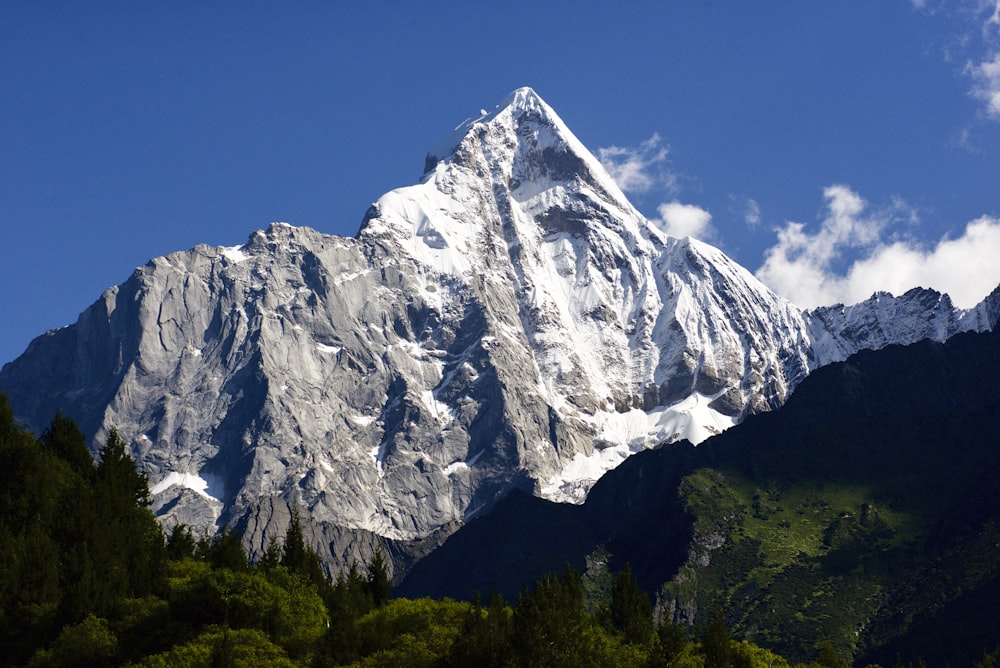
Elite climbers looking for the ultimate test of bravery and skill are drawn to this colossal in the shape of a pyramid. Its technical difficulties is significantly greater than that of Mount Everest, with significant challenges from the severe Abruzzi Spur and the infamous "Bottleneck". K2 is still associated with the wild and unconquered, which adds to its attractiveness in addition to its height and mystique.
The mountain's status as one of the world's most dangerous summits is reinforced by its mixed history of victories and tragedies. Climbers are engulfed in a universe where every step is a monument to the unwavering human spirit facing the powerful forces of nature, captivated by the mysterious slopes of K2. With its towering presence against the Karakoram, K2 continues to symbolize the attraction and dangers of pursuing high-altitude exploration.

3.Kangchenjunga
In the eastern Himalayas, Kangchenjunga, the third-highest mountain on Earth, magnificently crosses the border between India and Nepal. With five unique summits, each symbolizing a Sikkimese god, Kangchenjunga, at a remarkable elevation of 8,586 meters (28,169 feet), is widely recognized. Culturally significant, this sacred mountain is revered by the surrounding populations as a guardian spirit.
Kangchenjunga's remote location and rough topography add to its allure, providing a special fusion of spiritual depth and natural beauty. Ascenting Kangchenjunga requires climbers to handle its treacherous slopes and erratic weather while honoring the mountain's cultural significance. The climbers' custom of pausing just short of the summit to pay homage to the deity Dzo-Nga demonstrates the devotion for Kangchenjunga and exemplifies a harmonious fusion of adventure with cultural respect.
Because of its isolation, Kangchenjunga has maintained its natural ecosystem, making it a haven for a wide variety of plants and animals. Rhododendron woods and alpine meadows decorate the mountain's slopes, providing an amazing backdrop to the majestic summits. With its historical significance and breathtaking scenery, Kangchenjunga continues to stand as a testament to the precarious balance that must be struck between human exploration and the preservation of sacred places.
 4.Lhotse
At 8,516 meters (27,940 feet), Lhotse, the fourth highest mountain in the world, is a magnificent neighbor of Mount Everest in the Himalayas. Tightly connected to Everest by the South Col, Lhotse poses a serious threat to climbers attempting to reach its high peak. Particularly well-known on the mountain's south face are the dangerous Lhotse Face and the elusive Lhotse Couloir, which call for a special combination of technical proficiency and unshakeable resolve.
Climbers who attempt to reach the summit of Lhotse encounter high elevations, erratic weather, and the inherent dangers of making their way through massive ice formations. Because of the mountain's close proximity to Everest, climbers frequently embark on joint expeditions to tackle the twin challenge of reaching both peaks in a single trip.
Lhotse is incredibly attractive not only because of its height but also because of its close relationship with its famous neighbor. In the world of high-altitude mountaineering, climbing Lhotse successfully is a tough undertaking. Those who brave its slopes are rewarded with expansive vistas of the breathtaking Himalayan scenery. With its spectacular beauty and technical challenges, Lhotse never fails to grab the hearts of adventurers aspiring to take on one of the world's most difficult mountains.

5.Makalu
The fifth-highest peak in the world, Makalu, rises to an impressive 8,485 meters (27,838 feet) in the eastern Himalayas. This pyramid-shaped peak is one of the less-visited but no less fascinating destinations for mountaineers. It is located on the boundary between Nepal and Tibet and is quite isolated.
Makalu's ascent is distinguished by its difficult terrain, which includes sharp ridges, steep pitches, and erratic weather. Navigating between the formidable Makalu La and the infamous Hillary Saddle, climbers are forced to face the mountain's inaccessible and difficult slopes. In addition to its attractiveness, Makalu's relative obscurity when contrasted to its nearby giants draws explorers drawn to the road less traveled and the excitement of exploration.
The name Maha Kala, which comes from the Sanskrit phrase for "Big Black," describes the mountain's dark rock walls and towering appearance against the Himalayan skyline. Makalu is a great challenge for mountaineers because of its unspoiled beauty and the technical challenges it presents. It offers a special combination of adventure, seclusion, and breath-taking views that make the ascent to the summit an absolutely amazing experience.

6.Cho Oyu
Cho Oyu, at 8,188 meters (26,864 feet), the sixth-highest mountain in the world, gracefully crosses the border between Nepal and Tibet in the Himalayas. Cho Oyu, sometimes referred to as the "Turquoise Goddess" in Tibetan, is a sought-after location for mountaineers seeking the excitement of high-altitude exploration because it offers an alluring balance of accessibility and challenge.
While Cho Oyu is a daunting summit, climbers seeking to reach an 8,000-meter peak without the same degree of technical difficulty are drawn to it by its relatively easy ascent when compared to nearby giants like Everest and K2. The mountain's enticing features include its wide slopes and magnificent vistas of the neighboring peaks.
Usually, the ascent requires negotiating the northwest face, which is mild but nonetheless demanding, and crevassed slopes. At the top, climbers are rewarded with breath-taking views of Lhotse, Everest, and the whole Himalayan range. Cho Oyu offers the ideal blend of adventure and accomplishment, acting as a trial ground for those hoping to take on more difficult summits. In the field of high-altitude mountaineering, Cho Oyu is a distinctive and sought-after destination because of its accessible yet challenging nature.
 7.Dhaulagiri
Massive Dhaulagiri is a mountain that towers over Nepal's western Himalayas and is renowned for both its difficult ascent and magnificent presence. At 8,167 meters (26,795 feet) above sea level, it is known in Nepali as "White Mountain" because of the spectacular way its snow-covered slopes and enormous icefalls contribute to the mountain's overall beauty.
The Dhaulagiri range possesses an aura of mystery and fascination for daring climbers because to its remote position and severe weather. When climbing Dhaulagiri, climbers have to deal with unpredictable weather patterns, dangerous ridges, and the fearsome Dhaulagiri Icefall. Experienced mountaineers looking for a real test of skill and resiliency are drawn to the peak because of its remoteness and technical challenges.
Beyond its physical difficulties, Dhaulagiri is significant culturally for the Nepalese native populations. Climbers experience an environment that reverberates with the spirit of adventure and the enduring bond between humanity and the towering peaks that decorate the Himalayan skyline as they scale its slopes. One of the world's highest mountain ranges, Dhaulagiri is a tribute to the wild force and breathtaking majesty of mountains.

8.Manaslu
With an elevation of 8,163 meters (26,781 feet), Manaslu is the eighth-highest peak in the world, towering magnificently over the Nepalese Himalayas. Climbers attempting to reach the top of Manaslu, also referred to as the "Mountain of the Spirit," must strike a careful balance between tradition and discovery because of the mountain's significant cultural value to the surrounding villages.
Manaslu, which is located in the Gorkha district, has a varied landscape with steep icefalls, snowfields, and rock portions. Its steep slopes demand specific permissions for climbers, underscoring the mountain's cultural significance and the necessity of treating its spiritual core with reverence.
Compared to some of its more popular equivalents, Manaslu offers a more private and clean atmosphere, which contributes to its attraction. Technical challenges characterize the mountain's ascents, requiring a great degree of stamina and mountaineering experience. Climbers are rewarded as they advance through the adventure with a profound sense of connection to the spiritual fabric woven into the very essence of Manaslu, in addition to stunning views of the surrounding peaks. Under the shadow of this sacred peak, intrepid travelers set out on a voyage that goes beyond the technical difficulties to explore the cultural and spiritual fabric that characterizes the ascent of Manaslu.

9.Nanga Parbat
Soaring to a height of 8,126 meters (26,660 feet), Nanga Parbat is the ninth-highest mountain in the world and is situated in Pakistan's western Himalayas. Nanga Parbat, also referred to as the "Killer Mountain," got its grim moniker from the dangerous terrain and high death rate there. The mountain presents climbers with a daunting task due to its towering stature and dramatic relief.
With its complicated topography and steep slopes, the dangerous Rupal Face—one of the highest mountain faces on Earth—presents serious challenges. The mountain's infamous reputation is partly attributed to the tremendous heights, erratic weather patterns, and ongoing threat of avalanches faced by climbers trying Nanga Parbat. For experienced climbers looking for a challenge to test their mettle and bravery, the mountain's appeal is further enhanced by the Diamir Face, a similarly difficult route.
Nanga Parbat's extreme vertical relief and isolated location lure adventurers drawn to the excitement of scaling one of the most difficult peaks in the world, despite the risks. The stories of sorrow and victory carved into the mountain's slopes, which represent the resilience of the human spirit in the face of unadulterated nature, add to the mountain's allure in addition to its physical difficulties.
 10.Annapurna
Nestled in Nepal's Himalayas, Annapurna is a daunting peak that stands at 8,091 meters (26,545 feet), making it the tenth highest mountain in the world. Annapurna, often called the "Goddess of the Harvest," is a formidable foe to those who venture up its slopes. One of the most dangerous summits is the South Face of the mountain, which is well-known for its lethal avalanches and erratic weather.
The Annapurna requires climbers to traverse over icefalls and technical obstacles, requiring resiliency and competence. An additional element of danger to the ascent is the mountain's inherent risks, which have led to a higher fatality rate than success rate. Though it presents difficulties, Annapurna's charm is in its mystery, luring travelers looking for the ultimate challenge to their bravery and mountaineering prowess.
In addition to being a natural wonder, Annapurna's imposing presence represents the precarious equilibrium that exists between human aspiration and the uncontrollable forces of nature. The snow-covered peak of this mountain serves as a reminder of the unwavering spirit of adventure and the unrelenting quest to reach the planet's most difficult altitudes.
Conclusion:
These ten mountains represent a rich tapestry of difficulties, victories, and a close bond between people and the natural world in the world of climbing. Every peak adds something special to the rich story of exploration, from the lethal slopes of Annapurna to the soaring heights of Everest and the perilous faces of K2. These mountains are more than just geographical features; they represent the spirit of all individuals who have the courage to dream big and reach the top.
Upon contemplation of these imposing behemoths, we acknowledge that their charm transcends the material domain. They stand for the nexus of spiritual value, cultural legacy, and the unbreakable human spirit. The tales of success and sorrow inscribed on their hillsides serve as a constant reminder of life's frailty and the unwavering quest for the remarkable.
Adventurers encounter not just physical difficulties but also opportunities for reflection, humility, and closeness to the natural world beneath the shadow of these mountains. Reaching the top of these peaks is not the only goal of the quest; another goal is to solve the mysteries that these peaks conceal. The top ten mountains invite people who want to push the limits of the human spirit and the outside world. They act as gatekeepers to the sublime.

You must be logged in to post a comment.