
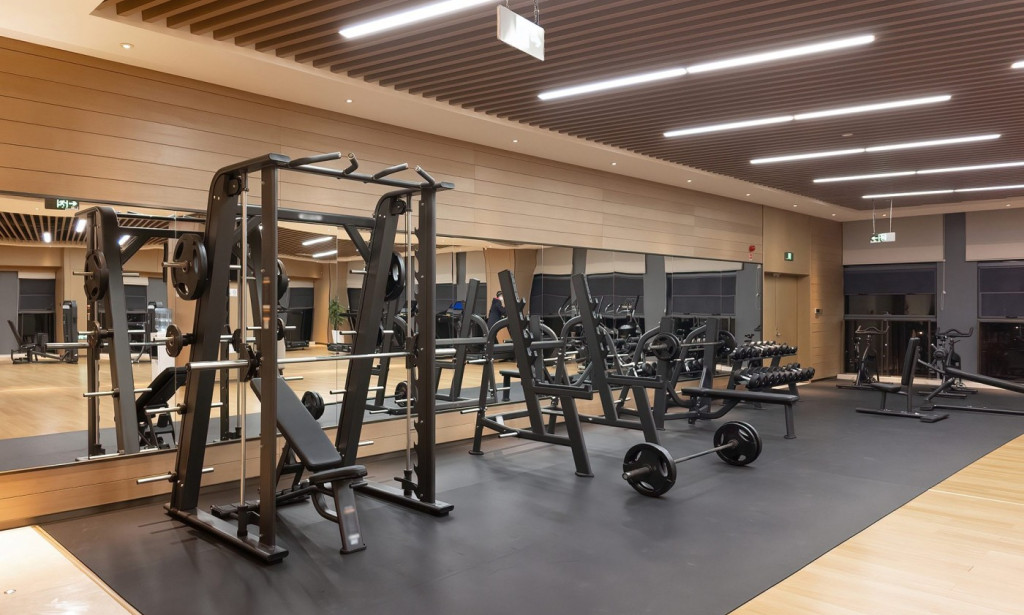
The complaints started about four months after we opened. Not from members — from the tenants in the office floor directly above us. The bass from our sound system was travelling up through the ceiling during morning classes, and the free weights landing on the rubber floor were apparently audible two floors up. Our building management sent a formal notice in the third month.
We run a boutique strength and conditioning gym in Al Reem Island, Abu Dhabi. Around 200 members, classes running from 6am to 9pm, six days a week. Closing for a full acoustic renovation was not an option — even two weeks of downtime would have cost us in membership freezes and cancellations we could not afford in the first year of operation.
A gym owner I know in Dubai had dealt with a similar situation and pointed me toward waseemtechnical. The specific thing he mentioned was that they had handled his install without shutting his facility down. That was the only thing I needed to hear to make the call.
Why renovation was off the table
The conventional answer to gym sound problems is construction — decoupled walls, floating floors, mass-loaded vinyl between layers, resilient channels on the ceiling. Done properly, it works extremely well. Done in an operating gym, it means dust, noise, equipment relocation, and weeks of closure.
We had looked at that route. The quotes we received ranged from AED 120,000 to AED 180,000, and every contractor was upfront that the gym would need to be emptied and closed for a minimum of three weeks. At our membership rate and retention assumptions, three weeks of closure in month five of operation was a risk we were not prepared to take.
What we actually needed was something that addressed the primary complaint — the sound bleed into the office floors above and the echo inside the gym itself that was making coaching difficult — without requiring us to gut the space we had just finished fitting out.
The assessment and what it found
The site visit from Waseem Technical lasted about two hours. They measured reverberation times across the main gym floor, the stretching area, and the functional training zone separately. They tested at low, mid, and high frequencies — which matters because bass from a sound system and the impact sound of weights behave differently and need different solutions.
Their assessment identified two separate problems. The first was internal reverberation — the gym had a long decay time at mid frequencies, which was making the space loud even at moderate sound system volumes and making verbal coaching over music genuinely difficult. The second was the sound transmission complaint from upstairs, which was primarily a ceiling issue, not a wall issue.
That distinction mattered for the solution. Treating every surface equally would have been expensive and unnecessary. Targeting the ceiling and the two longest walls would address both problems without touching the floor, the mirrored wall, or the entrance area.
The install — three days, gym stayed open
Works ran across three days. The installation team worked in sections — ceiling panels first, then the two side walls — with equipment shifted within the gym rather than removed. We ran a reduced class schedule during the install days but did not close. Members were aware works were happening; no one asked for a freeze.
What the non-invasive approach actually meant in practice:
• No drilling into the structural slab. The ceiling panels were mounted on a system that attached to the existing grid without penetrating the concrete above. This was the critical requirement given the complaint from the floor above — we could not risk creating new transmission paths through fixings.
• Wall panels mounted without damaging the existing finish. The gym walls had been painted two months earlier. The mounting system used French cleats that could be removed cleanly without leaving the surface unusable. That matters when you are in a leased space.
• No equipment removal required. Racks, platforms, and cable machines were shifted within the floor area as each section was completed and shifted back. The install worked around our equipment, not the other way around.
• Three days from start to finish. We had been quoted three weeks for the renovation route. The panel installation was done before the weekend, and the gym ran a full class schedule on Saturday morning.
What changed after the install
The building management complaint stopped. We received written confirmation from the property manager two weeks after the install that the office tenants had not raised further issues. That was the primary measure of success and it was met within the first month.
Inside the gym, the difference was immediate and noticeable to members without us pointing it out. The first coach to teach a class after the install commented unprompted that she could hear herself clearly at normal voice volume over the music for the first time. That had been the practical coaching problem we had been working around for four months.
We also turned the sound system down. Not because we were told to — because the room no longer required volume to feel energetic. The reverb had been adding a sense of chaos that we were compensating for with higher volume, which was making the transmission problem worse. Fixing the acoustic environment fixed the behaviour that was driving the complaint.
If you are managing a gym, studio, or fitness space in Abu Dhabi and you are facing a sound complaint or a coaching clarity problem, a full renovation is rarely the only option. Their Acoustic Panels in Abu Dhabi are installed without structural work, without closure, and without the timelines that a traditional acoustic renovation requires.
What I would ask before any acoustic quote
Ask whether the assessment separates internal reverberation from sound transmission. They are different problems and treating them the same way wastes money on the wrong surfaces.
Ask specifically how the panels are mounted and whether the mounting system can be removed cleanly. In a leased commercial space, anything that permanently damages the shell could become a dilapidations issue at the end of the tenancy.
And ask what the install timeline looks like with the space in active use. The answer to that question separates suppliers who understand operational constraints from those who are quoting for an empty shell.

You must be logged in to post a comment.