
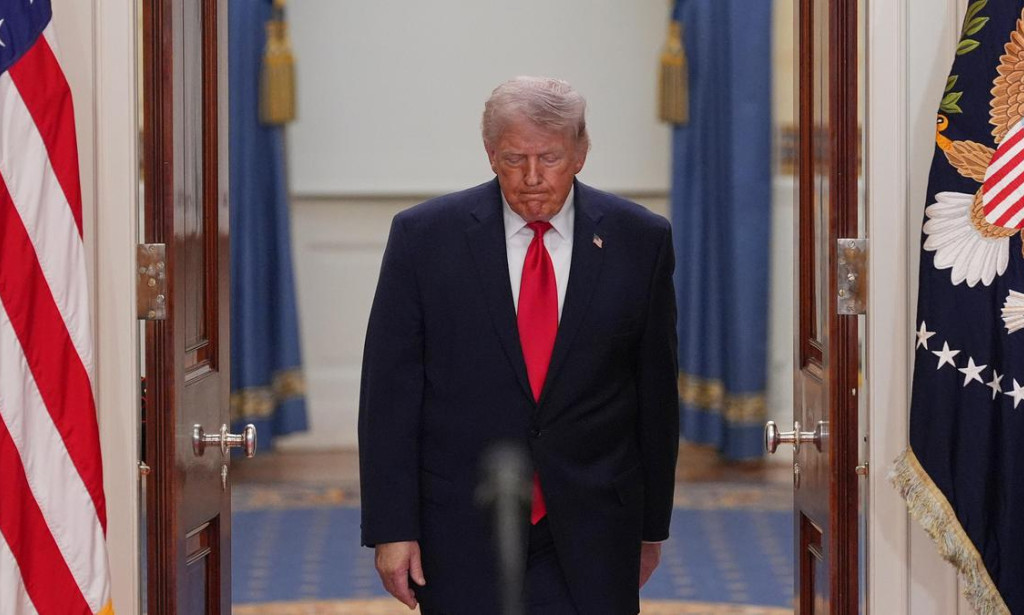
U.S. President Donald Trump has announced the destruction of what Iranian officials describe as the country’s tallest bridge, marking a dramatic escalation in the ongoing conflict between the United States and Iran.
The structure, known as the B1 bridge, was located near the city of Karaj, approximately 35 kilometers southwest of Tehran. According to multiple reports, the bridge stood around 136 meters tall and was still under construction, touted by Iranian media as one of the most ambitious infrastructure projects in the region.
The Strike and Immediate Impact
The destruction of the bridge occurred following two reported airstrikes. Iranian state media claimed that the first strike caused initial casualties, while a second strike hit the area shortly after emergency responders had arrived. Local officials reported that at least eight people were killed and nearly 100 others injured, though these figures have not been independently verified due to restrictions on access to the site.
Visual footage shared on social media appeared to show large sections of the bridge collapsing, with thick plumes of smoke rising into the air. The attack effectively rendered the bridge unusable before it was even officially opened.
U.S. officials have justified the strike by claiming the bridge was being used, or was intended to be used, as a logistical route for transporting missile and drone components. However, Iranian authorities have strongly denied this, insisting the structure was purely civilian infrastructure.
Trump’s Statement and Warning
President Trump publicly took credit for the attack, posting a message on social media declaring that the “biggest bridge in Iran” had been destroyed. He warned that further strikes would follow if Iran did not agree to U.S. demands in the ongoing conflict.
In his statement, Trump emphasized that this was only the beginning of a broader campaign. He urged Iranian leadership to negotiate, warning that failure to do so could result in additional attacks targeting key infrastructure, including bridges, power plants, and energy facilities.
The rhetoric marks one of the most aggressive public positions taken by the U.S. president during the conflict so far. In earlier remarks, Trump had also threatened to bring Iran “back to the Stone Ages,” indicating a willingness to expand military operations significantly.
Escalation of Conflict
The strike on the B1 bridge is part of a wider military campaign that began in late February. The conflict, involving the United States and its regional allies, has already seen numerous airstrikes on Iranian military installations, missile facilities, and logistical hubs.
Targeting major infrastructure such as bridges represents a notable shift in strategy. Analysts say it signals a move toward crippling Iran’s internal connectivity and economic capacity, rather than focusing solely on military targets.
However, this shift has sparked serious concerns among international observers. Legal experts have warned that attacking civilian infrastructure could violate international humanitarian law, particularly if such targets are not clearly linked to military use.
Iran’s Response
Iranian officials have condemned the strike in strong terms. The country’s foreign ministry described the attack as evidence of “moral collapse” and accused the United States of deliberately targeting civilian assets.
Iran has also vowed retaliation. While details remain unclear, officials have indicated that further military responses are likely if U.S. attacks continue. The escalation raises fears of a broader regional conflict that could draw in additional countries.
State media in Iran has framed the attack as part of a pattern of aggression, emphasizing that the bridge was not yet operational and had no military function. The government has also highlighted the civilian casualties, using them to rally domestic and international support.
Global Reactions and Concerns
The international community has reacted with alarm to the developments. Several global leaders and organizations have called for restraint, warning that continued escalation could destabilize the entire Middle East.
The destruction of infrastructure such as bridges and potential future attacks on power plants or oil facilities could have far-reaching consequences. These include disruptions to global energy markets, increased refugee flows, and heightened geopolitical tensions.
Oil prices have already shown signs of volatility amid fears that the conflict could affect supply routes, particularly if critical infrastructure in Iran is further targeted.
Strategic Implications
From a military perspective, the destruction of the bridge may have both symbolic and tactical significance. While it may disrupt certain supply routes, experts question whether such actions will meaningfully weaken Iran’s overall capabilities.
Instead, some analysts argue that targeting high-profile infrastructure projects could serve more as a psychological and political tool—demonstrating U.S. power and increasing pressure on Iran’s leadership.
At the same time, the move risks hardening Iran’s stance. Rather than forcing negotiations, it could strengthen resistance and prolong the conflict.
Humanitarian Impact
Beyond the strategic considerations, the humanitarian consequences are becoming increasingly evident. Civilian casualties, damage to infrastructure, and the threat of further strikes are contributing to growing instability within Iran.
The destruction of a major bridge—even one not yet completed—represents a significant loss of investment and future economic potential. It also raises concerns about the broader impact on civilians, particularly if similar attacks continue.
Aid organizations have warned that targeting infrastructure can have cascading effects, disrupting transportation, emergency services, and access to essential resources.
What Comes Next
As tensions continue to rise, the situation remains highly uncertain. President Trump has indicated that more strikes are likely unless Iran agrees to U.S. terms, while Iran has signaled that it will not back down under pressure.
The coming weeks may prove critical in determining whether the conflict escalates further or moves toward a negotiated resolution.
For now, the destruction of Iran’s tallest bridge stands as a stark symbol of the intensifying confrontation—one that carries significant implications not only for the two countries involved but for the broader global community.
If you want, I can simplify this into bullet points, explain the background of the war, or give a timeline of events.

You must be logged in to post a comment.