

For more than 100 years, psychologists have done research on which study habits work best. Some tips help for almost every subject. For example, don’t just cram! And test yourself, instead of just rereading the material. Other tactics work best for certain types of classes. This includes things like using graphs or mixing up what you study. Here are 7 tips to tweak your study habits.
#1: Practice. Practice. Practice !!!
“If you want to be able to remember information, the best thing you can do is practice,” says Katherine Rawson. She’s a psychologist at Kent State University in Ohio. In one 2013 study, students took practice tests over several weeks. On the final test, they scored more than a full letter grade better, on average, than did students who studied the way they normally had.
In a study done a few years earlier, college students read material and then took recall tests. Some took just one test. Others took several tests, with short breaks of several minutes in between. The second group recalled the material better a week later.
#2: Find Examples
Abstract concepts can be hard to understand. It tends to be far easier to form a mental image if you have a concrete example of something, Nebel says.
For instance, sour foods usually taste that way because they contain an acid. On its own, that concept might be hard to remember. But if you think about a lemon or vinegar, it’s easier to understand and remember that acids and sour go together. And the examples might help you to identify other foods’ taste as being due to acids.
#3: Don't Just Reread
Too often, when students reread material, it’s superficial, says McDaniel, who also co-wrote the 2014 book, Make It Stick: The Science of Successful Learning. Rereading is like looking at the answer to a puzzle, rather than doing it yourself, he says. It looks like it makes sense. But until you try it yourself, you don’t really know if you understand it.
One of McDaniel’s coauthors of Make it Stick is Henry Roediger. He, too, works at Washington University. In one 2010 study, Roediger and two other colleagues compared test results of students who reread material to two other groups. One group wrote questions about the material. The other group answered questions from someone else. Those who answered the questions did best. Those who just reread the material did worst.
#4: Test Yourself
As Nebel got older, she quizzed herself. For example, she might cover up the definitions in her notebook. Then she tried to recall what each term meant.
Such retrieval practice can help nearly everyone, Rawson and others showed in an August 2020 study in Learning and Instruction. This research included college students with an attention problem known as ADHD. It stands for Attention Deficit Hyperactivity Disorder. Overall, retrieval helped students with ADHD and those without the disorder equally well.
Try to quiz yourself the way the teacher asks questions.
#5: Mistakes Are Okay - As Long As You Learn From Them
It’s crucial to test your memory. But it doesn’t really matter how many seconds you spend on each try. That finding comes from a 2016 study by Kornell and others. But it’s important to go the next step, Kornell adds: Check to see if you were right. Then focus on what you got wrong.
“If you don’t find out what the answer is, you’re kind of wasting your time,” he says. On the flip side, checking the answers can make your study time more efficient. You can then focus on where you need the most help.
In fact, making mistakes can be a good thing, argues Stuart Firestein. A Columbia University biologist in New York City, he actually wrote the book on it. It’s called Failure: Why Science is So Successful. Mistakes, he argues, are actually a primary key to learning.
#6: Mix It Up
In many cases, it helps to mix up your self-testing. Don’t just focus on one thing. Drill yourself on different concepts. Psychologists call this interleaving.
Actually, your tests usually will have questions mixed up, too. More importantly, interleaving can help you learn better. If you practice one concept over and over “your attention decreases because you know what’s coming up next,” Sana explains. Mix up your practice, and you know space the concepts apart. You can also see how concepts differ, form trends or fit together in some other way.
Suppose, for instance, you’re learning about the volume of different shapes in math. You could do lots of problems on the volume of a wedge. Then you could answer more batches of questions, with each set dealing with just one shape. Or, you could figure out the volume of a cone, followed by a wedge. Next, you might find the volume for a half-cone or a spheroid. Then you can mix them up some more. You might even mix in some practice on addition or division.
Rawson and others had groups of college students try each of those approaches. Those who interleaved their practice questions did better than the group that did single-batch practice, the researchers reported last year in Memory & Cognition.
A year earlier, Sana and others showed that interleaving can help students with both strong and weak working memory. Working memory lets you remember where you are in an activity, such as following a recipe.
#7:Use Pictures
Pay attention to diagrams and graphs in your class materials, says Nebel. “Those pictures can really boost your memory of this material. And if there aren’t pictures, creating them can be really, really useful.”
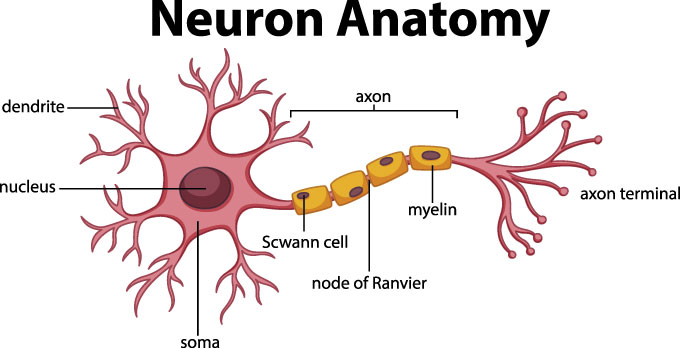 Pay attention to drawings, graphics, chart and other visual aids. Psychologist Mark McDaniel at Washington University in St. Louis, Mo., says a diagram of a nerve cell helped when he studied neuroscience in college.
“I think these visual representations help you create more complete mental models,” McDaniel says. He and Dung BUI, then also at Washington University, had students listen to a lecture on car brakes and pumps. One group got diagrams and was told to add notes as needed to the diagrams. Another group got an outline for writing notes. The third group just took notes. The outlines helped students if they were otherwise good at building mental models of what they were reading. But in these tests, they found, visual aids helped students across the board.
Even goofy pictures might help. Nikol Rummel is a psychologist at Ruhr University, Bochum in Germany. In one study back in 2003, she and others gave cartoon drawings to college students along with information about five scientists who studied intelligence. For example, the text about Alfred Binet came with a drawing of a race car driver. The driver wore a bonnet to protect his brain. Students who saw the drawings did better on a test than did those who got only the text information.
That's it. Thank You all for reading this article !!! And if you really improved, then please follow my other articles as well.

You must be logged in to post a comment.