
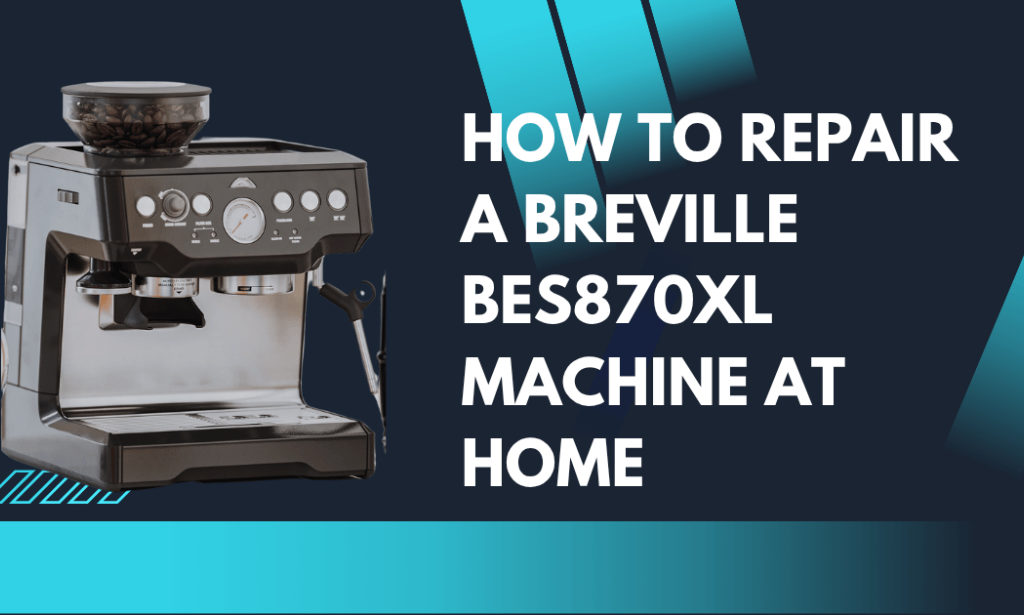
The Breville Barista Express (BES870XL) is one of the most popular semi-automatic espresso machines in the world. However, combining a high-pressure heating system, a precision water pump, and an integrated conical burr grinder into a single countertop footprint means there are multiple points where wear and tear can occur.
When your machine loses pressure, stops heating, or refuses to grind, you don't necessarily need to pay for expensive factory servicing. Many common faults can be safely diagnosed and fixed on your kitchen counter. Below is the definitive blueprint for repairing your Breville BES870XL at home.
1. Primary Diagnostic: Isolating the Fault Area
Before picking up a screwdriver, you must determine which core system is failing. The BES870XL operates on three distinct internal loops:
-
The Dry Loop (Grinding): Responsible for portioning and pulverizing beans.
-
The Wet Loop (Extraction & Steam): Manages water delivery, the 15-bar Italian pump, and the Thermocoil heating element.
-
The Logic Loop (Electronics): The main PCB that monitors temperature sensors (NTC thermistors) and button commands.
2. Fixing the Grinder System (The Dry Loop)
The built-in grinder experiences immense physical torque. Over time, oily dark roasts or foreign objects like small pebbles mixed into coffee bags can cause the mechanical components to seize up entirely.
Symptom: The Motor Hums but Burrs Do Not Turn
If you press the portafilter against the activation switch and hear a low electrical buzz but no beans are crushed, the internal grinding assembly is physically locked.
-
The Solution: This is usually caused by super-compressed coffee "fines" hardening beneath the plastic impeller wheel, or a stone wedged in the steel conical burrs. If your grinder is stalling, clicking, or acting completely dead, read through our comprehensive Breville BES870XL Grinder Jammed? Easy Fix Guide to safely clear the debris and check if your internal nylon drive gear needs replacement.
3. Resolving Pressure & Flow Issues (The Wet Loop)
If your grinder works perfectly, but your espresso shots are dripping slowly, or the pressure gauge needle refuses to rise into the "Espresso Zone," your water delivery system is compromised.
Step 1: Clearing a Clogged Solenoid Valve
The BES870XL uses a 3-way solenoid valve to direct hot water to either the group head or the steam wand, and to vent excess pressure into the drip tray. Scale buildup (calcium deposits) is the number one enemy of this valve.
-
The Fix: Unplug the machine, remove the outer metal casing, and locate the brass valve assembly. If a piece of scale is trapped inside, the valve won't seal properly, causing water to constantly leak into the drip tray instead of building extraction pressure. Dismantling the valve and soaking the metal components in a food-safe descaling solution typically solves the issue.
Step 2: Replacing a Weak Ulka Pump
If the machine runs but makes a faint, dull buzzing sound instead of its usual loud vibration, the 15-bar electromagnetic pump may be failing.
-
The Fix: Use a multimeter to test the pump terminals for resistance. If the internal diode or spring is broken, a replacement Ulka EAX5 pump is inexpensive and can be swapped out by disconnecting two silicone tubes and two electrical spade connectors.
4. Breville BES870XL Diagnostic Matrix
| Symptom | Hidden Internal Cause | Required Action |
| No pressure at group head, steam wand works | Clogged 3-Way Solenoid Valve | Clean or replace solenoid plunger. |
| Grinder makes a loud screeching/slipping noise | Stripped internal nylon gear | Open gearbox; replace sacrificial gear. |
| Water leaking from bottom of the machine | Blown O-ring on Thermocoil brass elbows | Replace internal food-grade silicone O-rings (Size #007). |
| Buttons flashing, machine won't heat | Tripped thermal fuse on heating element | Reset or replace the 172°C thermal cut-off switch. |
5. Advanced Electrical and Safety Troubleshooting
If your machine has no power at all, or if the lights flash erratically the moment you turn it on, the issue is located within the logic loop.
-
The Thermal Cut-Offs (TCOs): Breville mounts small safety fuses directly onto the aluminum Thermocoil block. If the machine runs dry or overheats, these fuses pop to cut the power. They can be tested for continuity using a basic digital multimeter.
-
O-Ring Degradation: The internal high-pressure teflon tubes are secured to the boiler using small brass clips and red silicone O-rings. Over time, heat causes these O-rings to flatten and leak micro-drops of steam. This ambient moisture condenses onto the main PCB control board, causing erratic button behavior.
Restoring Your Espresso Experience Safely
Tackling a home appliance repair can save you hundreds of dollars in repair fees and keep your machine out of the landfill. However, working with internal boilers, high-voltage lines, and intricate hydraulic systems requires precise guidance and safety measures.
If you are dealing with complex internal leaks, need help diagnosing electrical board faults, or want to look over schematic layouts for other home appliances, check out the specialized diagnostic articles and repair blueprints over at repairthese.com to get your kitchen tech running perfectly again.

You must be logged in to post a comment.