
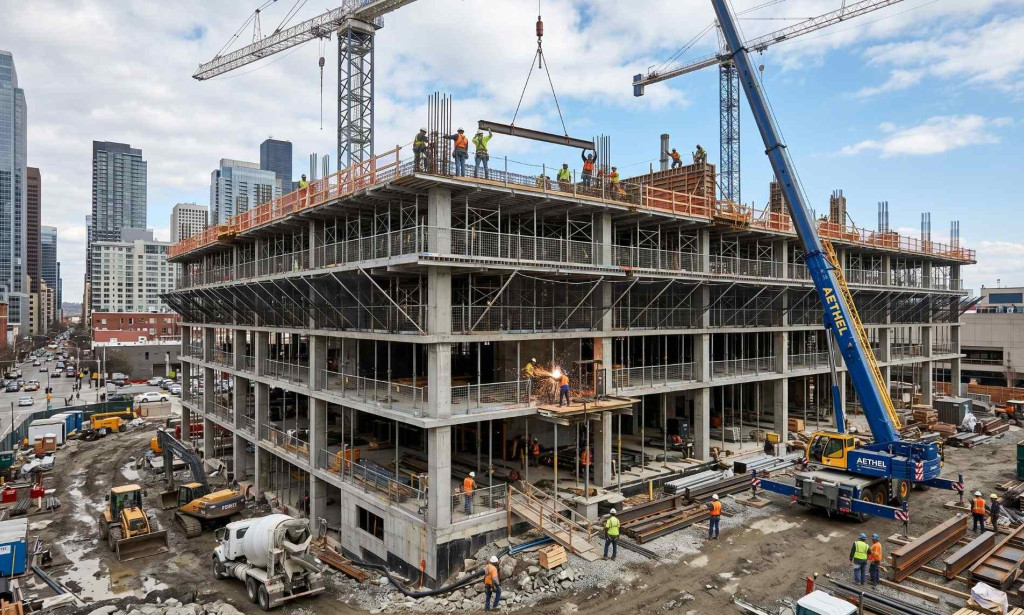
Construction of a house or any structure is a significant investment in which costs can quickly add up. To learn how to reduce construction costs, one must carefully plan, choose materials, and manage the workforce to save on the cost of construction without sacrificing quality.
Without a plan, one can end up paying 30% more than calculated. This blueprint covers all these parameters to allow you to build your project within budget.
Understanding How to Reduce Construction Costs
A reduction in construction costs by no means implies low-quality materials. Our aim is efficient use of resources and avoiding waste. At the beginning of a project, we have to study each phase in detail. Good planning is the key to saving money.
Construction prices are subject to daily changes. Failure to make decisions promptly can have a negative impact on your wallet. So, try to do a market study before commencing the work.
Planning and Design of the Project
House design and plan are key factors in determining the cost of construction. The more complicated the design is, the more manpower and materials are needed. Any rectangular or square design is cheaper as there will be less wastage.
How to Buy the Right Amount of Material
Most often, we purchase more than what is required and then end up damaging and wasting the material. It's important to calculate the quantity to save money.
Accurate Financial Analysis is Required
At the onset of any construction project, accounting is the main need. Here, technical analysis is greatly beneficial in estimating the cost of one square foot. After the construction estimates are done, the owner of the project understands the degree of material calculation and the assistance of a project planner.
Smart Material Selection and Savings
Construction material costs account for a major part of construction costs. So, if you save money here, you keep the project's budget in check. But be aware that it's not worth sacrificing quality.
Using Local Materials
So, try to buy local materials whenever possible. You will have to pay more for transporting materials. It is not only cheaper to buy local bricks, gravel, and sand, but their availability is also easier.
Wholesale or Buying in Bulk
If you have a place to store them, purchase steel and cement in bulk. Wholesale buying offers cost savings and eliminates multiple delivery costs.
Simplicity in Finishing
Finishing is not important; structure is. You can opt for locally sourced and quality products, rather than imported tiles and fittings. This makes no difference to the quality of the work, but saves a considerable amount.
Improvements in the Finishing Stage
Once the house structure is erected, the finishing stage is the most challenging, where the cost often exceeds. These include wall paint and external decoration, which need to be done with utmost care. With interior exterior finishes takeoff volume analysis, and material calculations are further refined to avoid any extra material in finishing.
Labor Management: Time and Money Saving
The second biggest component in construction is the labor cost. If not managed properly, the project will be delayed, and money will be wasted.
- Experienced Contractor: Hire an experienced contractor to work on the project so the work is done quickly and properly.
- Daily Monitoring: Check the work every day so there are no errors that will have to be corrected later.
- Pay Per Task: Instead of paying on a daily basis, take the help of labor on a task basis, which ensures the timely completion of work.
New Construction Methods to Save Money
Now, new methods are available that reduce the time and cost of construction. Such as precast concrete walls or slabs. This will reduce work, and the structure can be rapidly prepared.
But before using these methods, it's important to seek the advice of a structural engineer. The safety of the structure should be prioritised.
Optimization of Floor Area
You don't need a huge living room or long hallways. Use space smartly. Build as much as you can, but don't waste space.
Waste Management: Preventing Material Waste
Construction sites have a lot of material wastage. Waste of brick, bats, steel, and cement is a loss of money.
- Reuse: Old bricks and debris can be reused for laying the foundation of a new building.
- Store Properly: Store cement in a dry place so that it doesn't set; otherwise, it will be lost.
- Accurate Cutting: Cut steel pieces according to the plan so that there are fewer small pieces of steel.
Is it Cheaper to Build a Multistory Building?
Many times we get asked whether it is better to build a single-storey or a double-storey house. Theoretically, the price per square foot may be lower for a double-story house as the cost of the foundation and roof is spread out. If your land area is small, then a double-story is preferred.
Mistakes During the Construction
Many times, mistakes are made to save on labor. These mistakes are later corrected at a greater price. Likewise, if you start work without planning, the budget goes out the window.
Be sure to know that "how to reduce construction cost" is not done by decreasing the quantity of steel or cement.
Conclusion
How to reduce construction cost is an art that can be learnt only with proper knowledge and supervision. The crux of this whole debate is that saving is always done through planning, the use of local materials, and waste disposal, not quality.
If you consider all the stages from a technical perspective, you can automatically reduce costs. The key is to create a quality and sustainable building with the least material.
And don't forget, a bit of planning and effort now will eliminate any future headache. Will you follow these for your next building?
FAQs
Is cheap material really cost-effective?
No, cheap or inferior quality material may save some money initially, but it will cost more in the long term in terms of upkeep and repair (due to its failure, such as cracks and leakage). To save, select quality local material that will save on transport costs.

You must be logged in to post a comment.