
How to Pursue B.Des Admission 2026: Eligibility, Specialisations, Fees and Careers
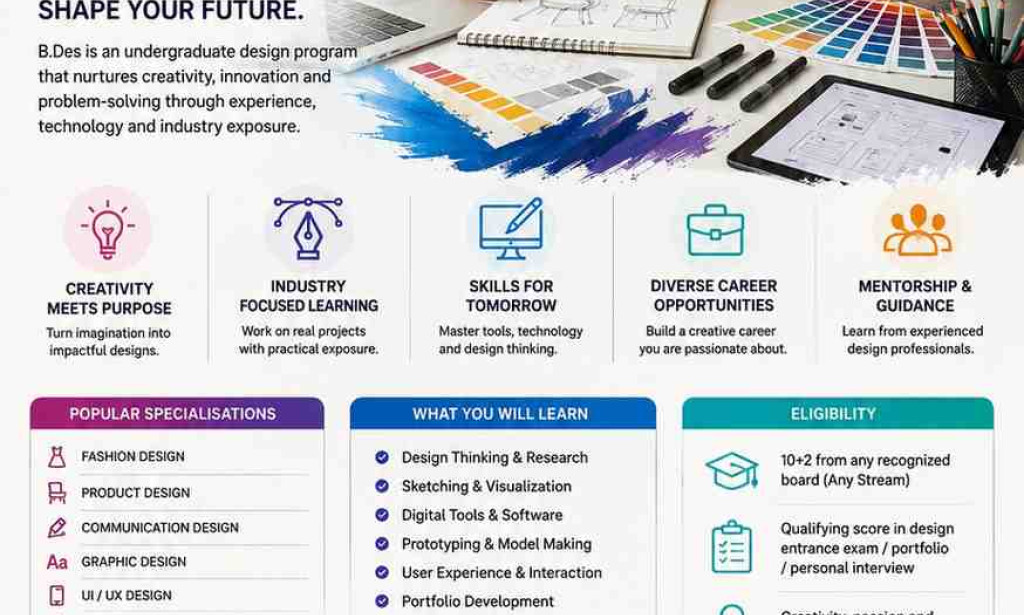
Bachelor of Design, commonly known as B.Des, is an undergraduate programme for students interested in creativity, innovation and visual problem-solving.
The course combines design theory, practical studio work, technology and project-based learning.
B.Des Eligibility
Candidates are generally required to complete Class 12 from a recognised board.
Students from Arts, Commerce or Science streams may be eligible, depending on the institution and specialisation.
Some colleges may also require candidates to qualify for a design entrance examination.
B.Des Admission Routes
Admission may be offered through examinations such as:
- UCEED
- NIFT Entrance Examination
- NID DAT
- University-level design tests
- Portfolio assessments
- Studio tests
- Personal interviews
The selection process varies significantly across institutions.
Popular B.Des Specialisations
Students can explore areas such as:
- Fashion Design
- Product Design
- Communication Design
- Graphic Design
- Interaction Design
- User Experience Design
- Textile Design
- Interior and Spatial Design
- Animation and Game Design
- Accessory Design
Each specialisation develops a different combination of creative and technical skills.
Skills Developed During B.Des
The programme may help students develop:
- Visual communication
- Design thinking
- Drawing and illustration
- Research and observation
- Digital design skills
- Prototyping
- Problem-solving
- Portfolio development
- Presentation skills
- User-centred design
Fees and Course Duration
B.Des is generally a four-year programme.
Fees vary according to:
- Institution type
- Specialisation
- Studio and laboratory facilities
- Materials and software requirements
- Location
- Hostel and additional charges
Students should also budget for design materials, portfolio preparation and project expenses.
Career Options After B.Des
Graduates may pursue roles such as:
- Graphic Designer
- Product Designer
- UI Designer
- UX Designer
- Fashion Designer
- Visual Communication Designer
- Interaction Designer
- Brand Designer
- Textile Designer
- Design Researcher
- Creative Strategist
Opportunities may be available in design studios, technology companies, fashion brands, advertising agencies, startups and consulting firms.
Choosing the Right Design College
Before applying, students should compare:
- Faculty and studio facilities
- Course curriculum
- Industry projects
- Internship opportunities
- Portfolio development support
- Alumni work
- Placement assistance
- Programme-specific fees
Conclusion
B.Des is suitable for students who enjoy creativity, experimentation and practical problem-solving.
A strong portfolio, design aptitude and consistent project work can be as important as academic performance when building a career in design.

You must be logged in to post a comment.