
In today’s competitive business environment, organizations must balance operational efficiency, regulatory compliance, and sustainability. Whether a company is engaged in manufacturing, exporting, importing, or brand management, compliance requirements play a critical role in ensuring smooth business operations and long-term success.
Among the various compliance mechanisms available to businesses, DGFT Ad-hoc Norms Fixation and EPR Registration serve distinct but equally important purposes. While DGFT Ad-hoc Norms Fixation helps exporters obtain approval for input-output norms when standard norms are unavailable, EPR Registration focuses on environmental responsibility through waste management obligations.
Understanding these frameworks can help businesses improve compliance management, reduce operational risks, and strengthen their market position.
Understanding DGFT Ad-hoc Norms Fixation
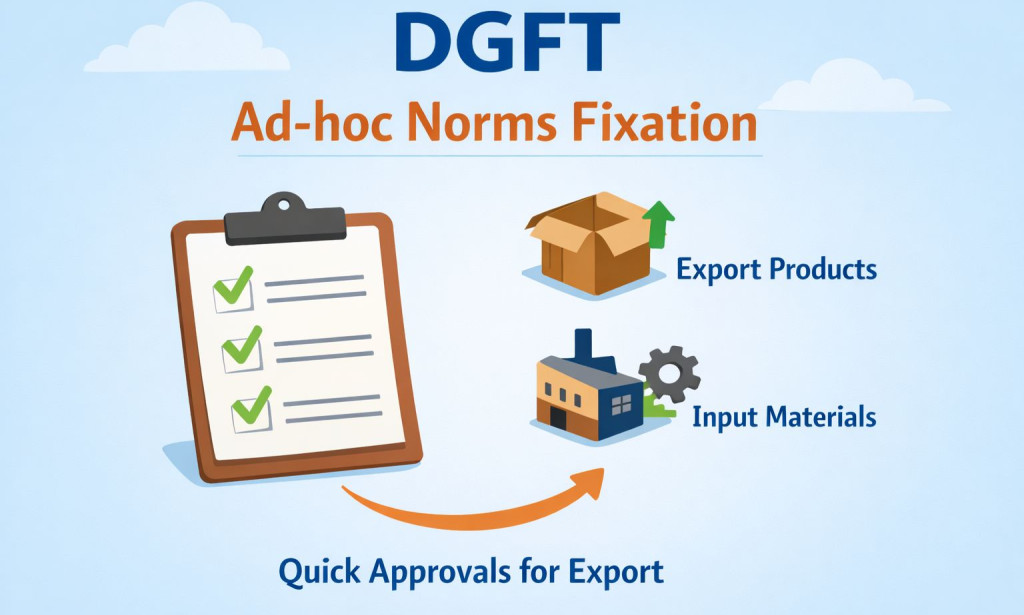
DGFT Ad-hoc Norms Fixation is a process administered by the Directorate General of Foreign Trade (DGFT) that allows exporters to obtain input-output norms for products not covered under existing Standard Input Output Norms (SION).
Input-output norms determine the quantity of raw materials or inputs required to manufacture a specific export product.
When a product is new, specialized, or technologically advanced, existing norms may not adequately reflect actual production requirements. In such cases, exporters can apply for DGFT Ad-hoc Norms Fixation to establish appropriate consumption standards.
This mechanism ensures that businesses can continue utilizing export promotion schemes even when predefined norms are unavailable.
Why DGFT Ad-hoc Norms Fixation Is Important
The process offers valuable support to exporters operating in specialized industries.
Facilitates Access to Export Benefits
Export incentives become more accessible.
-
Businesses can apply for Advance Authorisation and other trade facilitation schemes even when standard norms do not exist for their products.
-
This flexibility supports innovation and the introduction of new products into international markets.
Supports Industry-Specific Manufacturing
Unique products require tailored solutions.
-
Ad-hoc norms allow exporters to accurately represent their production processes and input consumption patterns.
Encourages Technological Advancement
Modern production methods often differ from traditional norms.
-
Companies adopting new technologies can seek norms that reflect actual manufacturing practices rather than relying on outdated standards.
What Is EPR Registration?
EPR Registration stands for Extended Producer Responsibility Registration.
It is a regulatory requirement applicable to producers, importers, and brand owners whose products generate waste after consumer use.
The objective of EPR regulations is to ensure that businesses take responsibility for the collection, recycling, recovery, and environmentally sound disposal of waste associated with their products and packaging.
EPR Registration demonstrates a company’s commitment to environmental accountability and sustainable business practices.
Why EPR Registration Matters
Environmental sustainability has become a major focus for businesses and regulators.
Promotes Responsible Waste Management
Environmental protection requires action.
-
EPR Registration encourages organizations to establish systems for collecting and processing waste generated by products after consumption.
-
Effective waste management contributes to resource conservation and reduced environmental impact.
Enhances Corporate Reputation
Consumers increasingly support responsible brands.
-
Businesses that maintain EPR compliance often enjoy stronger trust among customers, investors, and stakeholders.
Ensures Regulatory Compliance
Compliance reduces business risks.
-
Proper registration helps organizations avoid penalties and maintain smooth relationships with regulatory authorities.
How DGFT Ad-hoc Norms Fixation and EPR Registration Complement Business Operations
Although DGFT Ad-hoc Norms Fixation and EPR Registration focus on different regulatory objectives, both contribute significantly to business efficiency and compliance.
For example, a manufacturer developing innovative export products may require DGFT Ad-hoc Norms Fixation to establish production norms and access export incentives. At the same time, the packaging associated with those products may fall under EPR regulations, making EPR Registration necessary.
By managing both requirements effectively, businesses can support growth while maintaining regulatory accountability.
This integrated approach strengthens both operational performance and sustainability.
Industries That Frequently Require Both Compliance Frameworks
Several industries commonly encounter obligations related to both areas.
Electronics Manufacturing
Innovation and sustainability are closely linked.
-
Electronics manufacturers often require specialized production norms while managing electronic waste responsibilities through EPR Registration.
Consumer Goods Industry
Packaging creates environmental obligations.
-
Companies producing packaged consumer products may utilize export promotion schemes while maintaining waste management compliance.
Plastic and Packaging Sector
Environmental regulations are particularly important.
-
Packaging manufacturers frequently address both production-related trade requirements and recycling obligations.
Engineering and Industrial Products
Complex products require customized norms.
-
Engineering exporters often seek DGFT Ad-hoc Norms Fixation while managing environmental responsibilities associated with product packaging.
Best Practices for DGFT Ad-hoc Norms Fixation
Businesses can improve application outcomes through careful preparation.
Maintain Detailed Production Records
Accurate information supports approvals.
-
Production data, raw material consumption records, process flow diagrams, and technical specifications should be documented carefully.
Provide Technical Justification
Supporting evidence strengthens applications.
-
Businesses should clearly explain why existing norms are not suitable for their products.
Monitor Regulatory Updates
Policies evolve over time.
-
Staying informed about DGFT guidelines helps improve compliance and application efficiency.
Best Practices for EPR Registration
Effective waste management requires structured systems.
Collaborate with Authorized Recyclers
Professional partnerships improve compliance.
-
Working with approved recyclers helps businesses fulfill collection and recycling obligations efficiently.
Maintain Comprehensive Documentation
Records support accountability.
-
Organizations should preserve recycling reports, collection records, and compliance documentation.
Conduct Regular Compliance Reviews
Monitoring strengthens performance.
-
Internal assessments help identify areas for improvement and reduce regulatory risks.
Common Challenges Businesses Face
Managing multiple compliance obligations requires attention to detail.
Documentation Complexity
Extensive records are often required.
-
Incomplete documentation can delay approvals and create compliance concerns.
Regulatory Changes
Requirements continue to evolve.
-
Businesses must remain informed about updates affecting both export and environmental regulations.
Resource Constraints
Compliance demands dedicated effort.
-
Organizations without structured systems may struggle to manage obligations efficiently.
Companies that invest in compliance processes are generally better equipped to overcome these challenges.
Long-Term Benefits of Effective Compliance
Businesses that successfully manage DGFT Ad-hoc Norms Fixation and EPR Registration often experience substantial advantages.
Improved Regulatory Readiness
Prepared organizations face fewer disruptions.
-
Strong compliance systems reduce uncertainty and improve operational stability.
Enhanced Business Reputation
Responsibility builds trust.
-
Customers, partners, and regulators value organizations that demonstrate accountability.
Stronger Competitive Position
Compliance supports growth.
-
Businesses that effectively manage regulatory requirements are often better positioned to expand into new markets.
Sustainable Development
Growth and responsibility work together.
-
Environmental stewardship and trade compliance contribute to long-term success.
Why Compliance Is Becoming a Strategic Priority
Modern businesses operate in an increasingly regulated environment where transparency, sustainability, and accountability are essential.
DGFT Ad-hoc Norms Fixation supports exporters by enabling access to trade benefits for innovative products, while EPR Registration ensures responsible management of environmental impacts.
Together, these frameworks help businesses remain competitive while meeting evolving regulatory expectations.
Conclusion
DGFT Ad-hoc Norms Fixation and EPR Registration are valuable tools that support business growth, compliance, and sustainability. While DGFT Ad-hoc Norms Fixation helps exporters establish appropriate production norms and access export incentives, EPR Registration ensures environmental accountability through responsible waste management practices.
Organizations that effectively manage both requirements can improve operational efficiency, reduce compliance risks, strengthen market credibility, and support sustainable long-term growth. By integrating compliance into their overall business strategy, companies can build a strong foundation for future success.
Looking to simplify compliance and improve business performance? Consult experienced professionals for assistance with DGFT Ad-hoc Norms Fixation and EPR Registration to ensure regulatory accuracy, operational efficiency, and sustainable growth.

You must be logged in to post a comment.