
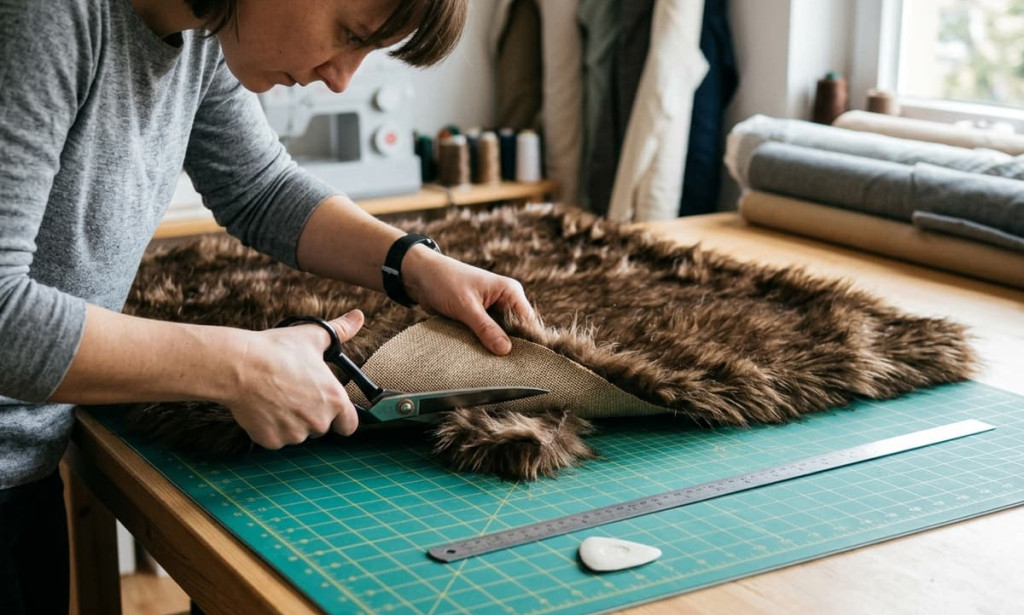
The best way to cut Faux Fur Fabric without making a mess is to cut only the backing fabric—not the fur fibers. Turn the fabric upside down, mark your cutting lines on the backing, and use a craft knife, utility knife, or small sharp scissors to slice through the backing gently. This method keeps the long fibers intact, reduces shedding, and gives your project clean, natural-looking edges.
Whether you're making blankets, costumes, pillows, rugs, pet beds, or home décor, learning the correct cutting technique will save time, reduce cleanup, and produce professional-looking results.
Why Faux Fur Fabric Can Be Messy to Cut
Faux fur is different from woven cotton or fleece because it has a knitted or woven backing with long synthetic fibers attached to the surface.
When you cut through both the backing and the fur using regular fabric scissors, thousands of loose fibers are trimmed away. These tiny fibers spread across your workspace, clothing, and sewing machine, creating unnecessary cleanup.
The good news is that most of this shedding can be avoided with the proper cutting method.
What Is Faux Fur Fabric?
Faux Fur Fabric is a synthetic textile designed to imitate the appearance and softness of real animal fur without using animal products. It is commonly made from polyester, acrylic, or modacrylic fibers attached to a fabric backing.
Today, faux fur is widely used for:
- Blankets
- Jackets and coats
- Costume making
- Pillows
- Plush toys
- Home décor
- Rugs
- Pet accessories
- Fashion accessories
Modern faux fur offers impressive softness while being easier to care for than natural fur.
Why You Should Never Cut Through the Fur Pile
One of the biggest beginner mistakes is cutting faux fur the same way you cut cotton fabric.
Regular scissors slice through the backing and the fur fibers at the same time.
This causes several problems:
- Excessive shedding
- Uneven edges
- Visible cut fibers
- Artificial-looking seams
- Difficult cleanup
Instead, professional sewists separate only the backing while leaving the fur strands untouched.
Once the fabric pieces are pulled apart, the long fibers naturally cover the cut edge, creating an invisible seam.
Tools You Need to Cut Faux Fur Fabric
Having the right tools makes the process much easier.
Craft Knife or Utility Knife
A sharp craft knife is one of the best tools because it cuts only the backing without trimming the fur pile.
Replace dull blades regularly for cleaner cuts.
Small Embroidery Scissors
If you do not have a craft knife, small pointed scissors allow you to snip only the backing carefully.
Avoid large dressmaking scissors for detailed cutting.
Fabric Marker or Chalk
Always mark your pattern pieces on the back of the fabric.
Visible marks on the fur side are difficult to remove and may damage the appearance.
Cutting Mat
A self-healing cutting mat protects your table while allowing the knife to glide smoothly.
Step-by-Step Guide to Cutting Faux Fur Fabric
Following the proper process dramatically reduces mess and improves the quality of your finished project.
Step 1: Place the Fur Face Down
Lay the fabric with the backing facing upward.
This gives you full visibility of your cutting lines.
Step 2: Mark the Pattern
Trace your pattern onto the backing using tailor's chalk or a washable fabric marker.
Avoid pressing too hard, especially on delicate backing materials.
Step 3: Cut Only the Backing
Using a craft knife, carefully score along the marked line.
Apply enough pressure to cut through the backing without slicing deeply into the fur fibers.
Step 4: Separate the Fabric
After cutting the backing, gently pull the pieces apart.
Most of the long fur fibers will separate naturally instead of being cut.
Step 5: Shake Away Loose Fibers
Take the fabric outdoors or over a trash bag and gently shake away any loose fibers remaining from the cutting process.
A quick vacuum afterward keeps your workspace clean.
Should You Use Scissors or a Craft Knife?
Both tools work, but they produce different results.
A craft knife generally creates cleaner edges because it cuts only the backing.
Scissors are easier for beginners but increase the chance of trimming the fur fibers if used carelessly.
For curved pieces, many experienced sewists use small embroidery scissors because they provide better control around detailed shapes.
Understanding the Nap Direction
Like velvet, faux fur has a nap, which refers to the direction the fibers naturally lay.
Running your hand across the fabric will reveal:
- One direction feels smooth.
- The opposite direction feels rough.
Always cut every pattern piece facing the same nap direction.
Keeping the nap consistent ensures your finished project has a uniform appearance.
This is especially important for:
- Jackets
- Pillows
- Plush animals
- Blankets
- Upholstery
Tips to Reduce Shedding While Cutting
Even with proper techniques, some loose fibers are unavoidable.
These simple habits help minimize shedding significantly.
First, cut one layer at a time instead of folding the fabric.
Second, avoid dragging the fabric across rough surfaces.
Third, vacuum your workspace immediately after cutting.
Finally, use painter's tape or a lint roller to collect loose fibers before sewing.
These small steps keep both your project and sewing machine much cleaner.
How to Sew Faux Fur After Cutting
Once your pieces are cut, preparing them correctly leads to neater seams.
Before stitching, brush the fur fibers away from the seam allowance.
After sewing, gently pull trapped fibers out of the seam using a pin or blunt needle.
This technique hides the stitching and creates a continuous furry surface.
Many professionals also reduce stitch length slightly to improve seam strength.
Using a walking foot helps feed thick layers evenly through the sewing machine.
Common Mistakes Beginners Make
Learning from common mistakes saves both time and fabric.
One frequent error is cutting from the front of the fabric instead of the backing.
Another is using large scissors that chop through the fur pile.
Some beginners also forget to check the nap direction before cutting their pattern pieces.
Others stack multiple fabric layers together, making it difficult to achieve clean edges.
Taking a little extra time during preparation often produces much better results.
Is Faux Fur Fabric Easy to Work With?
Many beginners assume faux fur is difficult, but most projects become manageable once you understand the material.
Faux fur does require more preparation than cotton or fleece because of its long fibers.
However, it also offers several advantages:
- Soft texture
- Excellent insulation
- Luxurious appearance
- Durable synthetic fibers
- Wide variety of colors and pile lengths
With proper cutting and sewing techniques, even first-time sewists can achieve professional-looking results.
Caring for Faux Fur After Cutting
Proper handling keeps faux fur looking full and soft.
Store cut pieces flat whenever possible to prevent crushing the pile.
Brush the fibers gently using a pet slicker brush or a wide-tooth comb before assembling your project.
When washing finished items, always follow the manufacturer's care instructions.
Many polyester faux fur fabrics can be washed on a gentle cycle using cold water and mild detergent.
High heat should be avoided because synthetic fibers can become damaged or lose their softness.
Faux Fur Fabric vs Real Fur
Understanding the differences helps you choose the right material for your project.
| Feature | Faux Fur Fabric | Real Fur |
|---|---|---|
| Material | Synthetic fibers | Animal fur |
| Animal-friendly | Yes | No |
| Cost | More affordable | More expensive |
| Care | Easier | Requires specialized care |
| Color options | Wide variety | Limited |
| Sewing | Beginner-friendly | More difficult |
Today, high-quality faux fur closely resembles natural fur while offering easier maintenance and greater design flexibility.
Frequently Asked Questions
What is the best way to cut faux fur fabric?
The best method is to cut only the fabric backing with a craft knife or small scissors while leaving the fur fibers intact.
Does faux fur shed when cut?
Yes, some shedding is normal, but cutting only the backing greatly reduces loose fibers and cleanup.
Can I use regular scissors to cut faux fur?
You can, but they often cut through the fur pile and create messy edges. A craft knife usually produces cleaner results.
Should I cut faux fur from the front or back?
Always cut from the backing side. This protects the fur fibers and creates more natural-looking seams.
Why do professionals cut only the backing?
Cutting only the backing preserves the long fur strands, hides seam lines, and minimizes shedding.
Create Beautiful Faux Fur Projects with Premium Faux Fur Fabric from Ice Fabrics
Whether you're sewing cozy blankets, stylish pillows, costumes, plush toys, pet accessories, or elegant home décor, choosing high-quality Faux Fur Fabric makes every project easier and more professional. Learning the proper cutting technique helps reduce waste, minimize shedding, and achieve clean, natural-looking edges that elevate your finished work.
At Ice Fabrics, you'll find premium faux fur fabric in a wide variety of colors, pile lengths, textures, and patterns to suit every sewing and crafting project. With quality materials and dependable performance, you can confidently create soft, durable, and luxurious designs that stand out.

You must be logged in to post a comment.