
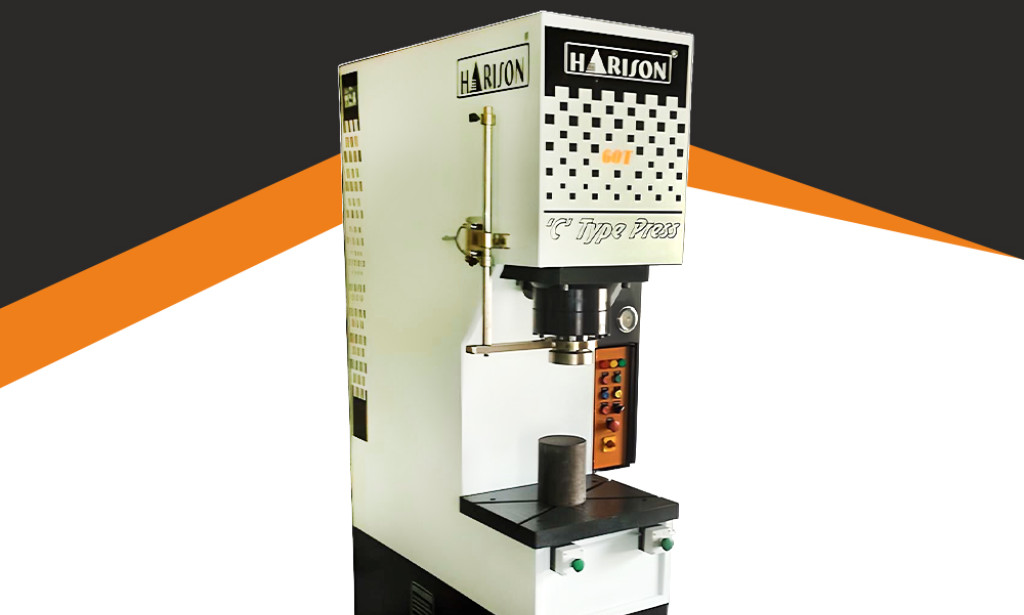
Here's something that confuses a lot of buyers. You compare two hydraulic presses — both rated at 100 tons. Same tonnage, similar price, and on paper they look identical. But once installed and running, one performs exactly as expected while the other struggles with the same job. Output is inconsistent, cycle times are longer, and the parts coming out don't meet the quality you were getting before.
The tonnage rating didn't lie. But it also didn't tell you the full story.
Understanding why this happens saves you from making a costly equipment decision based on a single number.
Tonnage Is Just One Part of the Picture
Tonnage tells you the maximum force a hydraulic press can generate. That's it. It says nothing about how that force is delivered, how consistently it's maintained, how the press handles different materials, or whether the machine is built to sustain that output over time.
Two presses can share the same tonnage rating and still be completely different machines in practice. The difference shows up in the details — hydraulic system quality, frame rigidity, control precision, cylinder design, and how the whole system holds up under actual production conditions.
What Actually Determines How a Hydraulic Press Performs
1. Hydraulic System Design and Quality
The hydraulic system is the heart of the press. The pump, valves, seals, and hydraulic fluid circuit determine how force is generated, maintained, and controlled through each stroke.
A press with a well-engineered hydraulic circuit maintains consistent pressure through the full stroke. A poorly designed one drops pressure mid-stroke — meaning the rated tonnage is only available at one point rather than through the working range. For forming, moulding, or deep drawing operations, this matters enormously.
Key factors in the hydraulic system:
-
Pump type and quality — gear pump vs piston pump
-
Valve quality and response time
-
Seal quality and longevity under thermal cycling
-
Oil reservoir size and cooling arrangement
-
Pressure holding capability during dwell
2. Frame and Structural Rigidity
The frame carries all the force the hydraulic press generates. A frame that flexes under load — even slightly — affects parallelism between the platen and the bed. That directly impacts part quality, particularly in precision forming and stamping operations.
Two presses rated at the same tonnage can have very different frame designs. A heavier, fully welded and stress-relieved frame holds its geometry under repeated loading. A lighter frame with thinner sections deflects, and over time those deflections compound into dimensional inconsistencies in the parts being produced.
This is why frame weight and design are worth asking about — not just the tonnage spec.
3. Cylinder Design and Platen Size
The cylinder converts hydraulic pressure into mechanical force. How the cylinder is sized, where it's positioned relative to the platen, and whether the platen is guided correctly all affect how uniformly force is distributed across the working area.
A single central cylinder on a large platen creates more force at the centre than at the edges. For operations that require uniform pressure across the full platen — laminating, compression moulding, rubber vulcanisation — this uneven distribution causes quality problems that tonnage alone doesn't predict.
Four-point guided platens and well-matched cylinder-to-platen sizing address this. Not all presses in the same tonnage range are built with the same attention to this detail.
4. Speed Control and Stroke Precision
Different operations need different approach speeds, pressing speeds, and return speeds. A hydraulic press with proper speed control can be set up for a slow, controlled pressing stroke on brittle materials and a fast return stroke to keep cycle times down.
A press without adequate speed control forces you to run everything at the same speed — which either damages delicate materials or slows down operations that could run faster.
Variable speed control across the full stroke cycle also reduces shock loading on the hydraulic system and the tooling, extending the service life of both.
5. Control System — PLC vs Manual vs Basic Relay
This is where the gap between two same-tonnage presses often becomes most visible in production.
-
Manual control — Operator-dependent, no repeatability built in
-
Basic relay-based control — Fixed sequences, limited flexibility
-
PLC-based control — Programmable sequences, pressure holding, dwell time control, stroke position control, data logging
A PLC-controlled press can hold pressure at a set value for a defined dwell time, repeat the exact same stroke sequence thousands of times, and alert the operator when parameters drift outside tolerance. A manually controlled press of the same tonnage can do none of this consistently.
For applications where part quality and repeatability are critical — automotive components, electrical insulation, composite materials — the control system is what separates acceptable output from consistent output.
6. Tooling Compatibility and Bed Dimensions
The working area of the press — bed size, daylight opening, stroke length, and tooling height range — determines what dies and moulds can actually be used on the machine.
Two 100-ton presses can have significantly different bed dimensions and daylight openings. A hydraulic press with a longer stroke and larger daylight can handle more tooling configurations. One with a shorter stroke limits what you can produce even if the force rating is identical.
Real-World Consequences of Getting This Wrong
When buyers focus only on tonnage and miss the factors above, the results show up in production:
-
Inconsistent part dimensions — Frame flex or uneven platen pressure
-
Surface defects or incomplete forming — Pressure drop mid-stroke
-
Higher scrap rates — Lack of dwell time control or speed control
-
Tooling damage — Shock loading from poor hydraulic control
-
Longer cycle times than expected — Speed limitations or manual control dependency
-
Premature maintenance needs — Poor seal quality or undersized hydraulic components
None of these problems show up when you're comparing spec sheets. They show up after installation when production starts.
What to Ask Before Buying a Hydraulic Press
Don't let the conversation stop at tonnage. Ask specifically about:
-
What is the working pressure range and how is it controlled?
-
What pump type is used and what is the system flow rate?
-
What is the frame construction — welded, stress-relieved, plate thickness?
-
How is the platen guided and what are the parallelism tolerances?
-
What control system is fitted — relay, PLC, touchscreen HMI?
-
Can the pressing speed, return speed, and dwell time be set independently?
-
What is the stroke length and daylight opening?
-
What is the bed size and what tooling height range does it accommodate?
A manufacturer who can answer all of these clearly is one who has thought about the machine beyond the tonnage number.
The Right Press for Your Application
Matching a hydraulic press to an application isn't just about force. It's about understanding what the operation actually demands — material behaviour, required repeatability, cycle time targets, tooling requirements, and the production environment — and then specifying a press that addresses all of it.
Hari Engineering Works manufactures hydraulic presses across a range of tonnages and configurations — with engineering support to help buyers match the right press specification to their actual production requirement, not just the tonnage on the datasheet.
Frequently Asked Questions
What does tonnage mean on a hydraulic press?
Tonnage is the maximum compressive force the press can generate, measured in metric tons or short tons. It tells you the upper limit of force available — but not how that force is delivered, controlled, or sustained through the stroke.
Why does my hydraulic press not reach its rated tonnage consistently?
Inconsistent tonnage is usually caused by pressure drop in the hydraulic system — worn seals, a pump that's not maintaining pressure, or a relief valve set incorrectly. It can also result from the rated tonnage only being available at the very end of the stroke rather than through the full working range.
What is dwell time in a hydraulic press and why does it matter?
Dwell time is the period during which the press holds pressure at the bottom of the stroke without moving. For operations like compression moulding, laminating, and rubber vulcanisation, dwell time is essential — it allows the material to fully form or cure under pressure. Without controllable dwell time, these operations produce inconsistent results.
What is the difference between a C-frame and H-frame hydraulic press?
A C-frame press has an open front that allows easy access to the tooling from three sides — useful for small parts and manual loading. An H-frame press has a closed, four-column structure that provides greater rigidity for higher tonnage and precision applications. For operations requiring consistent parallelism and high repeatability, H-frame is generally the better choice.
How important is PLC control on a hydraulic press?
Very important for production applications. PLC control allows programmable stroke sequences, adjustable pressure and speed at each stage, dwell time control, and repeatable cycles without operator variation. For R&D or low-volume work, simpler control may be acceptable. For production environments, PLC control directly affects output quality and consistency.
What maintenance does a hydraulic press require?
Regular maintenance covers hydraulic oil condition and level, seal inspection and replacement, filter changes, pump performance checks, valve function testing, and structural inspection of the frame and platen guides. Hydraulic oil quality is particularly important — degraded oil is behind a large percentage of press failures.
Can a hydraulic press be customised for a specific application?
Yes. Press bed size, stroke length, daylight opening, cylinder configuration, control system, and speed range can all be specified to match a particular operation. For non-standard applications — deep drawing, powder compaction, composite pressing — custom engineering from the manufacturer delivers significantly better results than adapting a standard press.

You must be logged in to post a comment.