
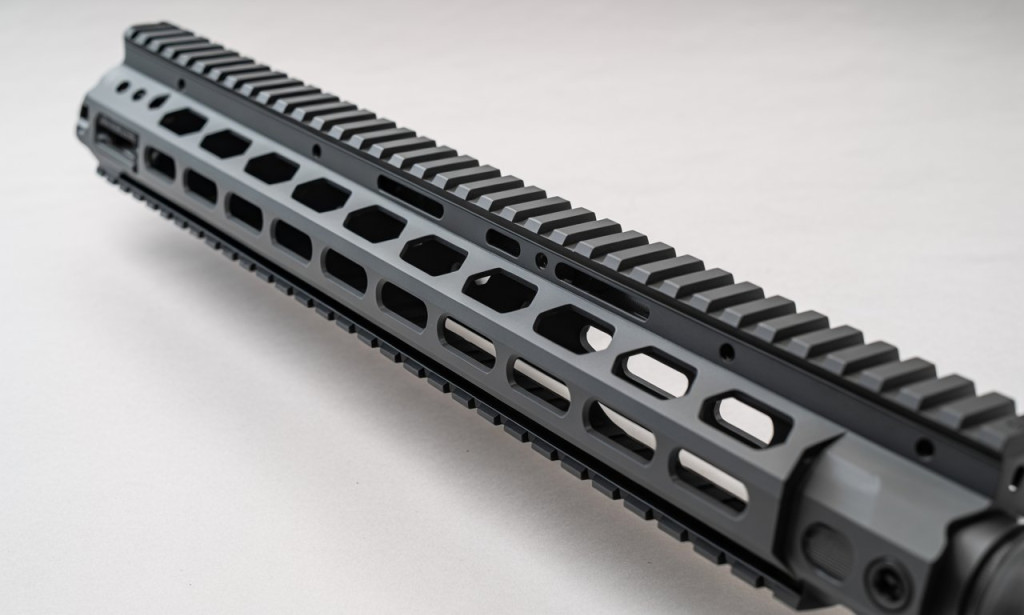
Choosing the perfect handguard for your AR-15 or AR-10 rifle comes down to one simple rule: prioritize a free-float M-LOK design that matches your barrel length and gas system. This setup eliminates barrel contact for consistent harmonics (boosting accuracy by up to 0.5–0.75 MOA in real-world tests), while delivering a slim, ergonomic profile that reduces fatigue and improves grip control during extended shooting sessions.
Whether you're building a precision AR15 for long-range targets or a reliable AR10 for hunting, the right handguard transforms recoil management, accessory mounting, and overall shooting comfort. In this guide, we'll break it down step by step with expert-backed insights, comparisons, and practical advice tailored for modern shooters.
Why the Right Handguard Matters for Accuracy and Comfort
Your handguard isn't just cosmetic—it's a critical performance component. It protects your support hand from heat, provides a stable platform for accessories like lights, grips, and bipods, and directly influences barrel harmonics.
- Accuracy impact: Pressure on a non-free-float handguard (from your grip, sling, or bipod) can shift point-of-impact by inches at distance. Free-float designs isolate the barrel completely.
- Comfort factor: A well-chosen handguard reduces weight, improves ergonomics, and dissipates heat faster, letting you shoot longer without hand fatigue or burns.
- Real-world proof: Competitive shooters and precision builders report tighter groups and steadier zeros after upgrading to free-float AR15 handguards. One military-style test showed sling pressure alone causing 3-foot POI shifts at 500 yards on non-free-float setups.
Drop-In vs. Free-Float Handguards: Accuracy Showdown
| Feature | Drop-In Handguards | Free-Float Handguards (Recommended) |
|---|---|---|
| Installation | Easy, no tools needed | Requires barrel nut wrench |
| Accuracy | Contacts barrel; minor POI shifts | No barrel contact; consistent harmonics |
| Weight | Lighter | Slightly heavier but more rigid |
| Accessory Space | Limited | Full-length rails or slots |
| Best For | Budget builds, beginners | Precision, competition, duty use |
| Cost | $30–$80 | $80–$250+ |
Expert insight: Free-float AR15 handguards (and AR10 handguards) win for accuracy because they let the barrel vibrate freely. Drop-ins are fine for plinking but fall short when precision counts.
Key Factors to Consider When Choosing AR15 or AR10 Handguards
1. Handguard Length: Match It to Your Barrel and Gas System
Length affects balance, grip position, and accessory real estate. Rule of thumb: Extend at least ¾" past the gas block for full coverage and heat protection.
Quick Length Guide (for common AR-15 setups; AR-10 follows similar logic but verify barrel nut):
- Pistol/SBR (7–11" barrel): 7–10" handguard
- Carbine Gas (14.5–16" barrel): 10–15" (15" is gold standard for balance)
- Mid-Length Gas (16" barrel): 12–15"
- Rifle Gas (18–20"+ barrel): 15–18"
Pro tip: For a 16" AR15, a 15" free-float handguard gives optimal hand placement without interfering with the muzzle device.
2. Materials: Aluminum, Carbon Fiber, or Polymer?
- 6061-T6 Aluminum: Most popular for AR15 handguards and AR10 handguards. Strong, affordable, excellent heat dissipation (spreads heat away from the barrel). Slightly heavier but rigid.
- Carbon Fiber: Ultra-light (often 30–50% lighter than aluminum) with superior strength-to-weight ratio and natural vibration damping. Insulates heat better for cooler grips during rapid fire. Ideal for competition or lightweight builds, though pricier.
- Polymer: Budget-friendly and light, but less rigid under heavy accessory loads.
Comfort winner: Carbon fiber or slim aluminum profiles with rounded edges and textured grips.
3. Mounting System: M-LOK, KeyMod, or Picatinny?
| System | Weight/Ergonomics | Strength & Security | Best For | Popularity (2026) |
|---|---|---|---|---|
| M-LOK | Slim, lightweight | Excellent | Most shooters | #1 choice |
| KeyMod | Very light | Good (but outdated) | Lightweight builds | Declining |
| Picatinny (Quad Rail) | Heavier, bulkier | Most secure | Heavy accessories, duty | Niche use |
M-LOK dominates for modern AR15 handguards thanks to its balance of strength, low weight, and accessory compatibility.
4. AR-15 vs. AR-10 Handguard Differences
AR10 handguards require a larger barrel nut (typically 1-7/16" vs. AR-15's 1-1/4"). They also need extra rigidity to handle .308 recoil. Stick with brands offering dedicated AR10 models (e.g., Midwest Industries or Aero Precision M5 series). Everything else—free-float preference, M-LOK, length matching—applies equally.
Step-by-Step: How to Choose Your Perfect Handguard
- Identify your rifle platform (AR15 or AR10) and current gas system/barrel length.
- Decide your priority: Accuracy first? Go free-float. Budget or simplicity? Drop-in is okay.
- Choose length to cover the gas block + allow comfortable grip.
- Select material based on weight vs. durability needs.
- Pick mounting system—M-LOK for 90% of users.
- Test fit virtually: Check barrel nut compatibility and overall rifle balance.
- Install or have a gunsmith do it for free-float models.
Real-Life Examples from the Range
- Precision AR15 build: A long-range shooter swapped a drop-in for a 15" carbon-fiber M-LOK free-float handguard. Groups tightened from 1.5 MOA to sub-MOA at 300 yards—no more POI shift under bipod pressure.
- Tactical AR10 hunter: Used a rigid aluminum AR10 handguard with M-LOK. The added length and ergonomics reduced felt recoil and let him hold steady for 400-yard shots in cold weather without hand fatigue.
Experts at Pew Pew Tactical and Midwest Industries consistently rank free-float M-LOK options highest for both accuracy and comfort in 2025–2026 testing.
Conclusion: Upgrade Your Rifle with Confidence
The perfect handguard delivers accuracy through free-float isolation and comfort through smart length, lightweight materials, and ergonomic design. Prioritize free-float M-LOK AR15 handguards or compatible AR10 handguards matched to your build—you'll notice tighter groups and happier hands immediately.
Key Takeaways:
- Free-float beats drop-in for accuracy every time.
- Match length to gas system for balance.
- M-LOK + aluminum or carbon fiber = modern gold standard.
- Always verify AR10 barrel nut compatibility.
Ready to transform your rifle? Browse top-rated free-float handguards from trusted brands like Midwest Industries, BCM, or Aero Precision today. Your groups (and your hands) will thank you. Share your build in the comments—what handguard did you choose?
FAQs: People Also Ask
What is the best handguard length for a 16" AR-15 barrel?
A 15" free-float handguard is ideal. It covers the gas block, provides excellent grip room, and balances the rifle perfectly for both accuracy and comfort.
Do free-float AR15 handguards really improve accuracy?
Yes—by eliminating barrel contact, they prevent POI shifts from grip or bipod pressure. Improvements of 0.5–0.75 MOA and reduced shifts of several inches at long range are common.
What’s the difference between AR15 and AR10 handguards?
AR10 handguards need a larger barrel nut for .308 platforms and extra rigidity for heavier recoil. Otherwise, free-float M-LOK principles are the same.
M-LOK or Picatinny—which is better for comfort?
M-LOK. It’s slimmer, lighter, and more ergonomic while still offering secure accessory mounting.
Are carbon fiber handguards worth the extra cost?
For weight-sensitive or high-round-count builds, yes. They’re significantly lighter with better heat insulation and vibration damping than aluminum.
How do I know if a handguard fits my AR-15 gas system?
Measure from receiver face to gas block shoulder and choose a handguard at least ¾" longer. Use manufacturer fitment charts for your exact barrel length.
Can I install a free-float handguard myself?
Yes, with a barrel nut wrench and armorer’s tools. If unsure, visit a qualified gunsmith to ensure proper torque and alignment.

You must be logged in to post a comment.