
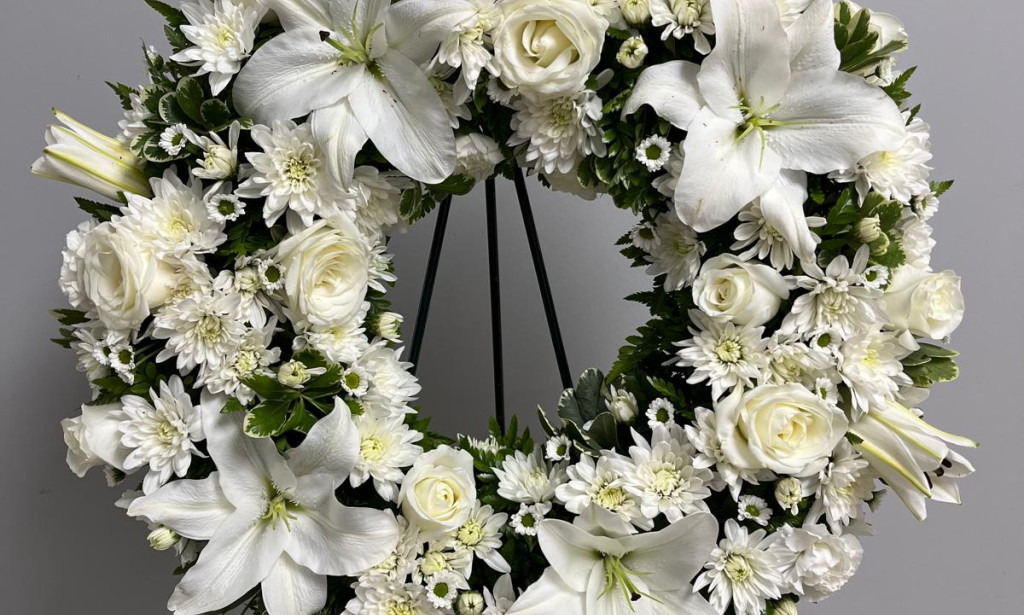
When someone close to you experiences a loss, the impulse to do something — anything — to help is strong. Sympathy flowers offer one of the most enduring ways to express care, but choosing them for someone close requires more thought than simply ordering a standard bouquet. The closer the relationship, the more your choice carries meaning. This guide helps you select sympathy flowers for close family members in ways that feel genuinely personal, comforting, and right for the moment.
Why Closeness Changes Everything
For acquaintances or distant relations, a tasteful sympathy arrangement from a thoughtful florist is more than enough. The gesture matters more than its specifics. For close family — a sibling who has lost a parent, a parent who has lost a partner, a child grieving a grandparent — the gesture deserves greater intention.
Close family will receive many arrangements during a loss. The ones they remember weeks and months later are those that feel personal. Yours doesn't have to be the largest. It needs to be the one that says, with quiet specificity, that you saw them and knew them.
Understanding What Your Close Family Member Needs
Before choosing flowers, think about the specific person receiving them. Different family members in grief have different needs.
A parent who has just lost a spouse may be navigating profound disorientation. Their home suddenly feels too quiet, too empty. Flowers placed where they spend the most time — the kitchen counter, the bedside table, the entry — bring small moments of beauty into a space that feels altered. Lush, comforting arrangements often help here.
A sibling losing a parent may be balancing their own grief with caring for surviving family members. They may not have time to think about themselves. Arrangements that don't require care — pre-arranged in a vase, easy to maintain — are kindest. Living plants that continue to thrive after the initial flowers fade can offer enduring presence.
A child or grandchild grieving may need flowers that speak to the relationship specifically. Memories of the grandparent who taught them to garden, the parent who always wore a particular colour, the aunt who loved a specific bloom — these personalized touches mean enormously.
Choosing Flowers That Reflect the Relationship
Sympathy flowers for close family work best when they reflect both the person grieving and the person being grieved. Several approaches work beautifully.
Flowers that the deceased loved — woven into the arrangement — make the bouquet itself a small remembrance. If your grandmother grew dahlias every summer, a dahlia-centred bouquet sent to your mother says "I remember her too" without needing words.
Flowers that comfort the recipient specifically. If your sister has always loved peonies, sending her peonies in her grief reminds her she's still seen as herself, even within the role of mourner.
Colours that connect. The pink your aunt always wore. The deep blue of your father's favourite garden. The warm yellow of the kitchen where the family gathered. Choosing palettes drawn from real memories transforms a generic gesture into a meaningful one.
A florist who specializes in personalized sympathy bouquets will gladly weave these details into the design once they understand the relationship.
Sympathy Arrangements That Last
Close family often benefit from arrangements that endure beyond a few days. The grief they're navigating doesn't end when fresh flowers fade, and an arrangement that lasts longer extends the comfort.
Living orchids, particularly phalaenopsis varieties, can bloom for months. Sent to a parent or sibling, they become quiet companions through the long stretches of grief that follow the funeral.
Mixed arrangements with longer-lasting flowers — chrysanthemums, lisianthus, alstroemeria — outlast more delicate blooms by a week or more. Asking your florist for arrangements designed to last longer can extend the gesture.
Garden plants or potted herbs offer another option, particularly for family members who love gardening. They continue to grow, to be cared for, to bring life into the home long after the funeral has ended.
Size and Scale for Close Family
For close family, slightly larger or more prominent arrangements are usually appropriate. They communicate the depth of the relationship and the seriousness of your support.
That said, scale should still feel proportionate to the space and the person. A massive arrangement that overwhelms a small apartment isn't kinder than a beautifully made medium-sized piece. A bouquet that fits gracefully where the recipient lives — visible, present, but not intrusive — works best.
For close family, consider sending multiple smaller arrangements over time rather than a single large one. A bouquet at the time of the loss, another two weeks later, another at the one-month mark or on a meaningful anniversary — this sustained presence often means more than any single grand gesture.
Adding a Personal Touch Beyond Flowers
Sympathy gifts to close family can include thoughtful additions alongside the flowers. A handwritten letter that goes beyond a card message. A favourite tea, a candle in a calming scent, a small framed photo of the deceased. None of these need to be elaborate — they only need to be considered.
When ordering through a florist offering thoughtful sympathy flower arrangements, ask whether they can include personal additions or coordinate delivery with other small gifts.
Choosing the Card Message Carefully
The card to close family carries more weight than a standard sympathy note. This is your space to say something personal — a memory, a quality you admired in the deceased, an acknowledgment of the depth of the loss.
Avoid generic phrases when writing to close family. They've received many of those by now. Instead, share something only you can say. "I'll never forget the way Dad laughed at his own jokes." "Mom taught me everything I know about grace. I see her in you." "I'm so grateful we had her as long as we did."
If words are difficult, even a few honest sentences mean more than polished platitudes.
Following Up After the Service
Sympathy work doesn't end at the funeral. For close family, your presence afterward matters as much as your initial gesture.
Send another arrangement at the one-month mark, when most other support has faded. Mark the deceased's birthday or the wedding anniversary with a bouquet. Acknowledge the first holidays without them. These continuing gestures tell your family member they aren't grieving alone, even months later.
For many bereaved people, the months after a death are quietly harder than the days immediately following. Sympathy flowers sent then often mean more than those sent in the first wave.
A Tribute Built on Real Care
Choosing sympathy flowers for close family is, in the end, an act of attention. You're not just sending blooms — you're sending the message that you've thought specifically about them, about the person they've lost, about what might bring them comfort. When that thought shows in your choice, the flowers themselves carry it.
A florist who listens carefully and crafts each arrangement with the particular relationship in mind helps you turn ordinary blooms into something genuinely meaningful. That's what sympathy work, at its best, has always been about.

You must be logged in to post a comment.