
I've watched a lot of website owners spend months publishing content, tweaking titles, and building backlinks only to stare at traffic graphs that refuse to move. I've been there too. And what I've learned after years of working with sites across different industries is this: most people aren't failing at SEO because they're lazy. They're failing because they're working off advice that was accurate three years ago but doesn't hold up anymore.
Google has changed. The people searching have changed. This guide is going to walk you through what's actually working right now the real SEO strategies that build sustainable rankings, not short-term tricks that collapse the moment an algorithm update drops.
Start With Search Intent, Not Just Keywords
Here's where most people get tripped up. They find a keyword with decent search volume, write a post targeting it, and wonder why it never ranks. The answer usually comes down to intent what the person searching actually wants versus what the article delivers.
Search intent falls into a few clear buckets: someone wants to learn something (informational), someone is ready to buy (transactional), someone is comparing options before deciding (commercial), or someone needs a specific local business (local). If your content doesn't match the right bucket, Google won't rank it well, no matter how optimised the page is technically.
Before you write anything, search the keyword yourself. Look at what's already ranking. Are those pages long guides, short answers, product pages, or comparison lists? That tells you exactly what Google thinks the searcher wants. Match that format and you've already solved half the problem.
Build Topical Authority Instead of Chasing Individual Keywords
The single biggest shift I've seen in how Google evaluates content over the past two years is the move toward topical authority. It's not enough to have one strong article on a subject. Google wants to see that your site genuinely covers a topic in depth multiple angles, related questions, connected content.
Think of it this way: if your site helps small businesses with their marketing, you shouldn't just have one post on "social media tips." You need content on organic growth, paid ads, content calendars, platform-specific strategies, measuring ROI, and so on. Each piece reinforces the others and signals to Google that you're a real resource on the topic, not a site that just happens to have one related post.
This is also where internal linking becomes a genuine ranking tool rather than an afterthought. When your content naturally links between related guides say, connecting a post on keyword research to a deeper guide on content planning you help both readers and search engines understand how your site is structured.
Local SEO Strategies That Drive Real Foot Traffic
If your business serves a specific area, local SEO strategies deserve their own attention. This isn't just about adding a city name to your title tag. It's about building genuine local relevance that Google can verify.
Your Google Business Profile is your most important local asset. Keep it fully filled out photos, business hours, service categories, a real description. Respond to reviews, including the negative ones, professionally. Ask satisfied customers to leave reviews. This signals to Google that your business is active, legitimate, and trusted in your area.
Consistent NAP (Name, Address, Phone) information across your website, directories, and social profiles matters more than most people realise. Even small inconsistencies "St." versus "Street," a slightly different phone number can dilute your local authority.
Create genuinely local content. Not forced keyword-stuffed pages like "Best Plumber in [City]" with two paragraphs of hollow text. I mean real content that reflects local knowledge whether that's a guide addressing common issues in older homes in your neighbourhood, a resource about local regulations in your industry, or case studies featuring local clients. That's the kind of content that earns both rankings and trust.
Technical SEO: The Foundation Nobody Wants to Deal With
I'm going to be honest with you technical SEO isn't exciting. But it's often the reason why well-written content never gets the rankings it deserves. If Google can't crawl or render your pages properly, none of your content work matters.
A few things that consistently make a difference:
Page speed is a direct ranking signal, especially on mobile. Run your site through Google's PageSpeed Insights and actually fix what it flags. Compress images before uploading. Avoid loading unnecessary scripts. A site that loads in two seconds will outperform an identical site that loads in five.
Core Web Vitals specifically Largest Contentful Paint, Cumulative Layout Shift, and Interaction to Next Paint are now baked into how Google scores user experience. If your layout shifts around while loading or your main content takes ages to appear, that's hurting you.
Crawlability and indexation are basics people still get wrong. Make sure your important pages aren't accidentally blocked in your robots.txt. Submit an updated sitemap through Google Search Console. Check regularly that Google is actually indexing your key pages.
Content Depth and E-E-A-T: What Google Actually Rewards
Google's Helpful Content System asks one core question about your content: was this written by someone with real experience and expertise, or was it produced just to rank? That's the essence of E-E-A-T Experience, Expertise, Authoritativeness, and Trustworthiness.
Writing with E-E-A-T in mind doesn't mean adding an author bio and calling it done. It means your content should reflect first-hand knowledge. Share real examples from your experience. Be specific rather than vague. Acknowledge nuance and complexity instead of giving oversimplified answers.
One practical approach: write about what you've actually done, seen, or tested. If you're recommending an SEO tool, explain exactly what you used it for and what result you got. If you're advising on a strategy, describe a real scenario where it worked or where it didn't. That specificity is what separates genuinely helpful content from content that only looks helpful on the surface.
Depth also matters, but depth doesn't mean length. A 600-word article that fully answers a question is more helpful than a 2,000-word piece that repeats itself. Cover what the topic actually requires no more, no less.
Link Building in 2026: Quality Over Everything
Backlinks still matter. But the definition of a quality backlink has become much more specific. A link from a respected publication in your niche is worth dramatically more than dozens of links from random directories or low-quality blogs.
The most effective link building strategies I've seen working right now:
Digital PR creating data-driven content, original research, or compelling perspectives that journalists and bloggers genuinely want to reference. This takes more effort, but the links you earn are the kind that actually move rankings.
Relationship-based outreach connecting with other credible voices in your industry and finding genuine ways to collaborate, whether that's guest articles, expert roundups, or co-created resources.
Earning links through content quality if your content is the most useful, thorough, or unique take on a topic, people will link to it without you asking. This is the strategy that compounds over time.
What doesn't work anymore: mass link exchanges, buying links from shady networks, or spamming blog comment sections. Google has become very good at identifying these patterns, and the penalties can be severe.
Putting It All Together
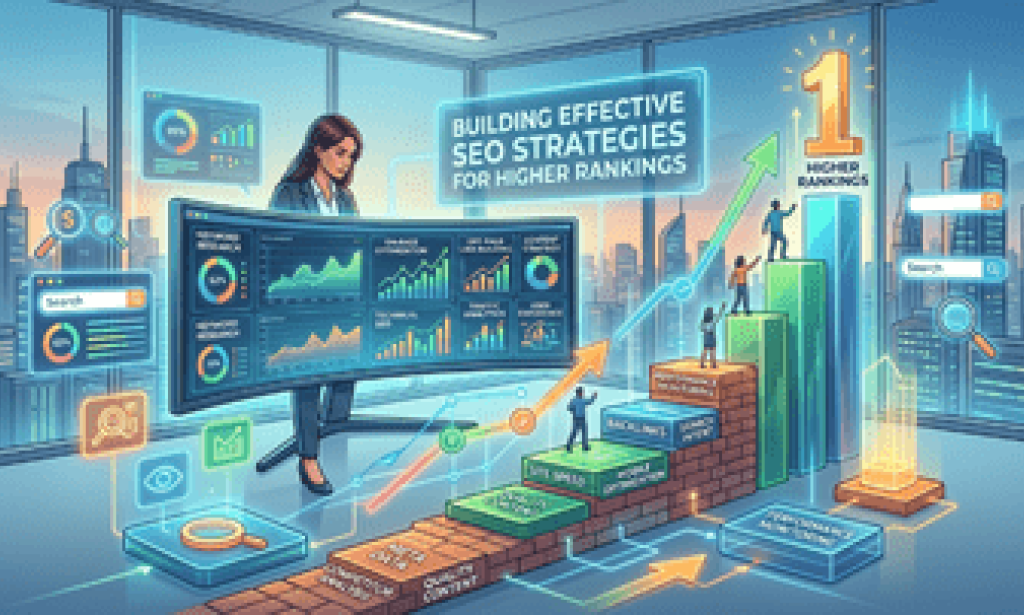
SEO strategies work best when they're connected. Intent-matched content, supported by topical authority, built on a technically sound site, enriched with real experience, and gradually earning quality backlinks that's the formula.
None of this produces overnight results. But done consistently, these approaches compound. Sites that commit to this kind of SEO tend to build rankings that hold up through algorithm updates, because they're aligned with what Google is actually trying to reward: content that serves real people well.
If you're not sure where to start, pick the one area where your site is weakest and focus there first. For most sites, that's either content depth and E-E-A-T, or technical foundations. Fix the foundation, then build up.

You must be logged in to post a comment.