
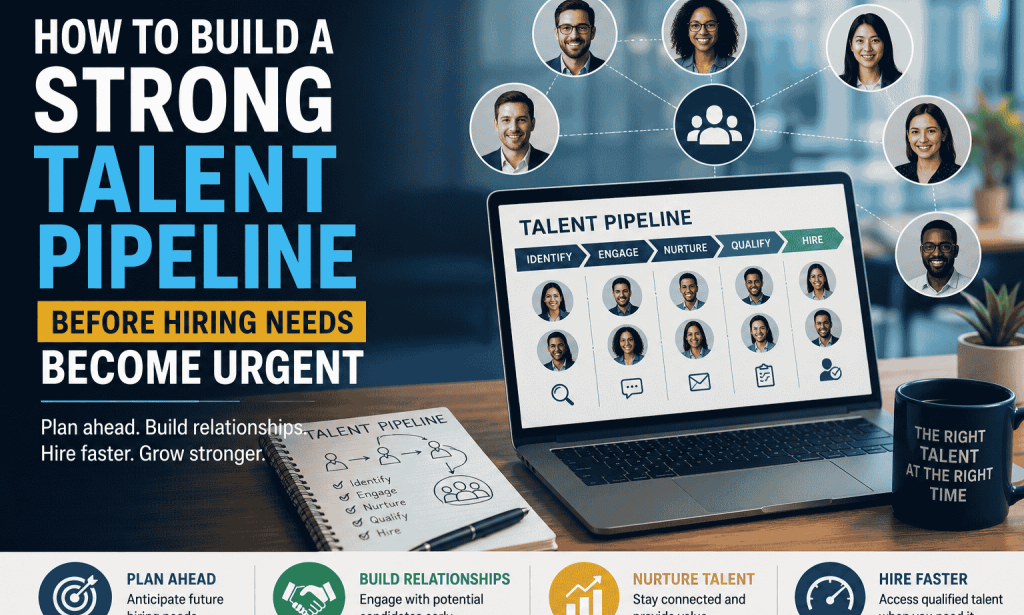
Hiring often becomes stressful when companies wait until a role is already urgent. By that point, teams may be overloaded, projects may be delayed, and hiring managers may feel pressure to make quick decisions. This can lead to rushed recruitment, poor candidate matches, and higher hiring costs. A strong talent pipeline helps companies avoid that problem by building relationships with qualified candidates before immediate hiring needs arise.
Modern businesses need a more proactive approach to recruitment, especially in competitive fields like marketing, creative, technology, digital operations, and analytics. Companies that invest early in candidate relationships are better prepared when new roles open, workloads increase, or growth opportunities appear. For businesses that need flexible support, marketing staffing solutions can also help maintain access to skilled professionals before hiring becomes urgent.
A talent pipeline is not just a list of names in a database. It is an active system for identifying, engaging, and nurturing potential candidates who may be a good fit for future opportunities. When built correctly, it gives companies a faster and more reliable path to hiring quality talent.
What Is a Talent Pipeline?
A talent pipeline is a pool of qualified potential candidates that a company can contact when hiring needs arise. These candidates may include past applicants, employee referrals, freelancers, contractors, passive candidates, previous interviewees, or professionals discovered through networking.
Unlike reactive hiring, where companies start searching only after a position opens, pipeline building happens continuously. It allows businesses to stay connected with people who match future skill needs.
For example, a company that often hires content strategists, campaign managers, designers, or data analysts should not wait until a vacancy appears to begin sourcing. By keeping in touch with strong candidates, the company can reduce hiring time and improve candidate quality when roles become available.
Why Waiting Until a Role Is Urgent Creates Problems
Urgent hiring often leads to compromise. When a team needs support immediately, hiring managers may focus more on speed than fit. This can result in candidates being selected because they are available, not because they are the strongest match for the role.
A rushed process can also affect the candidate experience. Communication may feel disorganized, interview steps may be unclear, and expectations may change quickly. Strong candidates often notice these issues and may choose other opportunities.
There is also a cost to leaving roles open for too long. Existing employees may take on extra work, productivity may drop, and important projects may slow down. In client-facing businesses, delayed hiring can even affect service quality and revenue.
Building a talent pipeline helps companies reduce these risks by making recruitment more prepared and less reactive.
Start by Identifying Future Talent Needs
A strong pipeline begins with understanding what roles the business is likely to need in the future. This requires communication between leadership, department heads, HR, and hiring managers. Companies should look at business goals, upcoming projects, seasonal demand, turnover patterns, and skill gaps.
For instance, if a company plans to expand its digital marketing efforts, it may need paid media specialists, SEO professionals, content managers, or marketing analysts. If a product team is growing, the business may need UX designers, developers, product managers, or QA specialists.
The goal is not to predict every role perfectly. The goal is to identify patterns so recruitment teams can begin building relationships in the right talent areas.
Key questions to ask when planning future hiring:
- Which departments are expected to grow in the next 6–12 months?
- What skills are currently missing from the team?
- Which roles are difficult to fill when they become urgent?
- Are there seasonal or project-based hiring needs?
- Which positions have historically had higher turnover?
These questions help companies prioritize pipeline development around roles that matter most.
Create Candidate Personas for Priority Roles
Once future hiring needs are clear, companies should define what an ideal candidate looks like for each priority role. This does not mean creating unrealistic requirements. It means clarifying the skills, experience, tools, and work style that would make someone successful.
For example, a candidate persona for a marketing automation specialist may include experience with platforms like HubSpot or Marketo, knowledge of lead nurturing workflows, strong analytical ability, and comfort collaborating with sales teams. A persona for a creative project manager may focus on communication, timeline management, agency experience, and the ability to coordinate designers, writers, and stakeholders.
Candidate personas help recruiters and hiring managers stay aligned. They also make outreach more personalized because the company understands what matters to that type of professional.
Use Multiple Sources to Build the Pipeline
A strong talent pipeline should not depend on one channel. Job boards are useful, but they are often most effective when a role is already open. Pipeline building requires a broader approach.
Companies can identify potential candidates through LinkedIn, industry communities, employee referrals, professional associations, portfolio platforms, webinars, networking events, alumni groups, and previous applicants. Freelancers and contractors can also become valuable pipeline candidates if they perform well on short-term projects.
The best approach is to treat every strong interaction as a future opportunity. A candidate who was not the right fit for one role may be perfect for another six months later.
Keep Candidates Engaged Over Time
A pipeline is only useful if candidates remain warm. If a company collects names but never communicates, the pipeline quickly becomes outdated. Candidate engagement should be consistent, helpful, and respectful.
This does not mean sending constant job alerts. It means building trust through relevant communication. Companies can share industry insights, company updates, career resources, event invitations, or occasional check-ins.
For example, a business may send a short message to a past candidate saying, “We are not hiring for this role right now, but we were impressed with your background and would like to stay connected for future opportunities.” This keeps the relationship open without creating false expectations.
Track Pipeline Quality, Not Just Quantity
Some companies focus too much on how many candidates are in the pipeline. A large database is not valuable if the candidates are outdated, unqualified, or uninterested. Quality matters more than volume.
Hiring teams should track candidate skills, availability, location preferences, salary expectations, communication history, and potential role fit. A simple applicant tracking system or CRM can help keep this information organized.
Here is a simple way to evaluate pipeline health:
| Pipeline Factor | Why It Matters |
|---|---|
| Candidate relevance | Ensures people match future hiring needs |
| Engagement level | Shows whether candidates are still interested |
| Skill alignment | Helps match candidates to roles faster |
| Availability | Supports faster outreach when roles open |
| Source quality | Reveals where the strongest candidates come from |
Reviewing this information regularly helps companies maintain a useful and accurate talent pipeline.
Align Pipeline Building with Employer Branding
Candidates are more likely to stay interested when they understand what makes the company a good place to work. This is where employer branding becomes important. A company’s reputation, culture, values, flexibility, growth opportunities, and leadership style all influence whether candidates want to stay connected.
Pipeline content should reflect the company’s strengths. For example, if the business offers career development, share employee growth stories. If the company supports flexible work, explain how remote or hybrid teams collaborate. If the culture is creative and fast-moving, show examples of meaningful projects.
Employer branding helps candidates imagine themselves working with the company before a role even opens.
Involve Hiring Managers Early
Talent pipeline building should not be handled only by recruiters or HR. Hiring managers play an important role because they understand the skills and team dynamics needed for success.
When hiring managers are involved early, they can help identify strong profiles, review potential candidates, and provide insight into future needs. This makes the pipeline more accurate and useful.
For example, a marketing director may know that the team will soon need stronger analytics support. By sharing that information early, recruitment teams can begin identifying analysts before the role becomes urgent.
Use Pipeline Data to Improve Hiring Strategy
A well-managed talent pipeline can reveal valuable hiring insights. Companies can learn which roles are hardest to fill, which sourcing channels produce the strongest candidates, and which skills are becoming more competitive.
This data can guide workforce planning, compensation decisions, content strategy, and recruitment marketing. If many strong candidates ask about remote flexibility, that may become an important selling point. If salary expectations are higher than expected, the company can adjust before launching a role publicly.
Pipeline data helps companies make smarter decisions instead of reacting under pressure.
Conclusion
Building a strong talent pipeline before hiring needs become urgent helps companies recruit with more confidence, speed, and quality. Instead of starting from zero every time a role opens, businesses can rely on existing relationships with qualified candidates who already match future needs.
A successful pipeline requires planning, consistent engagement, employer branding, accurate candidate data, and collaboration between recruiters and hiring managers. It is not about collecting resumes; it is about building a reliable talent network that supports long-term growth.
In today’s competitive hiring market, proactive recruitment is a major advantage. Companies that invest in talent pipelines early are better prepared to fill important roles, reduce hiring pressure, and build stronger teams when growth opportunities arise.

You must be logged in to post a comment.