
Most men's wardrobes have the same problem: full of clothes, short on outfits.
There are shirts that don't match trousers, trousers that belong to suits packed away somewhere, jackets with no natural pairing, and shoes that technically fit nothing currently hanging nearby. The wardrobe looks substantial until you actually need to get dressed then it feels empty.
The solution isn't buying more. It's building deliberately.
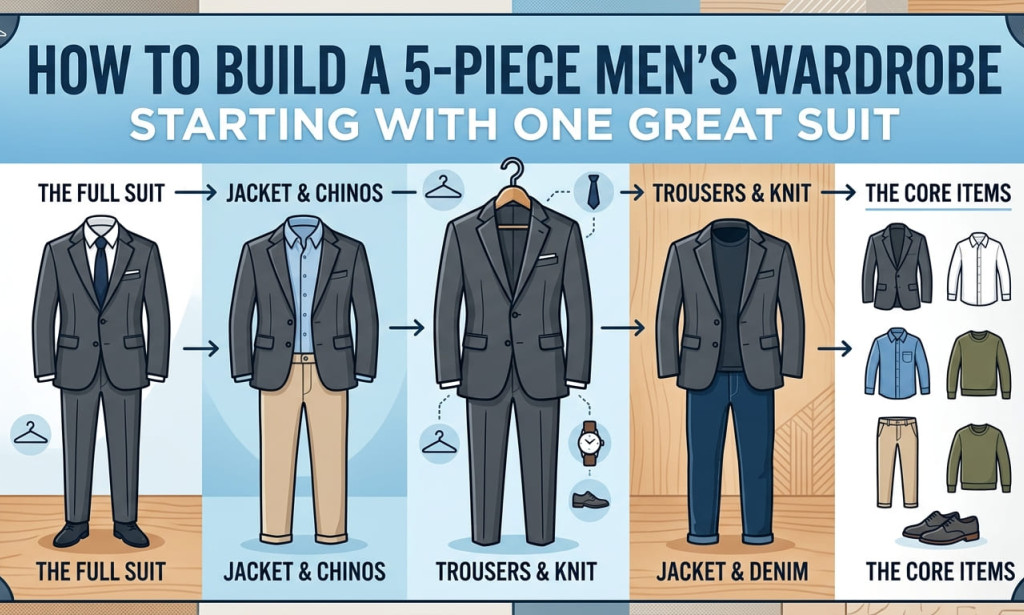
Affordable mens suits are one of the most practical starting points for building a wardrobe that actually functions. A well-chosen suit isn't just a formal outfit for occasional events. It's two or three pieces jacket, trousers, and sometimes a waistcoat that separate into components, mix with other pieces, and dramatically multiply your outfit count without multiplying your spending.
This guide walks you through a five-piece wardrobe framework built around one central suit. You'll see exactly which five pieces to buy, how they work together, how to get the most versatility from each one, and how to avoid the spending mistakes that leave wardrobes full of things that don't connect.
You don't need a large budget. You need the right five pieces chosen in the right order.
Why One Great Suit Changes Everything in a Small Wardrobe
A suit is the wardrobe's most productive asset but only when you treat it as a system rather than a single outfit.
Most men think of a suit as one thing: a formal two-piece worn together to specific occasions. In reality, a well-chosen suit gives you:
- A complete formal outfit when worn as a two-piece
- A smart-casual jacket when the suit jacket is worn with jeans or chinos
- A sharp casual option when the suit trousers are worn with a plain sweater
- Multiple professional combinations when mixed with other shirts and shoes
That's four or five distinct outfit directions from one purchase. No other single item in a man's wardrobe generates that kind of range. A shirt is a shirt. Trousers are trousers. A suit is a system.
The key is choosing the right suit one in a color and cut that makes it genuinely versatile rather than occasion-specific.
The 5-Piece Foundation: What You're Actually Building
Before getting specific about each piece, here's the complete list:
Piece 1 One great suit (navy or charcoal, in a modern fit)
Piece 2 Two dress shirts (white and light blue, in plain weave)
Piece 3 One pair of versatile trousers (dark grey or stone chino)
Piece 4 One blazer or sport coat (grey or tan, in a complementary color)
Piece 5 One pair of quality leather shoes (brown Oxford or Derby)
Five items. When combined across different configurations, these pieces produce more than fifteen distinct outfits covering formal, professional, smart-casual, and casual settings. The math works because every piece is chosen to work with every other piece not independently, but as a connected system.
Piece 1 The Suit: Where to Spend, Where to Save
The suit is the foundation, which means it deserves the most deliberate decision-making.
The goal here is finding affordable mens suits that deliver on fit and fabric without requiring a significant financial stretch. That's achievable but it requires knowing what actually matters versus what's marketing language.
What Makes a Suit Affordable Without Being Cheap
Cheap suits and inexpensive mens suits aren't the same thing. Cheap refers to quality fabric that doesn't drape, construction that doesn't hold, seams that fail after a season. Inexpensive refers to price. Your goal is the second category, not the first.
What to prioritize regardless of budget:
Fabric composition. Look for at least 60–70% wool content. Wool drapes cleanly, handles wrinkles better than synthetics, and holds its shape across a long day. A suit listed at a budget price point with a high wool content will outperform an expensive synthetic suit in every practical way.
Fit at the shoulders. The shoulder seam should sit exactly at the edge of your shoulder. Everything else chest, waist, sleeve length, trouser break can be adjusted by a tailor for $40–$80. The shoulder cannot. If the shoulders fit, you have a working foundation.
Color selection. Navy and charcoal are the two colors that work across the most occasions. A navy suit can be worn to a job interview, a wedding, a business dinner, and a smart-casual social event. Charcoal covers professional and formal settings with authority. Either choice is correct. Black limits your versatility to formal occasions only.
Cut. A modern slim or tailored fit photographs better, reads as more current, and works in more settings than a boxy or oversized cut. When browsing affordable mens suits, always confirm the cut description before ordering.
For budget-conscious buyers, the sweet spot is a wool-blend suit from a reputable retailer with transparent fabric descriptions and a clear return policy. You don't need to spend a fortune you need to spend wisely.
Piece 2 The Dress Shirts: Two Colors, Maximum Coverage
Two dress shirts is all this wardrobe requires at the start. Choosing them deliberately means those two shirts work across every combination in the system.
White is non-negotiable as a first shirt. It pairs with every suit color, every trouser color, and every shoe in this wardrobe. Under the suit jacket, it's formal. Untucked with suit trousers and no jacket, it's smart casual. Under the blazer with chinos, it's professional without being stiff.
Light blue is the second shirt. It softens slightly compared to white better for daytime professional settings and casual-leaning occasions. It pairs as cleanly with navy and charcoal as white does, with a slightly warmer visual result.
What to look for in both shirts: a plain weave Oxford or poplin fabric, a semi-spread or spread collar (which works with or without a tie), and a fitted cut that doesn't billow when untucked.
Avoid patterns, stripes, or strong colors at this stage. Patterned shirts compete with the other pieces in this wardrobe. Plain shirts cooperate with them.
Piece 3 The Versatile Trouser: The Bridge Between Formal and Casual
This piece is what makes the suit jacket function as a blazer.
When the suit jacket is worn with its matching trousers, it's a suit. When the suit jacket is worn with a separate trouser in a contrasting color, it becomes a smart jacket. The third trouser enables that second use.
Dark grey chinos are the most flexible option. They pair with both the navy and charcoal suit jacket, work with the white and light blue shirt, and look equally at home in professional settings and casual weekend environments.
Stone or tan chinos are a warm-weather alternative that works particularly well with a navy jacket. The contrast between navy and tan is one of the most reliable color combinations in men's dressing.
Whatever color you choose, the fit matters as much as it does with the suit. Slim or straight-leg chinos in a clean cut no cargo pockets, no distressing are the most versatile across occasions.
Piece 4 The Blazer or Sport Coat: The Outfit Multiplier
Adding a second jacket to this wardrobe dramatically expands what the trousers and shirts can do.
The suit jacket can only pair convincingly with the suit's matching trousers or the contrasting chino. A second jacket opens up every possible trouser and shirt combination to a new outfit configuration.
Grey blazer is the most versatile choice. It pairs with navy suit trousers, dark grey chinos, tan chinos, and jeans (once those enter the wardrobe). It works over white shirts and light blue shirts equally well. It's appropriate for professional settings, social events, and smart-casual occasions without being limited to any of them.
Tan or brown sport coat in a subtle texture herringbone, soft tweed is a slightly more casual alternative that suits weekend dressing and outdoor events particularly well. If the wardrobe is tilting toward professional use, stick with the grey blazer. If the lifestyle is more casual, the sport coat adds more day-to-day value.
At this stage, the wardrobe contains two jackets, two shirts, and two trouser options. The combinations start multiplying quickly.
Piece 5 The Shoes: The Most Overlooked Investment in a Small Wardrobe
Most men underspend on suits and overspend on shoes, or vice versa. The correct approach is to spend proportionally on each based on how much work they do.
In a five-piece wardrobe, one pair of shoes needs to carry significant load. That means quality matters more than it would if you owned six pairs.
Brown leather Oxford or Derby shoes are the strongest single choice. Brown leather pairs with navy, charcoal, and grey suits cleanly. It pairs with chinos naturally. It works in professional settings and smart-casual environments. It reads as warm and considered in a way that black leather doesn't.
Black leather is more formal and more restrictive. It works with charcoal and grey suits but creates visual tension with navy and tan. If your primary use case is highly formal courtroom, finance, upscale professional black may suit you better. For most men, brown has broader application.
Whatever color you choose, buy the best leather quality your budget allows in the shoes category. Shoes touch the floor, absorb pressure, and age visibly faster than any other item in this list. Quality leather shoes, properly maintained, last ten years. Low-quality leather shoes show wear within a year and never look quite right regardless of the outfit.
How to Multiply 5 Pieces Into 15+ Outfits
Here's the practical output of this system in action.
Using the suit as a two-piece:
- Navy suit + white shirt + brown Oxfords (formal)
- Navy suit + light blue shirt + no tie (business casual)
Using the suit jacket as a blazer:
- Navy jacket + grey chinos + white shirt + brown Oxfords (smart casual professional)
- Navy jacket + tan chinos + light blue shirt (smart casual weekend)
Using the suit trousers as separates:
- Navy suit trousers + white shirt + grey blazer (professional, non-suit look)
- Navy suit trousers + light blue shirt + sport coat (business casual)
Using the grey blazer across the wardrobe:
- Grey blazer + tan chinos + white shirt (smart casual)
- Grey blazer + navy suit trousers + light blue shirt (professional separates)
Layering for different occasions:
- Sport coat + suit trousers + white shirt (eclectic professional)
- Navy jacket + grey chinos + light blue shirt untucked (casual)
That's ten to fifteen clear outfit combinations from five intentional pieces all working together because they were chosen as a system rather than as individual items.
Common Mistakes When Building a Budget-Conscious Wardrobe
Buying pieces that only work alone. A statement item that pairs with nothing else in the wardrobe is wasted spending regardless of price. Every piece should connect to at least two others.
Prioritizing quantity over quality in fabric. Three cheap suits in poor-quality fabric will never collectively outperform one well-made affordable suit in good wool. The cheaper suits wear out faster, look less sharp, and don't respond well to tailoring.
Skipping the alteration budget. Even a perfectly chosen suit may need minor adjustments after delivery. Reserve $50–$80 for a tailor after your suit arrives. That investment returns more visual value than almost anything else you could spend it on.
Choosing trend-driven colors early on. Build the foundation in navy, grey, charcoal, and brown. Personality and expressive colors come once the foundation is established and you know what you're adding them to.
Searching for cheap suits near me without knowing what you want. Walking into a suit shop without knowing your measurements, your color preference, and your cut preference is how men end up with suits that don't fit and don't get worn.
FAQ: Building a Wardrobe With Affordable Men's Suits
Q: What's the difference between cheap suits and affordable suits?
Cheap refers to quality poor fabric, weak construction, short lifespan. Affordable refers to price. You can find inexpensive mens suits with solid wool content and proper construction. Read fabric descriptions carefully before buying.
Q: How much should I spend on my first suit?
A quality entry-level suit in a wool or wool-blend fabric typically costs between $150 and $400. That range gets you real fabric quality and proper construction without overspending on a first purchase.
Q: Should I buy a navy or charcoal suit first?
Navy. It covers more occasions interviews, weddings, business meetings, and casual social events than any other color. Charcoal is an excellent second suit once the navy is established.
Q: Can I wear suit separates to work every day?
Yes. Mixing the suit jacket with chinos, or the suit trousers with a blazer, creates professional outfits that look intentional and avoid the monotony of wearing the same suit daily.
Q: How do I find affordable mens suits near me?
Searching for cheap suits near me often returns lower-quality options. Online retailers with transparent fabric descriptions and size charts frequently offer better value than physical shops at the same price point.
Q: How many suits do I actually need?
One great suit is enough to build a complete wardrobe system. A second suit in a complementary color expands your formal options considerably. Most men don't need more than two well-chosen suits.
Q: What should I spend more on the suit or the shoes?
Both matter, but if you must prioritize: spend more on fabric quality in the suit and buy the best leather shoes your remaining budget allows. Both are long-term investments that pay back over years of wear.
Conclusion
Building a wardrobe that genuinely works doesn't require a large budget or a full closet.
It requires five well-chosen pieces, selected in order, with each one connected to the others. Starting with one well-fitted affordable mens suit in navy or charcoal, you create the foundation from which everything else grows a second jacket, a versatile trouser, two shirts, and one pair of quality leather shoes.
The result is a wardrobe that handles formal occasions, professional environments, and casual weekend settings without gaps, without confusion, and without the frustration of owning too many clothes and not enough outfits.
Skip the cheap suits that wear out quickly and look it. Skip the impulse buys that don't connect to anything else. Invest in five pieces that were chosen to work as a system and wear them with confidence.
For a professional selection of affordable suits built around quality fabric and modern fit, visit Mensusa.

You must be logged in to post a comment.