
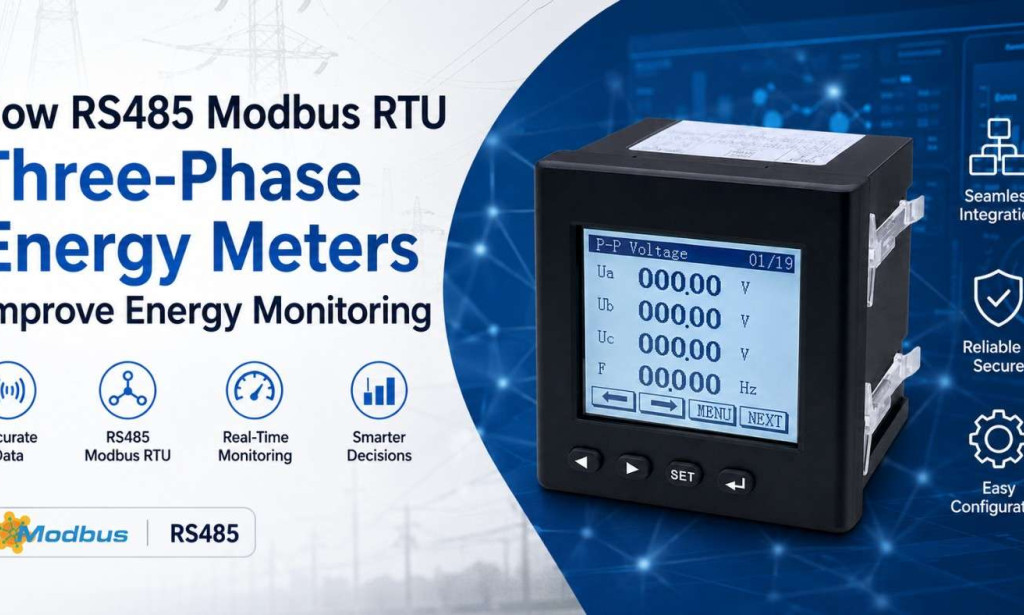
As industries become increasingly automated and energy costs continue to rise, businesses need smarter ways to monitor and manage electricity consumption. Traditional energy meters only provide basic readings, making it difficult to analyze real-time power usage, identify inefficiencies, or optimize energy consumption.
This is where RS485 Modbus RTU Three-Phase Energy Meters make a significant difference. These intelligent meters not only measure electrical parameters with high accuracy but also communicate the data to centralized monitoring systems through the widely adopted RS485 Modbus RTU protocol.
Whether you're managing a manufacturing plant, commercial building, data center, or renewable energy installation, an RS485 Modbus RTU three-phase energy meter provides valuable insights that help reduce energy waste, improve equipment performance, and lower operating costs.
What Is an RS485 Modbus RTU Three-Phase Energy Meter?
An RS485 Modbus RTU Three-Phase Energy Meter is a digital electrical meter designed to measure energy consumption and electrical parameters in three-phase power systems.
Unlike conventional meters, these devices support Modbus RTU communication over RS485, allowing them to transmit real-time electrical data to:
-
PLCs
-
SCADA systems
-
Building Management Systems (BMS)
-
Industrial IoT platforms
-
Energy Management Systems (EMS)
This enables centralized monitoring of multiple electrical panels from a single dashboard.
Understanding RS485 Modbus RTU Communication
Before discussing the benefits, it's important to understand why RS485 Modbus RTU has become the industry standard.
RS485
RS485 is a serial communication standard designed for industrial environments. It offers:
-
Long communication distance (up to 1200 meters)
-
High resistance to electrical noise
-
Multi-device communication
-
Stable performance in factories
-
Low installation cost
Modbus RTU
Modbus RTU is one of the world's most widely used industrial communication protocols.
It allows:
-
PLCs
-
HMIs
-
Gateways
-
Industrial PCs
-
SCADA software
to communicate with energy meters using a common language.
The combination of RS485 + Modbus RTU creates a reliable, scalable, and cost-effective solution for industrial energy monitoring.
Why Three-Phase Energy Monitoring Matters
Most industrial machinery operates using three-phase power because it delivers:
-
Better efficiency
-
Higher power capacity
-
Balanced electrical loads
-
Reliable motor operation
Monitoring only total energy consumption is no longer enough.
Modern facilities need visibility into:
-
Voltage
-
Current
-
Frequency
-
Active Power
-
Reactive Power
-
Apparent Power
-
Power Factor
-
Energy Consumption (kWh)
-
Demand
-
Load imbalance
An RS485 Modbus RTU energy meter continuously measures these parameters.
Key Features of RS485 Modbus RTU Three-Phase Energy Meters
Modern industrial energy meters typically include:
Real-Time Energy Monitoring
Monitor electrical consumption continuously without manual readings.
Multiple Electrical Measurements
Measure:
-
Voltage
-
Current
-
Power
-
Frequency
-
Power Factor
-
Active Energy
-
Reactive Energy
RS485 Communication
Supports reliable communication with industrial controllers.
Modbus RTU Protocol
Compatible with almost every industrial automation platform.
LCD Display
Shows important electrical parameters locally.
High Measurement Accuracy
Suitable for industrial energy management and billing applications.
Multi-Device Networking
Connect dozens of energy meters on a single RS485 communication line.
Compact DIN Rail Design
Easy installation inside electrical control panels.
How RS485 Modbus RTU Three-Phase Energy Meters Improve Energy Monitoring
1. Real-Time Visibility
Instead of waiting for monthly electricity bills, operators can monitor energy consumption instantly.
This helps identify:
-
Unexpected power spikes
-
Overloaded equipment
-
Idle machines consuming electricity
-
Peak demand periods
2. Centralized Energy Management
Multiple energy meters can transmit data to one monitoring system.
Operators can monitor:
-
Entire factory
-
Individual production lines
-
Electrical panels
-
Motors
-
Compressors
-
HVAC systems
from a single dashboard.
3. Detect Energy Waste
Continuous monitoring helps identify:
-
Equipment running unnecessarily
-
Poor power factor
-
Voltage imbalance
-
Idle machinery
-
Inefficient motors
These insights help reduce electricity costs.
4. Prevent Equipment Failure
Abnormal electrical conditions often occur before equipment fails.
Energy meters can identify:
-
Voltage fluctuations
-
Current overload
-
Phase imbalance
-
Power quality issues
Maintenance teams can resolve problems before breakdowns occur.
5. Improve Power Quality
Power quality affects the lifespan of industrial equipment.
Energy meters monitor:
-
Frequency
-
Harmonics (supported models)
-
Voltage imbalance
-
Current imbalance
-
Power factor
This information helps improve electrical system reliability.
6. Enable Predictive Maintenance
Historical energy data helps identify equipment deterioration.
For example:
If a motor gradually draws more current every month, it may indicate:
-
Bearing wear
-
Mechanical friction
-
Alignment issues
-
Overloading
Maintenance can be scheduled before failure occurs.
7. Reduce Energy Costs
Energy monitoring enables organizations to:
-
Shift loads during peak tariffs
-
Improve power factor
-
Reduce idle energy consumption
-
Optimize equipment scheduling
All these improvements contribute to lower electricity bills.
8. Support Industrial IoT
Modern factories rely on connected devices.
RS485 Modbus RTU energy meters integrate easily with:
-
Industrial IoT gateways
-
Edge computers
-
Cloud dashboards
-
AI-based analytics platforms
This enables remote monitoring from anywhere.
Typical Applications
RS485 Modbus RTU three-phase energy meters are widely used in:
Manufacturing Plants
Monitor production line energy consumption.
Commercial Buildings
Track HVAC, elevators, and lighting systems.
Data Centers
Monitor server power usage and UPS performance.
Renewable Energy Systems
Measure power generation and consumption.
Water Treatment Plants
Monitor pumps and motors.
Smart Factories
Collect real-time electrical data for Industry 4.0 applications.
Hospitals
Ensure stable power monitoring for critical equipment.
Educational Institutions
Track electricity consumption across multiple buildings.
Benefits of Using RS485 Modbus RTU Three-Phase Energy Meters
|
Benefit |
Description |
|
Real-time monitoring |
Instant visibility into electrical systems |
|
Lower operating costs |
Detect and eliminate energy waste |
|
Better equipment health |
Monitor abnormal electrical conditions |
|
Remote monitoring |
Access energy data through SCADA or IoT platforms |
|
Easy integration |
Compatible with PLCs, HMIs, and industrial controllers |
|
Scalable |
Connect multiple meters on one RS485 network |
|
Improved power quality |
Monitor voltage, current, and power factor |
|
Predictive maintenance |
Analyze historical electrical trends |
Best Practices for Installation
To achieve reliable performance:
-
Use shielded twisted-pair RS485 communication cables.
-
Maintain correct Modbus device addresses.
-
Install proper RS485 termination resistors.
-
Ensure correct phase wiring.
-
Verify CT (Current Transformer) ratios before commissioning.
-
Use surge protection in high-noise industrial environments.
-
Regularly calibrate energy meters if required.
Choosing the Right RS485 Modbus RTU Three-Phase Energy Meter
When selecting an energy meter, consider:
-
Measurement accuracy
-
Number of measurable parameters
-
RS485 communication support
-
Modbus RTU compatibility
-
Display type
-
DIN rail or panel mounting
-
Current transformer compatibility
-
Operating temperature range
-
Data logging capability
-
Industrial certifications
Selecting the right model ensures long-term reliability and seamless integration into your energy management system.
Future of Energy Monitoring
The future of industrial energy management lies in intelligent, connected, and data-driven solutions.
RS485 Modbus RTU energy meters are increasingly being integrated with:
-
AI-powered analytics
-
Cloud-based energy dashboards
-
Predictive maintenance software
-
Digital twins
-
Smart grids
-
Industrial IoT platforms
These technologies allow organizations to make faster, data-backed decisions that improve efficiency, sustainability, and operational reliability.
Conclusion
An RS485 Modbus RTU Three-Phase Energy Meter is much more than a device for measuring electricity usage. It serves as the foundation of a modern energy monitoring system, delivering real-time insights into power consumption, electrical performance, and equipment health. By leveraging reliable RS485 communication and the widely supported Modbus RTU protocol, businesses can seamlessly integrate these meters with PLCs, SCADA systems, Building Management Systems, and Industrial IoT platforms.
With capabilities such as continuous monitoring, predictive maintenance support, power quality analysis, and centralized energy management, these meters help organizations reduce operational costs, enhance equipment reliability, and improve overall energy efficiency. As industries continue to adopt Industry 4.0 and smart factory initiatives, RS485 Modbus RTU three-phase energy meters will remain a key technology for achieving sustainable, data-driven energy management.

You must be logged in to post a comment.