

- Most disaster relief efforts are initially provided via word-of-mouth, which largely forsakes people who are deaf or hard of hearing.
- There's as growing push by disaster responders to ensure the needs of people with disabilities are considered from the start.
- In Ukraine, one nonprofit is finding ways to help, like providing solar-powered lights or deploying people who are deaf to help evacuate others.

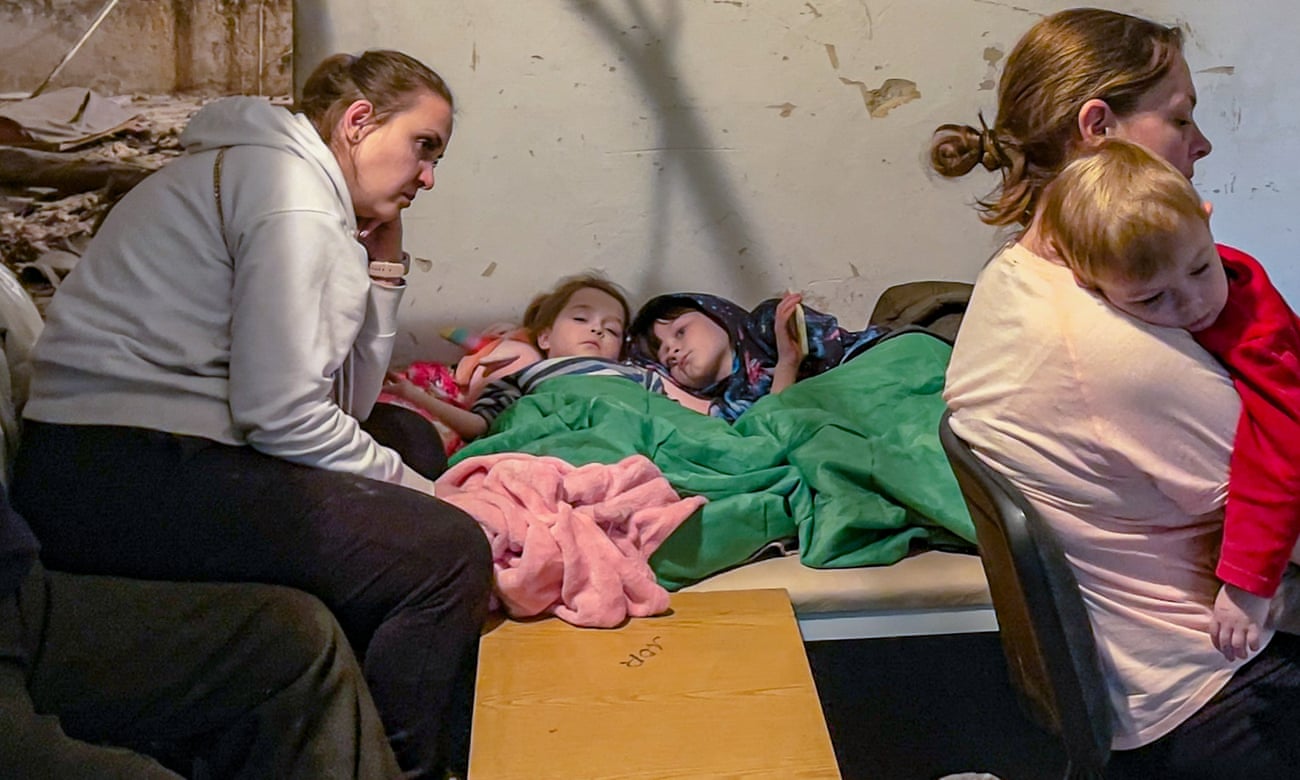
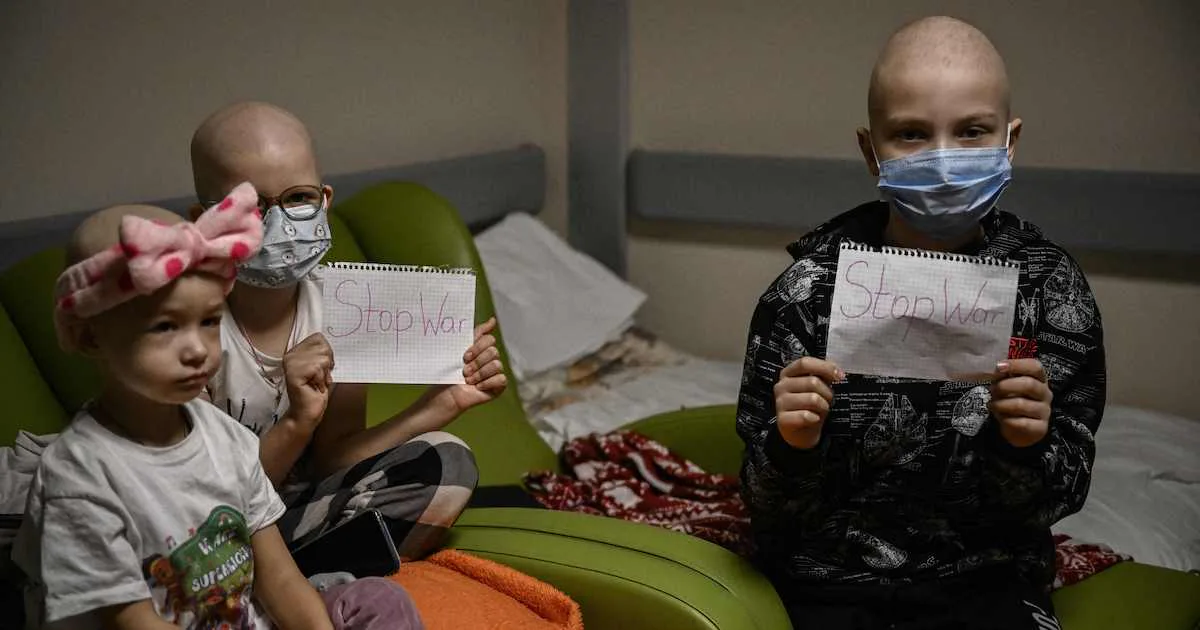
From the thunder of artillery to the roar of fighter jets and air-raid sirens warning of incoming Russian attacks, the sounds of war are almost inescapable in Ukraine.
But for thousands of Ukrainians who are deaf or hard of hearing, those danger signals just don't exist.
That's why a U.S-based nonprofit called Off-The-Grid Missions is now providing that community with tools to stay safe and alert, such as solar-powered lights, cell phone chargers and drinking-water filters. The group also provides evacuations run exclusively by people who are deaf or hard of hearing.
Off-The-Grid's presence in Ukraine reflects a growing understanding among the disaster-response community that the unique needs of people with disabilities must be prioritized in preparation plans. OTG has previously deployed its teams to Louisiana, Lebanon, Puerto Rico and Haiti.

"When a hearing person says to people, 'go, go, go,' Deaf people miss this small window of opportunity to flee," Off-The-Grid founder Angela Maria Nardolillo told USA TODAY via email. "Deaf are the first to get cut off from vital information and the last to get help."
She added: "Even if we are weeks out from reaching a Deaf family in the aftermath of the disaster, we can easily be their first responder."
Solar-powered lights and cell phone chargers help because they allow people who rely on sign language or reading lips to video call friends and family for assistance, including after dark.
The nonprofit founded in 2009 has also developed an online information-sharing system to warn the deaf and hard-of-hearing community about Russian attacks and show them how to find bomb shelters and evacuation routes. Most disaster relief efforts are initially provided via word-of-mouth, which largely forsakes people who can't hear.
"With emergency-related information changing quickly, by the time a Deaf or hard-of-hearing person receives that vital information, it is too late because that information has changed and the limited resources have already run out," she said.
In west-central Ukraine, Ludmila Mykolaivna Surikova, 26, said she can't hear air-raid sirens warning of an attack because she is deaf. She's thankful for the help provided by the Off-The-Grid teams, which use the city of 21,000 as a staging point for rescue missions.

Via a translator provided by OTG, Surikova said she depends on her cell phone to get alerts, and the solar-powered chargers provided by OTG are a lifeline.
"Efforts are not made to communicate with us Deaf people, so we are isolated when it comes to the war," she said. "Communication is everything, especially with the war."
"Oftentimes, the disabled are discarded and seen as disposable or outcasts," said Reggie Ferreira, director of Tulane University's Disaster Resilience Leadership Academy. "People are literally left on the street."
Ferreira said most people don't have a disaster-preparedness plan – whether that's for an Atlantic Coast hurricane, a California wildfire evacuation or widespread civil unrest – and a plan is all-the-more important for people with disabilities who need mobility assistance or help. For someone who is blind or who uses a wheelchair, evacuation is not as simple as hopping in a car and driving away.
"The message we're trying to send is that the people with the least amount of resources need to connected with resources.
"Oftentimes, the disabled are discarded and seen as disposable or outcasts," said Reggie Ferreira, director of Tulane University's Disaster Resilience Leadership Academy. "People are literally left on the street."
Ferreira said most people don't have a disaster-preparedness plan – whether that's for an Atlantic Coast hurricane, a California wildfire evacuation or widespread civil unrest – and a plan is all-the-more important for people with disabilities who need mobility assistance or help. For someone who is blind or who uses a wheelchair, evacuation is not as simple as hopping in a car and driving away.
"The message we're trying to send is that the people with the least amount of resources need to connected with resources," he added.
In the U.S., FEMA's Office of Disability Integration and Coordination helps plan and manage disaster responses for the disabled community, working in partnership with state and local responders, said Jason T. Lagria, the office's acting director.

"FEMA deploys disability integration advisers to every disaster to provide advice, guidance, training and technical assistance to make sure that people with disabilities impacted by disasters have access to the programs and services they need," Lagria said via email.
In the United States, people with disabilities are increasingly consulted during disaster planning, said Laura M. Stough, the assistant director of the Center on Disability and Development at Texas A&M University.
She said disaster responses within the U.S. have long been led by white men who speak only English, often with a military background, and their unconscious biases have sometimes left out planning for people with disabilities. She said that can manifest, for instance, in disaster workers rescuing someone from a flood or fire but leaving behind their wheelchair or walker, making them even more dependent on others afterward.

"Thinking about what people with disabilities need makes emergency management and preparedness that much better and that much stronger.
On the frontlines of the Russian invasion of Ukraine, nonprofits like Off The Grid are helping fill in those existing gaps. Other aid workers are doing the same.

In Ukraine and other disaster areas, Off-The-Grid's Deaf and hard-of-hearing responders are positioned to assist because they better understand the needs of the disabled community, Nardolillo said. She said it's been easier to train people with disabilities to provide disaster assistance than it is to train disaster responders to understand the disability community.
Aid can sometimes be as simple as a wheelchair, said Imad Ben, a refugee evacuation expert who has been extracting women, children and people with disabilities into neighboring Moldova.
Ben said he and his team recently brought a wheelchair to a man living in Moldova who was unable to leave his apartment for two years. While the man wasn't a Ukrainian refugee, his neighbors heard about the team's willingness to help, so Ben found a wheelchair for sale nearby.
"For us, it's just a wheelchair," said Ben, a veteran of disaster response in Somalia, Syria, Palestine and Greece. "For others, it's freedom."

You must be logged in to post a comment.