

When Carbon Becomes Diamond
A diamond starts with something surprisingly ordinary: carbon. What makes it special isn't the element itself, but the way its atoms are arranged. In a diamond, carbon atoms form an extremely strong crystal structure that gives the gemstone its famous hardness, brilliance, and durability.
Natural diamonds develop deep inside the Earth under intense heat and pressure over extremely long periods. Lab-grown diamonds take a different route. They are created in controlled laboratory environments using technology designed to reproduce the conditions needed for diamond crystal growth.
This distinction is important because a laboratory-grown diamond isn't an imitation like cubic zirconia or moissanite. It is a real diamond made from crystallized carbon. Today, two main technologies are used to grow diamonds in laboratories: High Pressure High Temperature (HPHT) and Chemical Vapor Deposition (CVD).
The Diamond Seed: Where Growth Begins
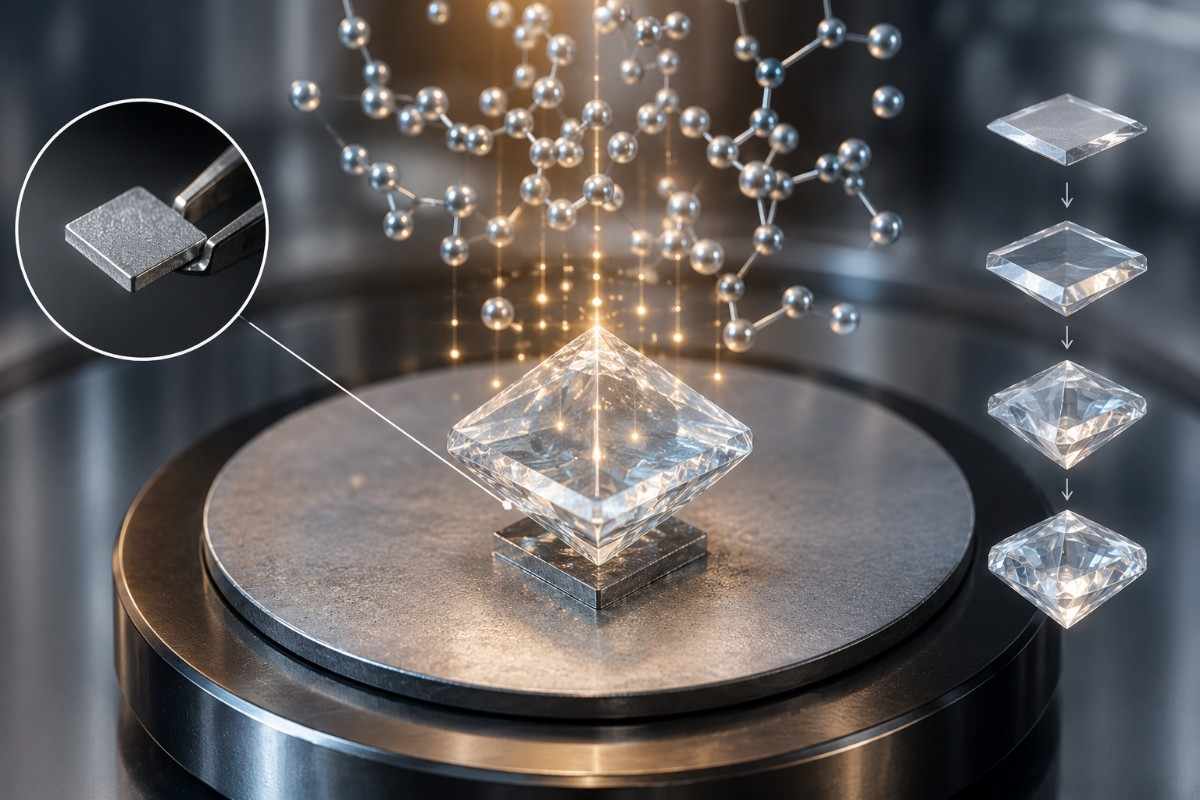
Neither HPHT nor CVD starts with a completely empty chamber and somehow produces a finished gemstone. Both processes begin with a tiny piece of diamond called a seed or substrate. This small piece provides the crystal structure that allows additional carbon to build upon it.
Think of the seed as the starting framework for the diamond. Carbon atoms attach to it and follow its existing crystal arrangement as the diamond gradually grows.
The size and quality of the finished crystal can be influenced by several factors, including the condition of the seed, temperature, pressure, gas composition, and growth time. This controlled environment is one of the most fascinating parts of modern diamond growth. Scientists aren't simply creating carbon; they are carefully controlling the conditions that allow individual atoms to form an organized diamond crystal.
HPHT: Recreating Extreme Conditions
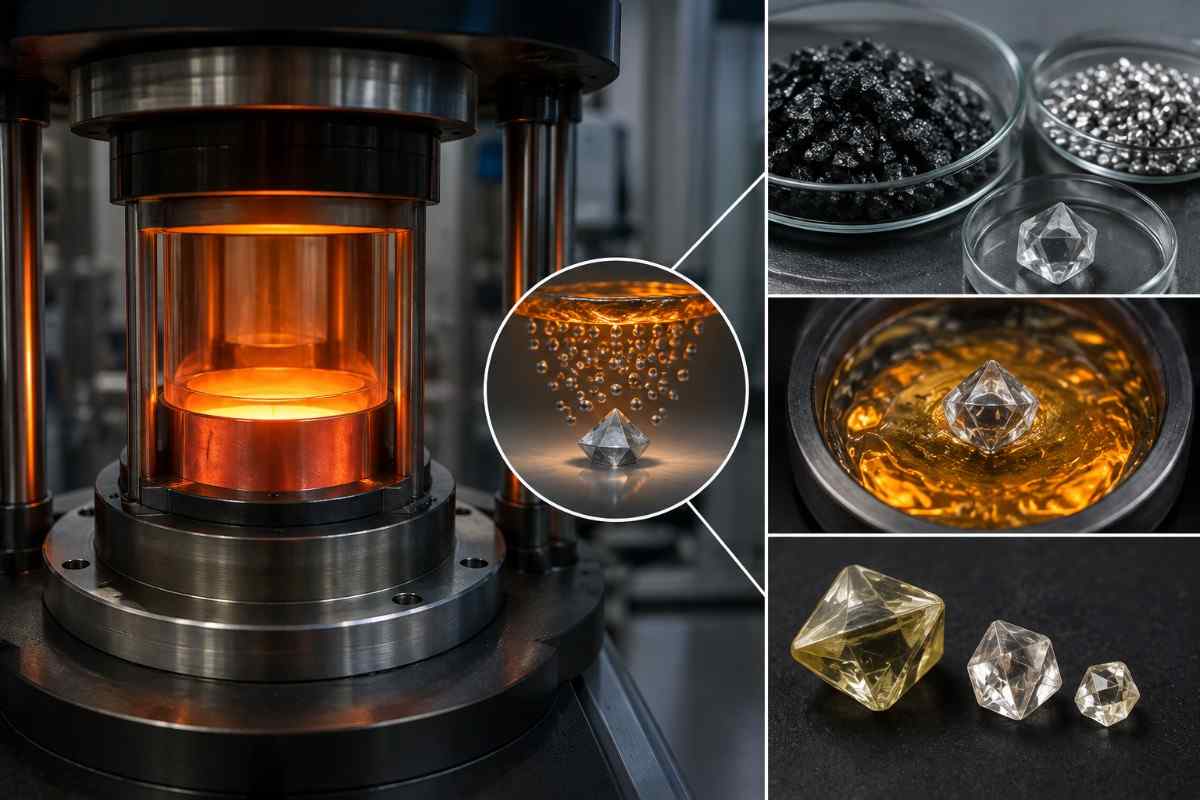
High Pressure High Temperature, commonly called HPHT, is a method inspired by the conditions under which natural diamonds develop inside the Earth.
In an HPHT system, a small diamond seed is placed alongside a carbon source and a metallic flux. The chamber is exposed to extremely high temperatures, often around 1,300–1,600°C, along with pressures reaching several gigapascals.
Under these conditions, the carbon dissolves into the molten metal. It then moves toward the diamond seed, where it gradually crystallizes and adds new layers to the growing diamond.
Depending on the desired size and quality, the growth process can take anywhere from hours to several weeks. Once the crystal reaches the required stage, it is removed from the equipment and prepared for the next stages of cutting and polishing.
HPHT is a remarkable example of how heat, pressure, chemistry, and time can be carefully controlled to encourage the same basic crystal structure associated with natural diamond formation.
CVD: Growing Diamond Layer by Layer
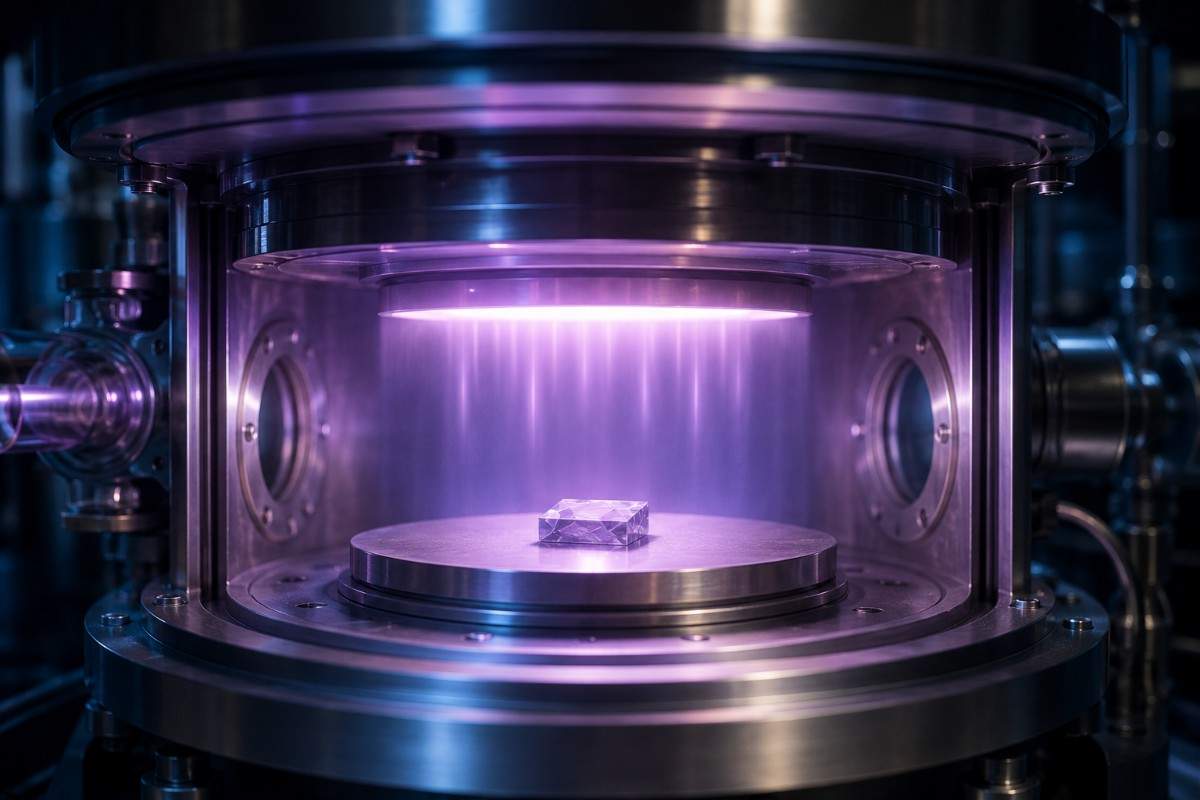
Chemical Vapor Deposition, or CVD, takes a very different approach. Instead of relying on extremely high pressure, this process takes place inside a controlled vacuum chamber.
The chamber typically contains hydrogen and Carbon-Containing gas such as methane. Energy, often supplied through microwaves, turns these gases into a plasma. This breaks downthe gas molecules and creates reactive carbon-containing particles that can reach the diamond seed.
The diamond then develops gradually, adding material layer by layer. Hydrogen is also important because it helps limit the formation of unwanted forms of carbon that don't have the desired diamond structure.
CVD growth can continue for several weeks. During this time, the crystal may be removed for inspection or surface preparation before being placed back into the reactor. Once growth is complete, the rough crystal can move on to cutting and polishing.
This controlled layer-by-layer approach has made CVD one of the most important technologies in modern lab-grown diamond production.
From Rough Crystal to Finished Jewelry
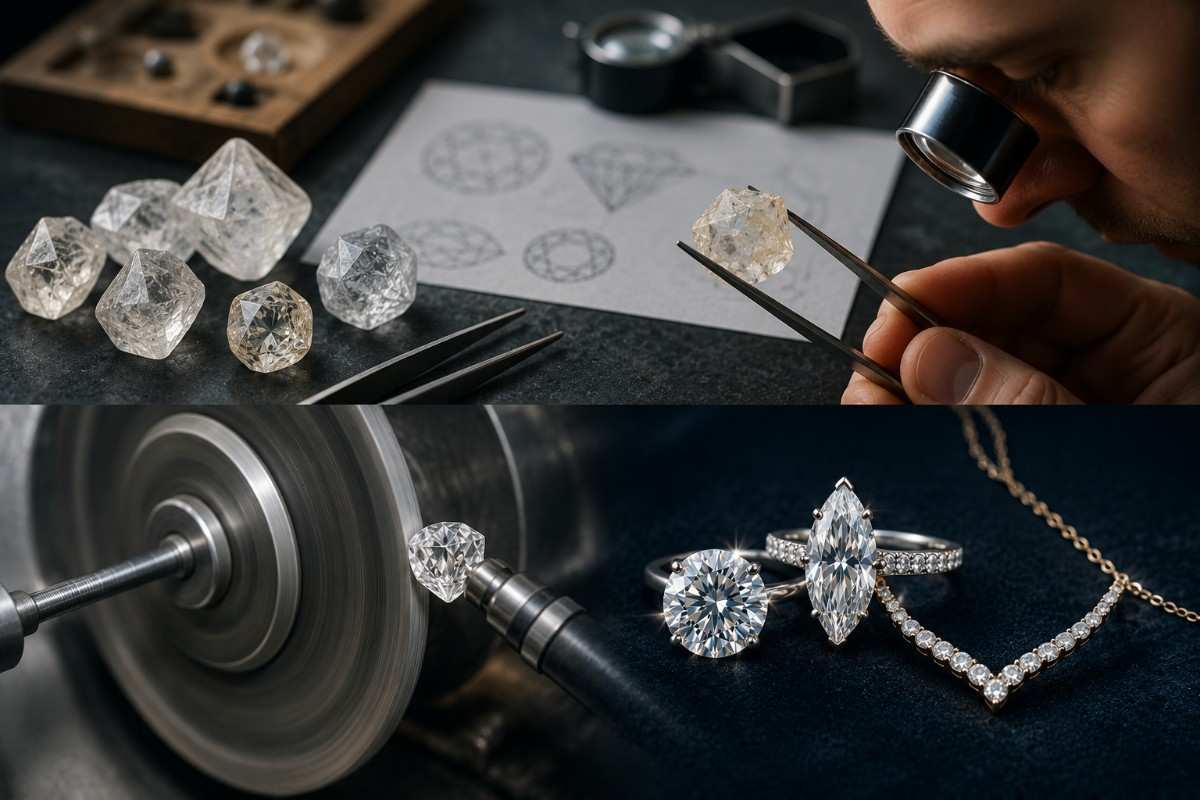
Growing a diamond crystal is only the beginning. Once the laboratory process is complete, the rough diamond still needs to be carefully examined, planned, cut, and polished before it can become a finished gemstone.
Experienced cutters study the rough crystal to determine how it can best be transformed. They consider factors such as shape, weight, clarity, proportions, and potential light performance. The goal isn't simply to remove material quickly. It is to find the right balance between the diamond's natural characteristics and the appearance of the finished stone.
This is where technology and craftsmanship come together. A well-grown rough crystal still requires thoughtful decisions before it becomes a ring, necklace, bracelet, or pair of earrings.
Whether the finished design is a marquise diamond ring or a delicate v shape diamond necklace , its final appearance depends partly on how successfully the rough crystal was shaped and polished.
Can You Tell How a Diamond Was Grown?
For most people, it is extremely difficult to tell whether a diamond was grown in a laboratory or formed naturally simply by looking at it.
Lab-grown diamonds have essentially the same chemical composition, crystal structure, and fundamental physical and optical characteristics as natural diamonds. The difference is their origin and growth history.
Specialized gemological equipment can identify features associated with different growth methods, including characteristics related to HPHT and CVD production. This is why proper disclosure and independent grading are important when purchasing a diamond.
A grading report can provide valuable information about the stone, including whether it is laboratory-grown, helping buyers understand exactly what they are purchasing. The science behind the diamond therefore has practical value, not just academic interest.
Why the Science Behind Lab-Grown Diamonds Matters
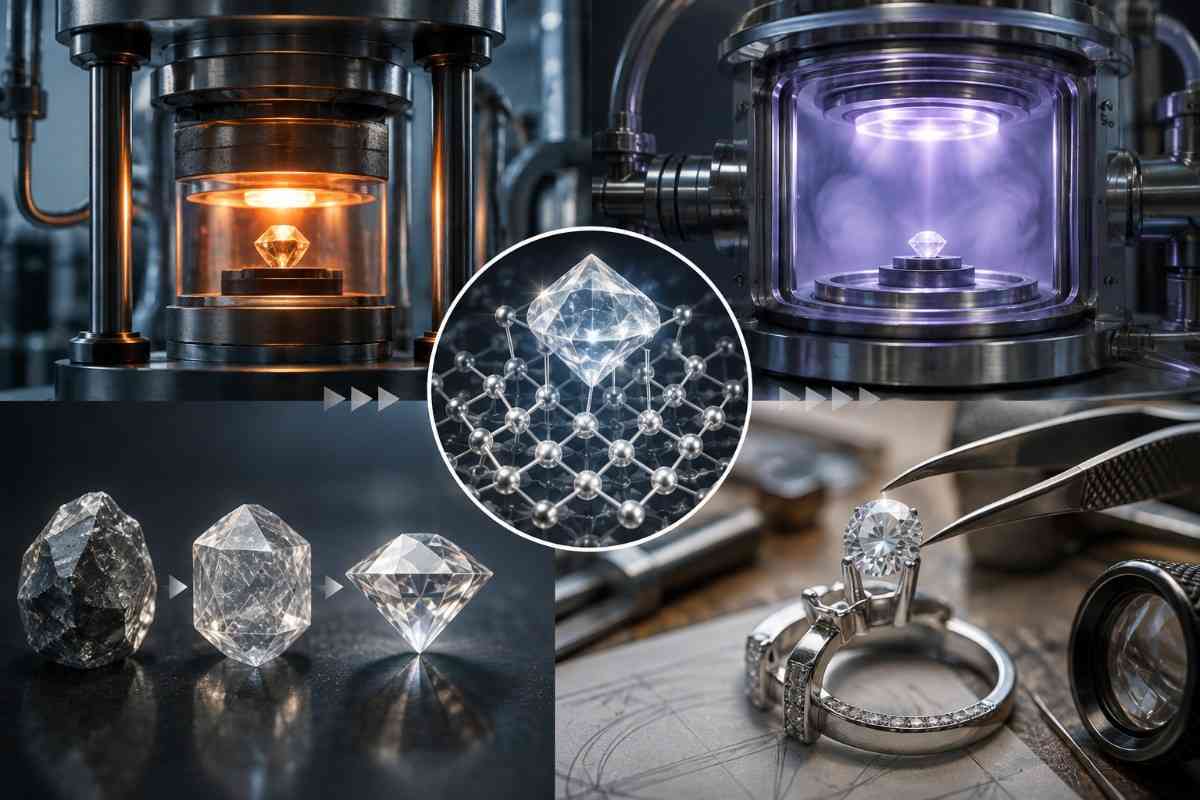
The journey from carbon to crystal reveals just how much science and precision are hidden inside a finished diamond. HPHT relies on extreme pressure and temperature, while CVD uses controlled chemical reactions inside a specialized vacuum environment.
Although the two methods are very different, they share the same fundamental goal: creating the highly organized crystal structure that makes diamond unique.
For anyone interested in modern jewellery, understanding this process adds another layer of appreciation to the gemstone. From the initial diamond seed to the final polished surface, a laboratory-grown diamond represents a combination of chemistry, physics, engineering, technology, and skilled craftsmanship.
That transformation is what makes science so fascinating. Something as simple as carbon can be carefully guided into an exceptionally durable and brilliant crystal, which can then be shaped into a meaningful piece of jewelry.
A jewelry brand such as ErayaSparkle becomes part of this broader journey at the design and craftsmanship stage, where advanced diamond technology meets skilled jewelry making. The finished piece may look effortless, but behind that polished surface is a carefully controlled process that connects science with artistry.

You must be logged in to post a comment.