
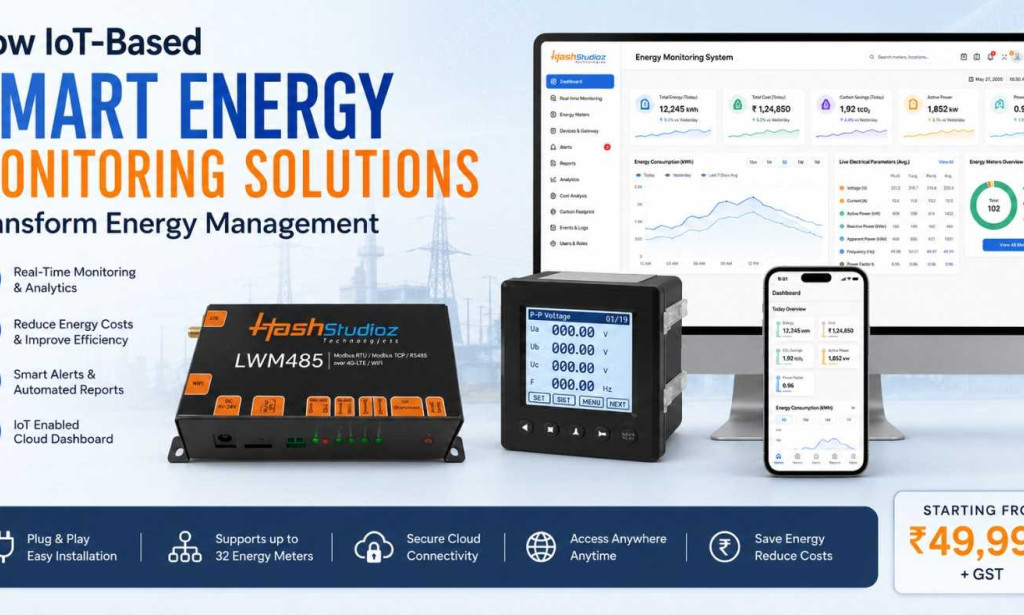
Energy costs continue to rise, making efficient energy management a top priority for businesses, industries, commercial buildings, and even residential facilities. Traditional energy monitoring methods often provide limited visibility into consumption patterns, making it difficult to identify inefficiencies and optimize energy usage.
This is where IoT-based Smart Energy Monitoring Solutions are changing the game. By combining Internet of Things (IoT) technology, smart sensors, energy meters, cloud platforms, and real-time analytics, organizations can monitor, analyze, and control energy consumption like never before.
What Is an IoT-Based Smart Energy Monitoring Solution?
An IoT-based smart energy monitoring solution is a system that collects real-time energy consumption data from electrical equipment, machines, and infrastructure through connected sensors and smart meters.
The collected data is transmitted via communication protocols such as:
-
Modbus RTU
-
RS485
-
Ethernet
-
Wi-Fi
-
Cellular (4G/5G)
-
LoRaWAN
This data is then processed and displayed on cloud-based dashboards, allowing users to monitor energy usage remotely and make informed decisions.
Key Components
A typical smart energy monitoring system includes:
-
Smart energy meters
-
Current transformers (CTs)
-
Voltage sensors
-
IoT gateways
-
Communication modules
-
Cloud platform
-
Analytics dashboard
-
Mobile application
Together, these components provide complete visibility into energy consumption across an organization.
Challenges with Traditional Energy Management
Many organizations still rely on manual meter readings and periodic energy audits.
This approach presents several limitations:
Lack of Real-Time Data
Energy consumption issues remain undetected until monthly utility bills arrive.
Delayed Decision-Making
Without live insights, corrective actions often happen too late.
High Energy Waste
Idle equipment, inefficient machines, and peak demand usage contribute to excessive energy costs.
Limited Visibility
Facility managers struggle to identify which equipment consumes the most energy.
Maintenance Difficulties
Unexpected equipment failures can result in costly downtime and energy losses.
How IoT Is Revolutionizing Energy Management
IoT technology transforms energy monitoring from a reactive process into a proactive and predictive system.
1. Real-Time Energy Monitoring
IoT sensors continuously collect energy data and transmit it to a centralized dashboard.
Users can monitor:
-
Voltage
-
Current
-
Power factor
-
Frequency
-
Active power
-
Reactive power
-
Energy consumption
in real time.
This immediate visibility helps organizations identify abnormalities before they become costly problems.
2. Remote Access and Control
One of the biggest advantages of IoT is remote accessibility.
Facility managers can monitor energy consumption from:
-
Smartphones
-
Tablets
-
Laptops
-
Control rooms
regardless of their location.
This capability is particularly valuable for organizations with multiple sites or geographically distributed operations.
3. Data-Driven Decision Making
Instead of relying on assumptions, businesses gain actionable insights through:
-
Historical data analysis
-
Energy consumption trends
-
Peak demand analysis
-
Equipment performance metrics
These insights support strategic energy-saving initiatives.
4. Predictive Maintenance
IoT systems continuously track equipment performance.
When unusual energy patterns occur, the system can generate alerts indicating potential issues such as:
-
Motor wear
-
Overloaded circuits
-
Voltage fluctuations
-
Equipment malfunction
Predictive maintenance helps avoid expensive breakdowns and extends equipment lifespan.
5. Automated Alerts and Notifications
Smart energy monitoring platforms can send instant alerts when:
-
Energy consumption exceeds thresholds
-
Voltage levels become unstable
-
Power factor drops
-
Equipment remains active after working hours
This enables immediate corrective action.
Key Benefits of IoT-Based Smart Energy Monitoring Solutions
Reduced Energy Costs
Real-time monitoring identifies energy wastage and helps optimize electricity consumption.
Organizations commonly achieve significant reductions in energy bills through:
-
Load balancing
-
Demand management
-
Equipment optimization
-
Peak usage control
Improved Operational Efficiency
IoT insights help organizations:
-
Optimize machine performance
-
Improve resource utilization
-
Reduce downtime
-
Increase productivity
Enhanced Sustainability
Reducing unnecessary energy consumption lowers carbon emissions.
This supports:
-
ESG goals
-
Sustainability initiatives
-
Green building certifications
-
Corporate social responsibility programs
Better Energy Visibility
Energy managers gain a detailed understanding of:
-
Department-wise consumption
-
Machine-wise consumption
-
Building-wise consumption
-
Production-line energy usage
This level of visibility was difficult to achieve using conventional systems.
Regulatory Compliance
Many industries must comply with energy efficiency regulations.
IoT monitoring solutions simplify compliance by maintaining accurate records and generating automated reports.
Key Features of Modern Smart Energy Monitoring Systems
Today's advanced solutions offer numerous intelligent capabilities.
Real-Time Dashboard
Interactive dashboards provide instant visibility into energy consumption and system performance.
Cloud Connectivity
Cloud platforms enable secure data storage and access from anywhere.
Historical Reporting
Users can analyze energy trends over days, weeks, months, or years.
Multi-Site Monitoring
Organizations can monitor multiple facilities from a single dashboard.
Energy Analytics
Advanced analytics help identify inefficiencies and optimization opportunities.
Custom Alerts
Users can define thresholds and receive automated notifications.
Mobile App Integration
Energy data can be accessed conveniently through mobile applications.
Applications of IoT-Based Energy Monitoring Solutions
Manufacturing Facilities
Manufacturers use energy monitoring systems to:
-
Track machine energy usage
-
Reduce production costs
-
Optimize operational efficiency
-
Prevent equipment failures
Commercial Buildings
Office complexes utilize smart monitoring to:
-
Control HVAC systems
-
Monitor lighting consumption
-
Reduce operational expenses
Data Centers
Energy monitoring helps data centers:
-
Optimize cooling systems
-
Improve server efficiency
-
Maintain uptime
Hospitals
Healthcare facilities use IoT solutions to ensure uninterrupted power availability while reducing energy waste.
Educational Institutions
Schools and universities monitor campus-wide energy consumption to improve sustainability efforts.
Renewable Energy Projects
Solar and wind energy operators use IoT systems to monitor generation performance and optimize output.
Role of Smart Energy Monitoring Starter Kits
A Smart Energy Monitoring Solution Starter Kit provides businesses with an easy and affordable way to begin their energy management journey.
Typically, a starter kit includes:
-
Three-phase energy meter
-
RS485 Modbus communication support
-
IoT gateway
-
Cloud dashboard access
-
Mobile monitoring capability
These kits allow organizations to quickly deploy energy monitoring systems without complex installations.
Future Trends in IoT-Based Energy Management
The future of energy management is becoming even smarter with emerging technologies.
Artificial Intelligence (AI)
AI-powered analytics will automatically identify inefficiencies and recommend corrective actions.
Digital Twins
Virtual representations of energy systems will help simulate and optimize performance.
Edge Computing
Local data processing will reduce latency and improve real-time decision-making.
Smart Grids
IoT-enabled smart grids will optimize electricity distribution and demand response.
Renewable Energy Integration
Advanced monitoring systems will support seamless integration of solar, wind, and battery storage systems.
Conclusion
IoT-based Smart Energy Monitoring Solutions are revolutionizing how organizations manage energy consumption. By providing real-time visibility, predictive insights, automated alerts, and advanced analytics, these systems help businesses reduce costs, improve operational efficiency, and achieve sustainability goals.
As energy prices continue to rise and environmental regulations become stricter, investing in a smart energy monitoring solution is no longer a luxury—it's a strategic necessity. Organizations that embrace IoT-powered energy management today will be better positioned to achieve long-term operational excellence, energy efficiency, and competitive advantage in the future.

You must be logged in to post a comment.