
When I first started using email automation software, I made every mistake in the book. I blasted the same welcome sequence to cold leads and warm buyers. I set triggers that fired at 3 AM. I watched my open rates crater and my unsubscribe rate quietly climb. Sound familiar?
Here's the thing: email marketing automation isn't magic. It's a system. And like any system, it works brilliantly when it's designed around real human behaviour, and terribly when it's just... on autopilot.
In this guide, I'm going to walk you through exactly how to set up automated email campaigns that build trust, move people through your sales funnel, and actually grow your business without falling into the usual marketing automation mistakes that kill engagement before it starts.
Why Email Automation Still Outperforms Every Other Channel
Before we get into the how, let's be honest about the why, because a lot of people treat email as an afterthought behind social media and paid ads.
Here's what I've seen firsthand: a well-built email sequence consistently outperforms social posts by 3 to 5x in terms of direct conversions. That's not a coincidence. Email is a channel you own. Algorithm changes don't touch it. Your list is yours.
That said, there's a difference between sending emails and running a real email marketing automation strategy. The former is just broadcasting. The latter is conversation at scale.
When someone downloads your lead magnet, books a discovery call, abandons a cart, or buys for the second time, each of those moments is a trigger. Automated email campaigns let you respond to those moments immediately, personally, and consistently, even while you're asleep.
Choosing the Right Email Automation Software
This is where most people get stuck. They either pick a tool that's too simple and outgrow it in six months, or they pay for an enterprise platform they never fully use.
Here's the framework I use when evaluating email automation software:
Does it support behaviour-based triggers? You need to be able to send emails based on what a contact does: clicking a link, visiting a pricing page, not opening an email in 30 days. Not just when they joined your list.
Does it connect to your existing tools? Your CRM, landing pages, ecommerce store, and booking system all need to talk to your email platform. Without that, you're working in silos.
Is the segmentation flexible enough? Sending the same email to everyone is one of the most common marketing automation mistakes. Good software lets you slice your audience by behaviour, purchase history, location, engagement level, and more.
Popular options worth considering include ActiveCampaign, Klaviyo (particularly strong for ecommerce), Mailchimp for simpler setups, and ConvertKit for creators and consultants. (You can explore a detailed comparison in our email platform review guide as an internal link opportunity here.)
The tool matters less than your strategy, but don't let that stop you from choosing one that won't limit you as you grow.
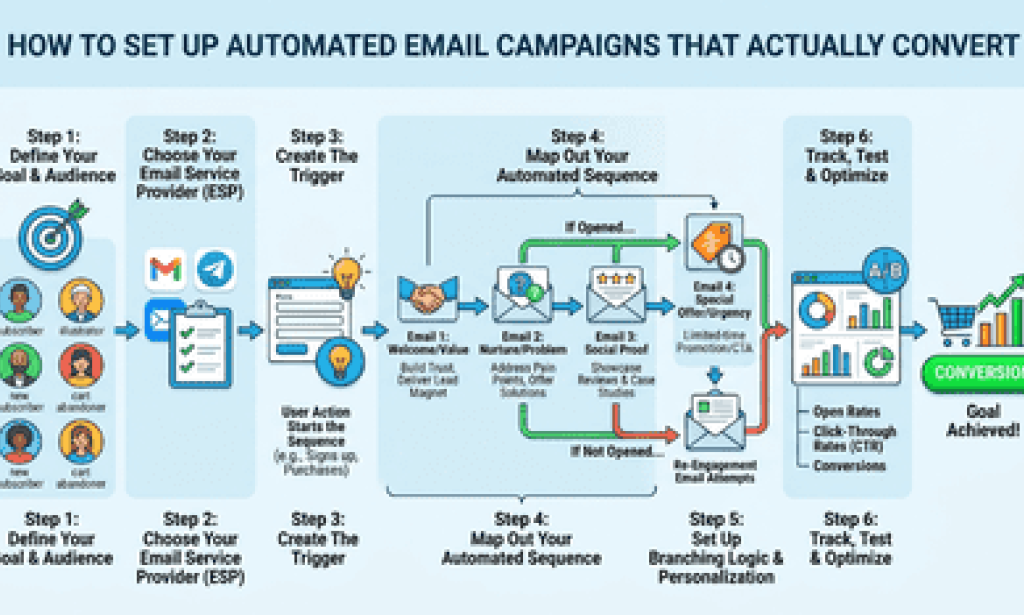
Building Your Sales Funnel Automation: The Core Sequences You Need
Think of your sales funnel automation as a series of conversations, not broadcasts. Each sequence has a specific job to do.
The Welcome Sequence
This is your first impression, and it sets the tone for everything. A solid welcome sequence runs three to five emails over seven to ten days and does three things: introduces who you are, delivers genuine value, and earns trust before you ever ask for anything.
Don't make it about selling. The welcome sequence is about demonstrating that being on your list is worth their time.
The Nurture Sequence
This is where most businesses drop the ball. After the welcome sequence ends, contacts often go cold because there's no follow-up plan. A nurture sequence keeps the relationship warm with educational content, case studies, customer stories, and the occasional soft offer.
I typically run nurture sequences on a bi-weekly cadence, but the right frequency depends on your industry and audience. Test it.
The Re-engagement Sequence
If a subscriber hasn't opened an email in 60 to 90 days, don't keep emailing them the same content. A targeted re-engagement sequence of three to four emails with a direct subject line like "Still want to hear from us?" will either win them back or help you clean your list. Both outcomes are good.
A clean list improves deliverability, which means your emails actually reach inboxes. This is one of those counterintuitive things: fewer subscribers who engage beats thousands who ignore you.
The Marketing Automation Mistakes I See Most Often
I've audited dozens of email setups over the years, and the same problems come up again and again.
Treating automation as a "set it and forget it" tool: Your business changes. Your audience changes. Review your sequences every quarter and update them. An email that made perfect sense eighteen months ago might now reference a product you no longer sell.
Skipping personalisation beyond first name: Using someone's first name in a subject line is table stakes. True personalisation means referencing their behaviour: what they downloaded, what they browsed, what they bought. This is where AI workflow automation is genuinely useful. Modern platforms can personalise content blocks dynamically based on contact data without you building a hundred different versions manually.
Sending to your whole list when you should be segmenting: A promotional email for a beginner-level course should not go to someone who already completed your advanced programme. It's a small thing that erodes trust fast.
Ignoring deliverability: If your emails land in spam, none of this matters. Authenticate your domain with SPF, DKIM, and DMARC records. Warm up new sending domains gradually. Monitor your bounce rates and spam complaint rates monthly.
Using AI Automation to Improve Your Campaigns Without Losing the Human Touch
AI automation has changed what's possible in email marketing, and I want to be straightforward with you about where it helps and where it can hurt.
Where it genuinely helps: subject line testing at scale, dynamic content personalisation, send time optimisation, and predictive segmentation. These are tasks that were either too time-consuming or too data-heavy for most small teams to do manually.
Where it can go wrong: leaning on AI to write your entire email voice without editing it. Readers notice when something sounds generated rather than genuine. Automated branding only works when it consistently reflects a real point of view: your perspective, your experience, your examples.
The best approach I've found is using AI to handle the infrastructure of email (segmentation, timing, testing) while keeping the voice distinctly human. Write your emails as if you're talking to one person. Automate the delivery. That combination is hard to beat.
How to Measure Whether Your Automated Email Campaigns Are Working
You can't improve what you don't measure. The core metrics I track for every automated sequence:
- Open rate: industry averages vary, but a healthy baseline is 25 to 40% depending on your niche
- Click-to-open rate (CTOR): this tells you whether people who opened your email found it compelling enough to act
- Conversion rate: what percentage of email recipients completed the desired action (purchase, booking, download)
- Unsubscribe rate: should stay below 0.5% per email; anything above that signals a relevance problem
- Revenue per email: for ecommerce and product-based businesses, this is the number that ultimately matters
Set a 30-day review cadence when you first launch a sequence. Once it's stable, quarterly reviews are usually enough.
Conclusion: Build It Once, Refine It Often
Setting up email automation software isn't a one-week project you complete and forget. It's an ongoing system that gets sharper the more data it collects and the more you pay attention to what your audience actually responds to.
Start simple. Build your welcome sequence first. Get that working. Then layer in nurture, re-engagement, and sales sequences over time. Resist the urge to build everything at once. Partial automation that runs well beats a complex system that nobody maintains.
The biggest shift for me was stopping thinking about "sending emails" and starting to think about "creating conversations." When you approach email marketing automation that way, the results follow.
If you're just getting started, take a look at our beginner's guide to email list building (internal link opportunity) before diving into automation. The best sequences in the world can't fix a list that was never built on trust.

You must be logged in to post a comment.