

The world has witnessed a tenfold increase in the number of natural disasters since the 1960s, the 2020 Ecological Threat Register (ETR) shows.
Increase in Natural Disasters on a Global Scale by Ten Times
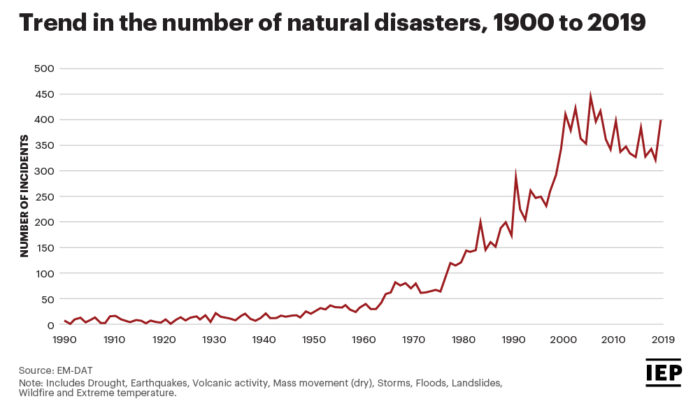
Data captured between 1900 and 2019 by the Institute for Economics and Peace reveal an increase from 39 incidents in 1960 to 396 in 2019.
In 2005, the world experienced the largest amount of natural disasters that left a death toll of more than 90,000 after 442 incidents with another 160 million people in need of immediate assistance.
The negative impacts of natural disasters depend on the intensity of individual incidents. Natural disasters can be of low intensity and occurring frequently, or they can be one-off catastrophic events.
In 2004, a tsunami affected numerous countries in Southeast Asia and represents a one-off catastrophic incident that has substantial impacts. The tsunami caused more than 220,000 deaths and widespread destruction across the region.
The resulting cost of addressing damage caused by natural disasters has risen from US$50 billion per year in the 1980s to US$ 200 billion per year in the last decade.
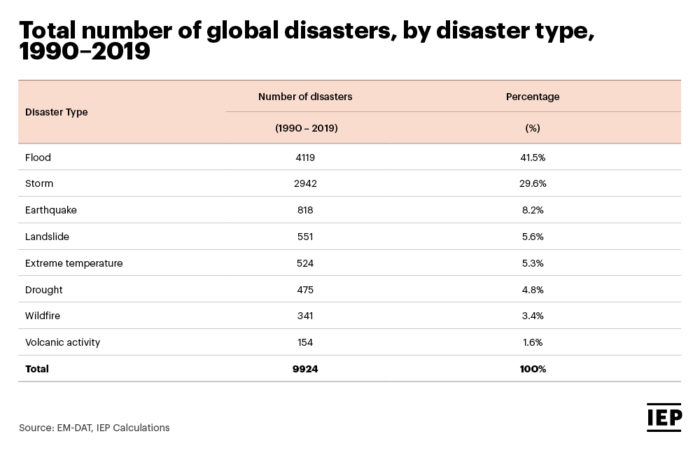
Flooding is the most common natural disaster since 1990. From 1990 to 2019, a total of 9,924 natural disasters occurred globally, of which 42 per cent were floods.
Storms including cyclones, hurricanes, tornadoes, blizzards, and dust storms, followed and accounted for 30% of the total natural disasters in this time period. Together, floods and storms account for 71% of the disasters that have occurred since 1990.
Changes in climate conditions, especially the warming of global temperatures increases the likelihood of weather-related natural disasters. Hotter global temperatures increase the risk of droughts as well as increase the intensity of storms and create wetter monsoons.
This is most visible when seen through changes in the intensity and frequency of droughts, storms, floods, extreme temperatures and wildfires. In the face of more common extreme weather events and climate related disasters, natural resources such as land and water will be most vulnerable.
Impact Asia
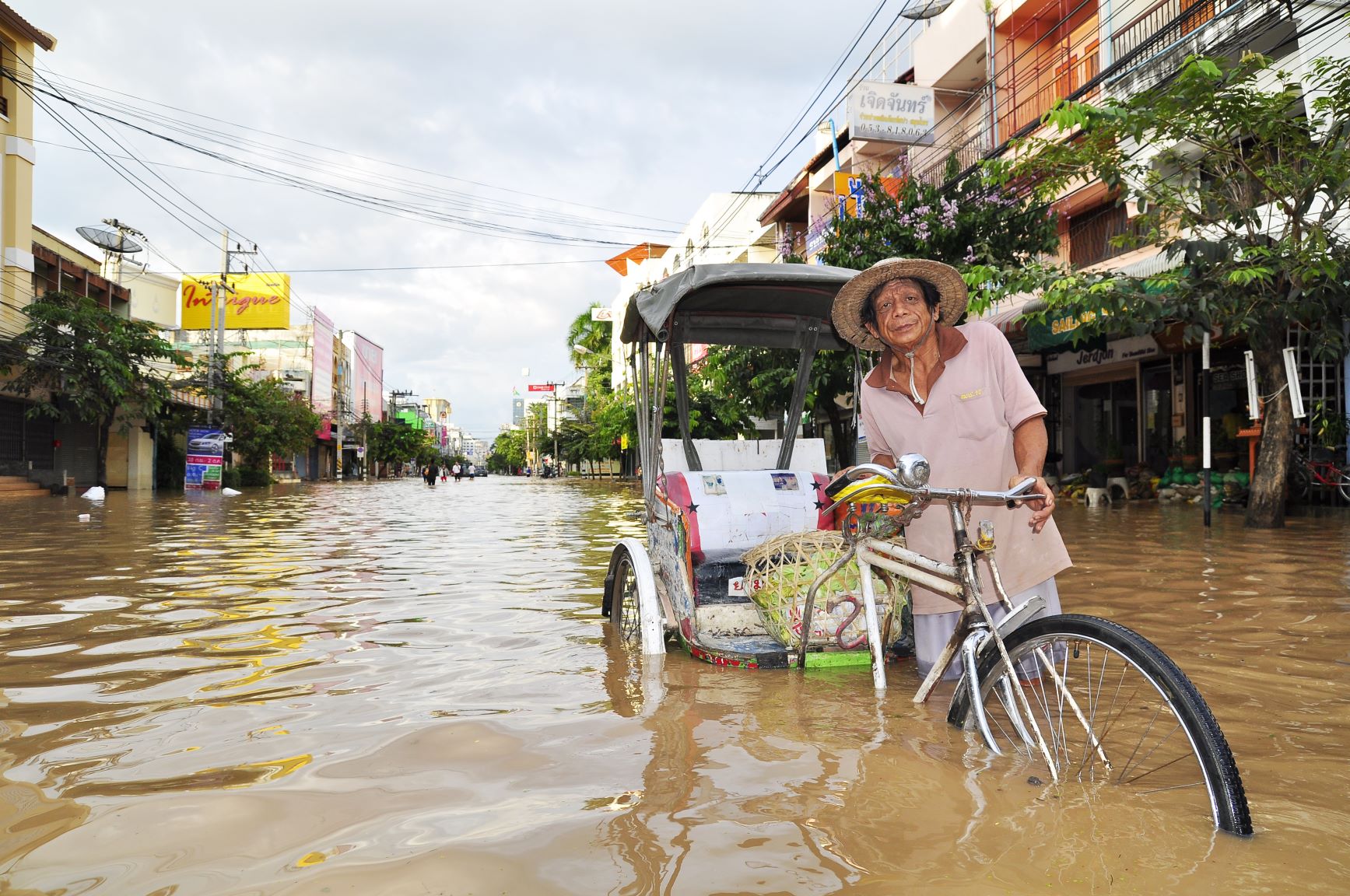
In Asia, 3454 disasters were recorded from 1970–2019, with 975 622 lives lost and US$ 1.2 trillion in reported economic damages. Asia accounts for nearly one third (31%) of weather-, climate- and water-related disasters reported globally, accounting for nearly half of deaths (47%) and one third (31%) of associated economic losses. Most of these disasters were associated with floods (45%) and storms (36%).
Storms had the highest impacts on life, causing 72% of the lives lost, while floods led to the greatest economic losses (57%). The top 10 recorded disasters in Asia account for 70% (680837 deaths) of the total lives lost and 22% (US$ 266.62 billion) of economic losses for the region.
North America
In North America, Central America and the Caribbean, 1977 recorded disasters, 74839 deaths and economic losses of US$ 1.7 trillion. The region accounted for 18% of weather-, climate- and water-related disasters, 4% of associated deaths and 45% of associated economic losses worldwide over the past 50 years.
Storms (54%) and floods (31%) were the most prevalent cause of recorded disasters. Storms were linked to the greatest loss of life (71%) and economic losses (78%) in the region. The United States accounts for one third (38%) of global economic losses caused by weather, climate and water hazards.

You must be logged in to post a comment.