
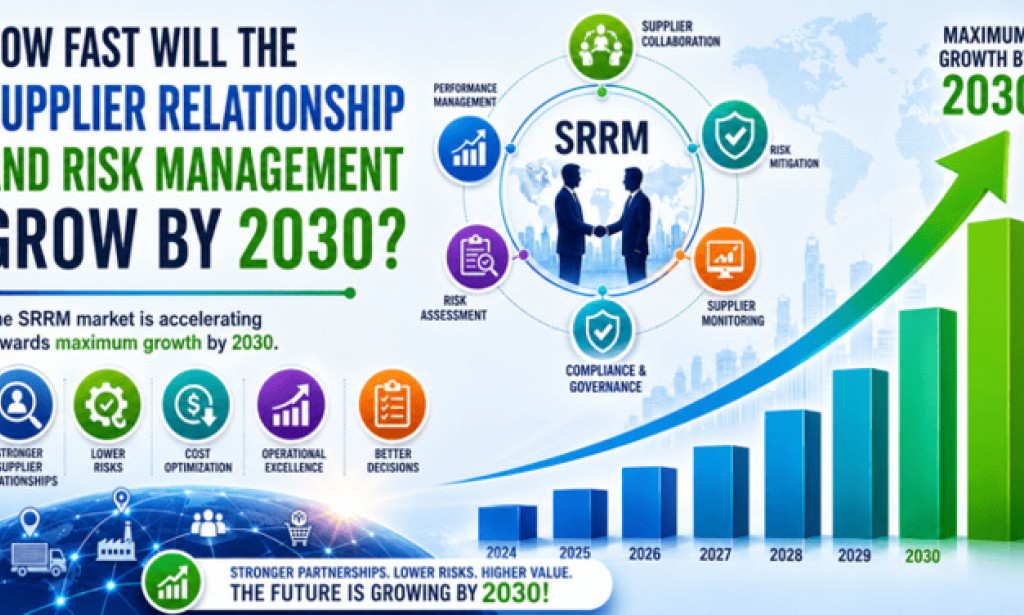
As global supply chains become increasingly interconnected and vulnerable to disruption, organizations are placing greater emphasis on supplier collaboration, risk mitigation, and operational resilience. The Supplier Relationship and Risk Management Market is emerging as a critical segment within procurement and supply chain technology, helping enterprises manage supplier performance, ensure compliance, and proactively identify risks across complex supplier ecosystems.
According to QKS Group, the Market Forecast: Supplier Relationship and Risk Management (SRRM), 2026-2030, Worldwide projects the market to reach approximately $1.45 billion by 2030, expanding at a CAGR of 12.22% from 2024 to 2030. This growth reflects the increasing need for organizations to strengthen supplier relationships while navigating economic uncertainty, geopolitical tensions, regulatory pressures, and environmental challenges.
How Fast Will the Supplier Relationship and Risk Management Market Grow by 2030?
The SRRM market is expected to witness robust growth through 2030 as enterprises prioritize supply chain resilience and risk intelligence. Businesses today depend on a vast network of suppliers spread across multiple geographies, making them vulnerable to disruptions caused by political instability, natural disasters, cybersecurity threats, inflation, and changing regulations.
Traditional supplier management approaches are no longer sufficient to address these challenges. Modern SRRM solutions combine supplier performance management, compliance monitoring, risk assessment, and predictive analytics into a single platform. This integrated approach enables organizations to identify potential risks early and implement corrective actions before disruptions impact operations.
The increasing digitalization of procurement processes and growing investments in supply chain technologies are expected to accelerate market adoption throughout the forecast period.
What Is Driving Growth in the Supplier Relationship and Risk Management Market in 2026?
Several key factors are fueling growth in the market:
Rising Supply Chain Complexity
Globalization has expanded supplier networks, creating greater interdependencies across industries. Organizations require advanced SRRM solutions to monitor supplier performance, assess risks, and maintain continuity across their supply chains.
Increased Regulatory Compliance Requirements
Governments worldwide are introducing stricter regulations related to sustainability, labor practices, environmental impact, and data security. SRRM platforms help organizations ensure supplier compliance and reduce legal and reputational risks.
Growing Focus on Operational Resilience
Recent disruptions have highlighted the importance of supply chain resilience. Organizations are investing in SRRM technologies to improve visibility, strengthen supplier relationships, and develop contingency plans for unexpected events.
Digital Transformation Initiatives
Procurement departments are increasingly adopting digital tools to automate workflows and improve decision-making. SRRM solutions provide real-time insights that support strategic sourcing and supplier management activities.
Top Supplier Relationship and Risk Management Trends to Watch in 2026–2030
AI-Powered Risk Assessment
Artificial intelligence is transforming supplier risk management by analyzing large volumes of structured and unstructured data. AI-driven platforms can identify emerging risks, predict supplier disruptions, and provide actionable recommendations.
ESG and Sustainability Monitoring
Environmental, Social, and Governance (ESG) considerations are becoming a major factor in supplier selection and evaluation. Organizations are leveraging SRRM solutions to monitor supplier sustainability practices and ensure compliance with ESG standards.
Real-Time Supplier Intelligence
Businesses increasingly demand real-time visibility into supplier performance and risk indicators. Advanced analytics and continuous monitoring capabilities enable organizations to respond quickly to changing market conditions.
Third-Party Risk Management Integration
Organizations are integrating SRRM with broader third-party risk management frameworks to gain a holistic view of supplier-related risks across procurement, finance, cybersecurity, and compliance functions.
Cloud-Based Deployment
Cloud-native SRRM platforms are gaining traction due to their scalability, flexibility, and ease of integration with existing procurement ecosystems.
How AI Is Transforming the Supplier Relationship and Risk Management Market
Artificial intelligence is becoming one of the most influential technologies in the Supplier Relationship and Risk Management market landscape. AI-powered systems help organizations move from reactive risk management to proactive risk prevention.
Machine learning algorithms can analyze supplier behavior patterns, financial health indicators, geopolitical developments, and market trends to identify potential vulnerabilities. Natural language processing (NLP) technologies can monitor news sources, regulatory updates, and social media channels to detect emerging supplier risks.
AI also enhances supplier segmentation, performance evaluation, and contract compliance monitoring. By automating routine tasks and delivering predictive insights, AI enables procurement teams to focus on strategic supplier engagement and value creation.
As AI capabilities continue to evolve, organizations are expected to increasingly rely on intelligent SRRM platforms to support data-driven decision-making and strengthen supply chain resilience.
Top Growth Opportunities in the Supplier Relationship and Risk Management Market Through 2030
Several opportunities are expected to drive future market expansion:
- Increased adoption among mid-sized enterprises seeking affordable cloud-based SRRM solutions.
- Growing demand for integrated procurement and supplier risk management platforms.
- Expansion of ESG-focused supplier monitoring capabilities.
- Rising investment in predictive analytics and AI-powered risk intelligence.
- Increased focus on supplier diversity and sustainable sourcing programs.
- Growing need for cybersecurity risk assessment within supplier networks.
Technology vendors that offer advanced analytics, automation, and seamless integration capabilities are likely to gain a competitive advantage in this evolving market.
What Does the Future Hold for the Supplier Relationship and Risk Management Market?
The future of the Supplier Relationship and Risk Management Market will be defined by greater automation, predictive intelligence, and strategic supplier collaboration. Organizations are moving beyond transactional supplier management toward long-term partnerships that prioritize innovation, resilience, and sustainability.
As supply chains become more dynamic and complex, SRRM solutions will play an increasingly critical role in helping organizations identify risks, maintain compliance, and optimize supplier performance. The convergence of AI, analytics, cloud technologies, and ESG monitoring will further enhance the value proposition of SRRM platforms.
Conclusion
The Market Forecast: Supplier Relationship and Risk Management (SRRM), 2026-2030, Worldwide highlights a market poised for significant expansion as organizations strengthen their supply chain resilience strategies. With a projected valuation of $1.45 billion by 2030 and a CAGR of 12.22%, the market is benefiting from growing supply chain complexity, regulatory requirements, and the need for proactive risk management.
Organizations that invest in advanced SRRM technologies will be better positioned to manage uncertainty, improve supplier performance, and achieve long-term business success. As AI, ESG initiatives, and real-time analytics continue to reshape the market, SRRM solutions will become an essential component of modern procurement and supply chain management strategies.
Frequently Asked Questions (FAQs)
1. What is Supplier Relationship and Risk Management (SRRM)?
Supplier Relationship and Risk Management (SRRM) is a technology-driven approach that helps organizations manage supplier performance, assess risks, ensure compliance, and strengthen supplier collaboration across the supply chain.
2. Why is the SRRM market growing rapidly?
The market is growing due to increasing supply chain complexity, regulatory requirements, digital transformation initiatives, and the need for enhanced risk visibility and operational resilience.
3. How does AI improve Supplier Relationship and Risk Management?
AI improves SRRM by enabling predictive risk analysis, automated monitoring, supplier performance evaluation, and real-time identification of emerging risks, helping organizations make faster and more informed decisions.
#SupplierRelationshipManagement #RiskManagement #SRRMMarket #ProcurementTechnology #SupplyChainRisk #SupplierManagement #DigitalProcurement #MarketForecast #SupplyChainResilience #AIinProcurement
Related Reports:
Supplier Relationship & Risk Management (SRRM)
Market Share: Supplier Relationship and Risk Management (SRRM), 2025, Worldwide
https://qksgroup.com/market-research/market-share-supplier-relationship-and-risk-management-srrm-2025-worldwide-2774
QKS Group
Support
Add: 5th Floor, Wing 2, Cluster C, Eon Free Zone Rd, EON Free Zone, Kharadi, Pune, Maharashtra 411014
Email: [email protected]
Phone: (+1) 978-344-2770

You must be logged in to post a comment.