

- Europe heatwaves
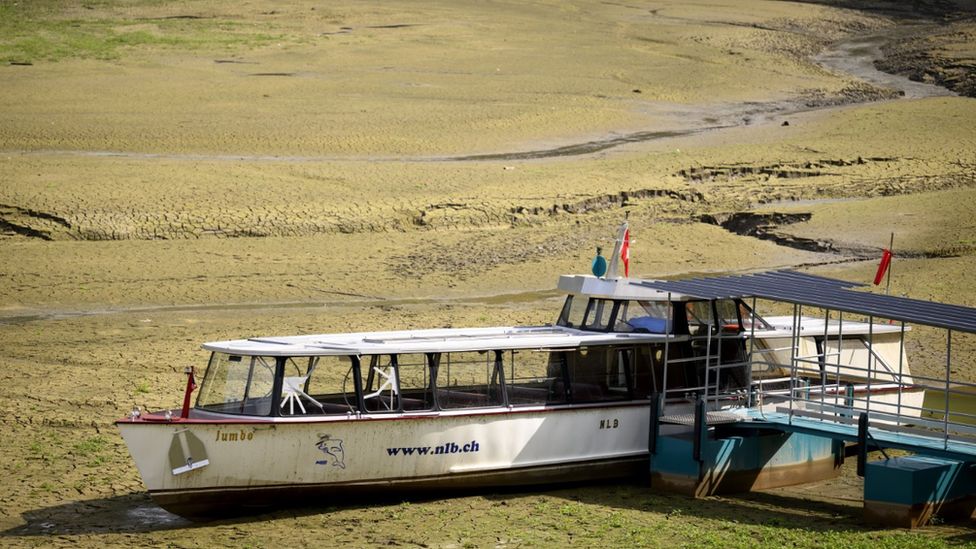 Image source, EPA
Two-thirds of Europe is under some sort of drought warning, in what is likely the worst such event in 500 years.
The latest report from the Global Drought Observatory says 47% of the continent is in "warning" conditions, meaning soil has dried up.
Another 17% is on alert - meaning vegetation "shows signs of stress".
The report warns that the dry spell will hit crop yields, spark wildfires, and may last several months more in some of Europe's southern regions.
Compared with the average of the previous five years, EU forecasts for harvest are down 16% for grain maize, 15% for soybeans and 12% for sunflowers.
The drought observatory is part of the European Commission's research wing. Responding to it, the Commission warned that preliminary data suggests "the current drought still appears to be the worst since at least 500 years".
The ongoing heatwave and water shortages have "created an unprecedented stress on water levels in the entire EU", Research Commissioner Mariya Gabriel said.
"We are currently noticing a wildfire season sensibly above the average and an important impact on crops production. Climate change is undoubtedly more noticeable every year," she added.
The report warned that nearly all of Europe's rivers have dried up to some extent.
Apart from the obvious impact on boats, dry rivers are also hitting the energy sector, which is already in crisis. Hydroelectric power has dropped by a significant 20%, according to the report.
A "severe drought" has been present in many places all year, but "has been further expanding and worsening as of early August" it says. The conditions are likely to last until at least November this year along the European Mediterranean.
The report warns that the situation is worsening in countries including Italy, Spain, Portugal, France, Germany, the Netherlands, Belgium, Luxembourg, Romania, Hungary, northern Serbia, Ukraine, Moldova, Ireland and the UK.
The researchers' stark warning follows rapidly-sinking river levels across Europe which have exposed relics of the past - including so-called "hunger stones" warning of potential famine and the sunken remains of World War Two Nazi ships.
And in the UK, which had an official drought declared in several regions, some trees have turned an autumnal shade of auburn - in what's considered a "false autumn" due to the heat.

You must be logged in to post a comment.