
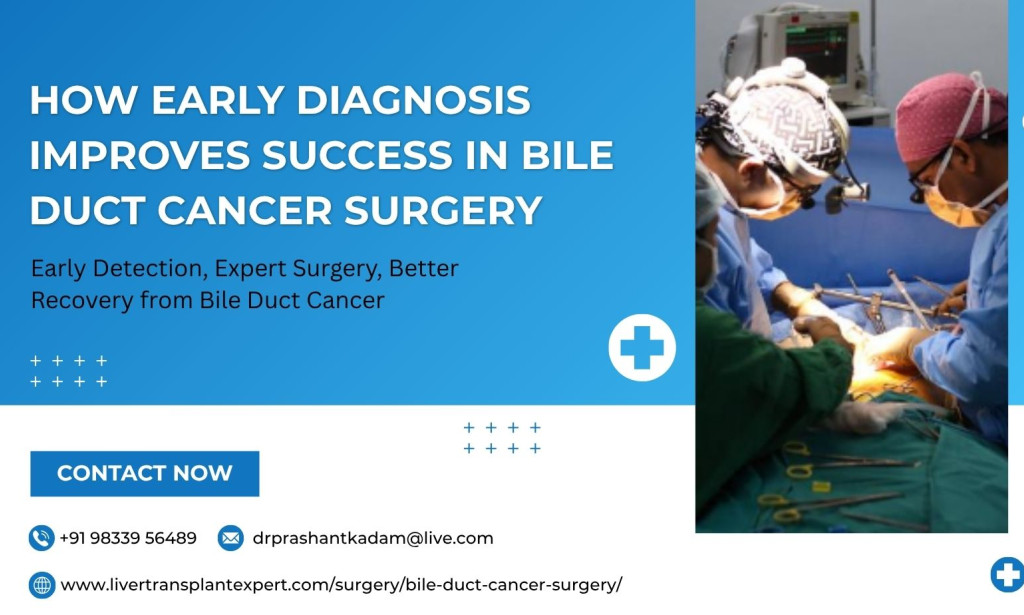
Bile duct cancer is a serious condition that affects the small tubes responsible for carrying bile from the liver to the small intestine. These ducts play an important role in digestion and liver function. When cancer develops in this area, early diagnosis becomes one of the most important factors for successful treatment.
Bile Duct Cancer Surgery is often the most effective treatment when the disease is found at an early stage. Timely detection allows doctors to remove the tumour before it spreads, improving both recovery and long-term outcomes.
Understanding Bile Duct Cancer
Bile Duct Cancer, also known as cholangiocarcinoma, can develop inside the liver or outside it in the bile duct system. It usually grows slowly, but symptoms may not appear in the early stages, which makes diagnosis difficult.
Common warning signs include jaundice, dark urine, pale stools, abdominal pain, itching, unexplained weight loss, and fatigue. Since these symptoms can also occur in other liver conditions, specialist evaluation is necessary for accurate diagnosis.
Why Early Diagnosis Is Important
Early-stage bile duct cancer is more likely to be treated successfully with surgery. If the tumour remains limited to the bile duct and nearby structures, surgeons may be able to remove it completely.
However, if diagnosis happens late, the cancer may spread to the liver, blood vessels, or nearby organs. This can make Bile Duct Cancer Surgery more complex or, in some cases, no longer possible.
This is why patients with symptoms of liver or bile duct problems should seek medical attention without delay.
Diagnostic Steps Before Surgery
Doctors use several tests to confirm the presence of bile duct cancer and determine the stage of the disease.
Imaging and Blood Tests
Ultrasound, CT scans, MRI, and MRCP are commonly used to examine the bile ducts and liver. These scans help doctors identify blockages, tumour size, and whether the cancer has spread.
Blood tests, including liver function tests and tumour markers, also support diagnosis. In some cases, a biopsy may be needed to confirm the cancer type.
A liver transplant specialist in Mumbai or an experienced HPB surgeon may also review these reports to decide whether surgery is the best treatment option.
Role of Surgery in Treatment
Surgery remains the main curative treatment for many patients with bile duct cancer. The goal is to remove the tumour completely while preserving as much healthy liver function as possible.
Types of Bile Duct Cancer Surgery
The type of surgery depends on the tumour location. Some patients may need bile duct removal, while others may require partial liver resection if the cancer involves nearby liver tissue.
In complex cases, advanced hepatobiliary teams and a liver transplant specialist in Mumbai may be involved, especially when major liver surgery or transplant evaluation is required.
Successful Bile Duct Cancer Surgery depends heavily on careful planning, detailed imaging, and early intervention.
Benefits of Early Surgical Treatment
When surgery is performed early, patients often have better outcomes and fewer complications. Recovery may be smoother because the tumour is smaller and surrounding organs are less affected.
Better Long-Term Survival
Complete tumour removal offers the best chance for long-term disease control. Patients diagnosed early are also more likely to avoid emergency procedures caused by severe jaundice or bile duct blockage.
Early diagnosis also allows doctors to plan treatment in a structured way, including surgery, supportive care, and follow-up monitoring.
This improves the overall success of Bile Duct Cancer Surgery and supports better quality of life after treatment.
Choosing the Right Specialist
Bile duct cancer requires treatment from experienced specialists who understand complex liver and biliary conditions. Choosing the right hospital and surgeon can make a major difference.
Patients should look for centres with expertise in hepatobiliary surgery, oncology, liver transplantation, and post-surgical care. A trusted liver transplant specialist in Mumbai can provide advanced treatment planning for difficult cases.
Importance of Follow-Up
Even after successful surgery, regular follow-up is necessary. Doctors monitor liver health, check for recurrence, and guide recovery through diet, medication, and lifestyle support.
Long-term care helps maintain results and supports better patient confidence after surgery.
Conclusion
Bile Duct Cancer is a challenging condition, but early diagnosis can greatly improve treatment success. When detected in time, Bile Duct Cancer Surgery offers the best chance for complete tumour removal and long-term recovery.
With expert evaluation, modern imaging, and skilled surgical care, patients can receive safer and more effective treatment. Early action remains the strongest step toward better outcomes and improved liver health.

You must be logged in to post a comment.