
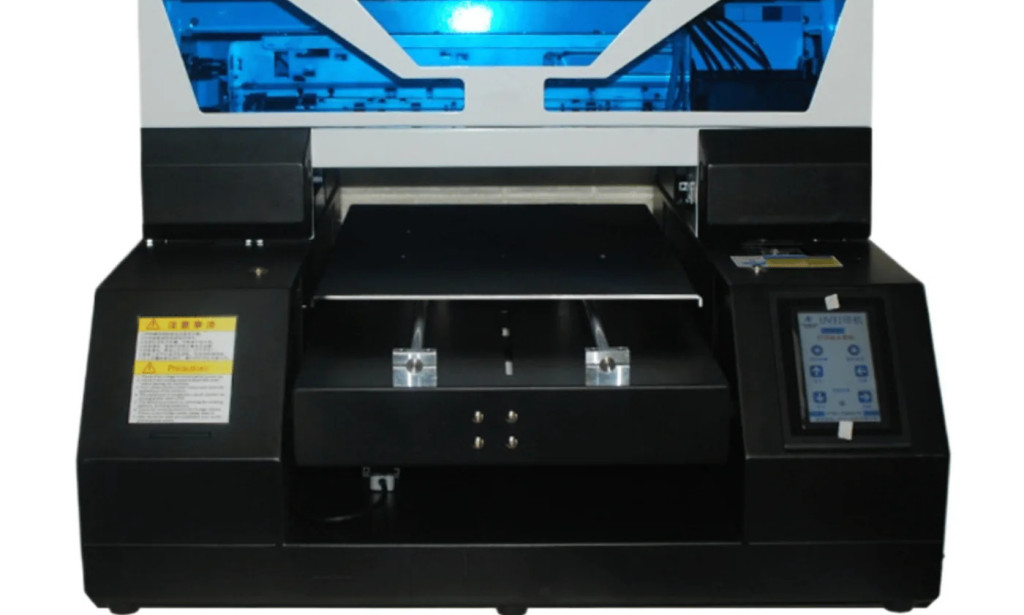
Across American small businesses, custom product creation and prototyping require printing on items that are not flat paper. Smartphone cases, promotional gifts, and product prototypes need durable, high-resolution graphics. An A4 UV flatbed printer prints directly onto three-dimensional objects up to 12 centimeters thick. American entrepreneurs, product designers, and small-scale manufacturers use these printers for on-demand customization without outsourcing.
Operating Principles
The printer uses ultraviolet-curable ink. The print head deposits ink onto the object surface. An ultraviolet lamp immediately cures the ink, turning it solid. This process allows printing on non-porous materials such as glass, metal, acrylic, and plastic that traditional ink would not adhere to.
The ink is instantly dry upon curing, so printed items can be handled immediately. The cured ink is durable and resists scratching and fading.
Material Compatibility and Applications
The printer works on a wide range of materials and objects. Flat items such as acrylic sheets, metal plates, glass panels, and wooden coasters accept direct printing. Three-dimensional objects such as smartphone cases, promotional pens, keychains, and electronic device housings also print successfully.
The infrared height sensor automatically measures object height up to 12 centimeters. The print head maintains a consistent 3 millimeter distance from the object surface. This automatic height adjustment protects the print head from collision and ensures even ink deposition on irregular surfaces.
Common applications include:
- Custom phone case printing
- Promotional product decoration
- Prototype and sample production
- Small batch product manufacturing
- Personalized gift creation
Color Capabilities and White Ink
The six-color ink system includes cyan, magenta, yellow, black, and two white channels. White ink is essential for printing on dark or transparent materials. Without a white base layer, colors would appear muted or transparent on dark surfaces. The dual white channels allow printing opaque white underlayers before applying color.
This capability enables full-color printing on clear acrylic, dark metal, and colored plastics. The printed result is vibrant and opaque, similar to printing on white paper.
Nozzle Protection and Maintenance
Ultraviolet ink can dry and clog print head nozzles if left idle. The printer includes an automatic flash spray maintenance system. When idle, the system periodically sprays cleaning solution onto the nozzles to prevent ink from drying. This reduces the risk of nozzle blockage and minimizes manual cleaning.
Key features for reliable operation include:
- Infrared height sensor for automatic distance adjustment
- Automatic flash spray nozzle maintenance
- Six-color ink system with dual white channels
- Ultraviolet curing for instant drying
- Air cooling for extended operation
Safety Practices and Operational Guidelines
Safe UV printer operation requires several key practices:
- Operate in well-ventilated area for ultraviolet ink fumes
- Wear nitrile gloves when handling uncured ink
- Do not look directly at ultraviolet curing lamp
- Keep printer away from direct sunlight
- Clean print head regularly using recommended solution
The ultraviolet lamp produces bright light that can damage eyes. Some protective covers shield the lamp during operation. Users should avoid looking directly at the curing area while printing.
Advantages and Limitations
Advantages of an A4 UV flatbed printer include:
- Direct printing on objects up to 12 centimeters thick
- Automatic height detection for nozzle protection
- Instant ultraviolet curing for immediate handling
- Six-color ink with white for dark materials
- Automatic nozzle maintenance system
- Works on glass, metal, acrylic, plastic, leather
Limitations to consider:
- A4 working area limits part size
- Requires ventilation for ink fumes
- Ultraviolet lamp poses eye hazard
- Ink is more expensive than standard inkjet ink
- Learning curve for color management with white underlayers
Real-World Application Example
An American small business owner in Texas printed custom smartphone cases for local retailers. Previously, each design required ordering from an overseas supplier with a two week lead time and minimum order quantities. The owner purchased an A4 UV flatbed printer. Each phone case was printed on demand in under five minutes. The business now offers next-day custom cases without inventory waste.
Conclusion and Future Outlook
A4 UV flatbed printers enable American small businesses to produce custom-printed products on demand without outsourcing. The combination of automatic height detection, ultraviolet curing, and white ink capability makes these printers suitable for phone cases, promotional items, prototypes, and personalized gifts. Future designs may include larger print areas and improved ventilation systems for indoor use.
Product designers and small manufacturers should evaluate UV flatbed printers for any business requiring on-demand printing on three-dimensional objects. The A4 size and 12 centimeter height capacity make this printer suitable for diverse American customization applications.

You must be logged in to post a comment.