

Today we are talking about the music emperor Gulshan Kumar, who took the Indian music industry to new heights. How did Gulshan Kumar, who sold fruit juices in a small shop with his father, become a successful musician? You all know that Gulshan Kumar has merged with the five elements and is not present among us today, but it is impossible to forget him, he is still alive in the hearts of people. Let us tell you about some special things related to the life of Gulshan Kumar.
Gulshan Kumar biography -
Gulshan Kumar was born on May 5, 1951, in Delhi in a Punjabi Hindu family. His full name was Gulshan Kumar DOA. Initially, he used to sell fruit juices along with his father in Delhi's Dariaganj market. But he was not happy with this work, and he had to do something big. When he was 23, he opened a shop and started selling records and audio cassettes. This is where Gulshan Kumar's career started.
After some time Gulshan Kumar opened his own music production company in Noida named Super Cassette Industries and in this he started making audio cassettes and selling them at low price to the people. Gradually, his business started growing, and his cassettes started selling a lot, due to which he started getting good profits. The Hindi film industry was also flourishing during that period and Gulshan Kumar moved from Noida to Mumbai and started giving music in Bollywood films.
Gulshan Kumar was very interested in worship -
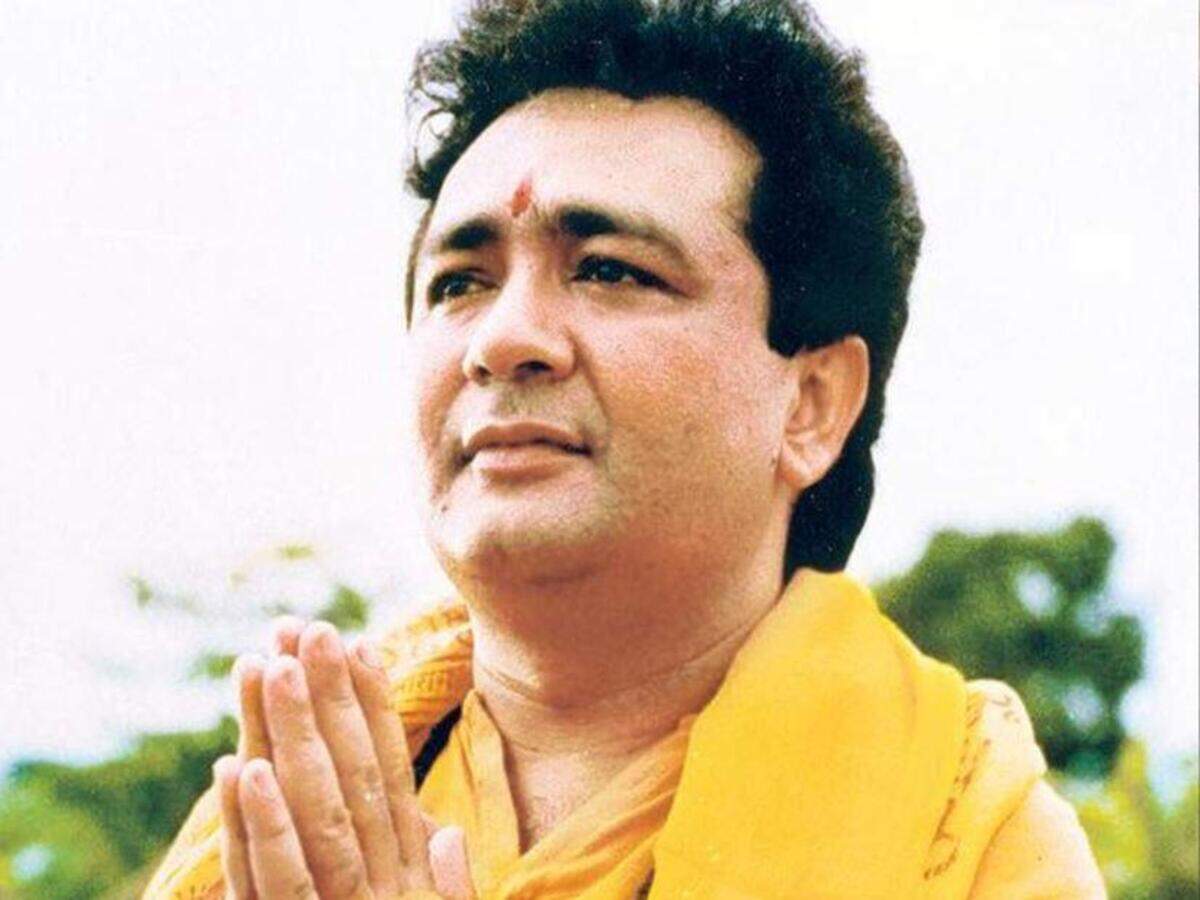
Gulshan Kumar was a very religious person and had great faith in the gods and goddesses. Apart from film music, Gulshan Kumar also made his foray into devotional music, he also produced many Bajans and films and serials related to Hindu mythology. Even today, you will hear many of his famous Bajans and artist in temples.
Gulshan Kumar made his debut in film production with the 1989 film Lal Dupatta Malmal Ka. The music of this film became very popular. The next year, in 1990, the film 'Aashiqui' was released, whose songs broke all the records and all the songs became very famous. Even today, many places get to hear the songs of the movie 'Aashiqui'. In 1991, the film 'Dil Hain Ki Manta Nahi' was produced by Gulshan Kumar in which Aamir Khan and Pooja Bhatt worked. This film could not show anything special but its songs definitely became a super hit.
Some special things related to Gulshan Kumar -
1. Gulshan Kumar was a man attached to the land and used to spend a large part of his earnings in social service. He was a devotee of Vaishno Devi and established a Bhandara at Vaishno Devi which still provides food for the pilgrims.
2. Gulshan Kumar was included in the list of the highest tax paying rich in the year 1992-93. Gulshan Kumar's daughter Tulsi Kumar is also a well-known singer.
3. Gulshan Kumar started T-Series Music under Super Cassette Industries, which is the largest producer of music and videos in India. It covers more than 60 percent of the Indian music industry. Apart from this, T-Series exports music albums to 24 countries around the world. T-Series is the most subscribed channel in India and the world on YouTube.
4. He also introduced his younger brother Kishan Kumar in films and got him recognition through 'Bewafa Sanam'. Sonu Nigam became famous with the songs of this film. Let us inform that the credit of giving recognition to Singer Kumar Sanu also goes to Gulshan Kumar.
Gulshan Kumar had turned down the demand of extortion of the underworld
5. Gulshan Kumar had rejected the demand of extortion of Mumbai's underworld from Surrey, due to which he was murdered. When Abu Salem asked him to give 5 lakh rupees every month, Gulshan Kumar refused and said that by paying this much money, he would organize a bhandara in Vaishnu Devi.
6. Gulshan Kumar used to go to the Jiteshwar Mahadev temple in Mumbai every day to perform aarti. On the morning of August 12, 1997, when he was going back to sit in his car after worshiping, an unknown person stopped his way and said that he has done a lot of worship, now go upstairs to worship. Saying this, the man along with two of his associates attacked Gulshan Kumar with bullets and called Abu Salem and heard Gulshan Kumar's screams for 10 minutes.
7. Gulshan Kumar's last rites were performed in Delhi. After the death of Gulshan Kumar, his son Bhushan Kumar took over the charge of Super Cassettes Industries Limited. On April 29, 2009, Rauf was sentenced to life imprisonment for the murder of Gulshan Kumar.

You must be logged in to post a comment.