

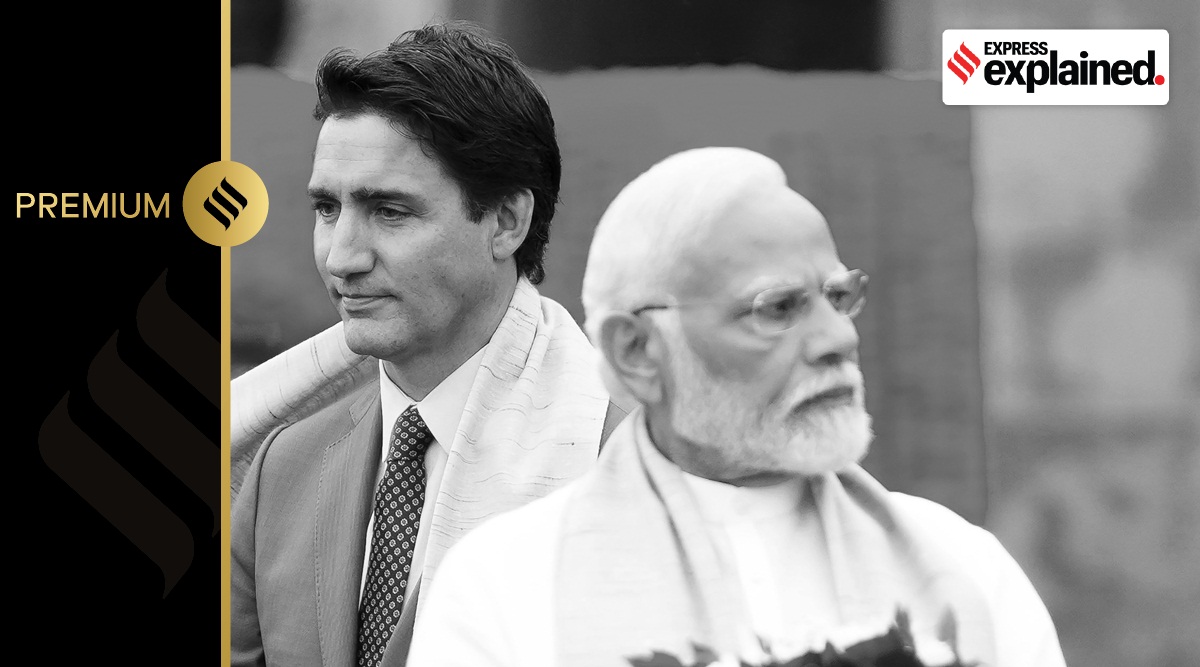
In a startling turn of events, Canada and India find themselves embroiled in a bitter diplomatic dispute, sparked by explosive allegations that the Indian government might have had a hand in the assassination of a prominent Sikh separatist activist on Canadian soil. The fallout from these accusations has cast a shadow over the once-friendly relations between the two nations, raising concerns about the potential ramifications for international diplomacy.
The Origins of the Dispute:
The controversy began when Canadian Prime Minister Justin Trudeau made a shocking claim in Parliament, asserting that his government possessed credible information linking India to the killing of Hardeep Singh, a prominent Sikh leader, a Canadian citizen, was brutally gunned down by masked assailants in June, a crime that sent shockwaves through the Sikh community in Canada, one of the largest Sikh populations outside of India, with over 770,000 members.
Canada's Allegations:
Trudeau's statement in Parliament sent shockwaves through the diplomatic world. He revealed that Canadian authorities had been investigating "credible allegations" suggesting a potential link between "agents of the government of India" and assassination. In response to these claims, Canada's foreign affairs minister, Melanie Joly, announced the expulsion of an Indian diplomat, whom she described as the head of the Indian intelligence agency in Canada.

India's Response:
India, taken aback by Canada's allegations, swiftly rejected Trudeau's claims. It vehemently denied any involvement in the assassination and accused Canada of harboring terrorists. India asserted that its long-standing concerns regarding Canada's inaction against extremist elements on its soil were well-founded. In a retaliatory move, India expelled a senior Canadian diplomat from its territory.
Sikh Community's Appeal:
Following Trudeau's revelations, two influential Sikh community groups in Canada, the British Columbia Council and the Ontario Gurdwaras Committee, called on the Canadian government to suspend all intelligence, investigative, and prosecutorial cooperation with India. These groups urged Canada to respond comprehensively, reflecting the gravity of India's alleged role in the premeditated murder of a Sikh dissident living in Canada.
Canada's Stance:
Despite India's sharp rebuttal, Trudeau doubled down on the allegations. He clarified that Canada's intent was not to provoke or escalate the situation but to present the facts. Trudeau emphasized his government's commitment to follow the evidence and ensure that those responsible for Nijjar's killing were held accountable.
Hardeep Singh: A Controversial Figure:
Hardeep Singh was a vocal advocate for the creation of Khalistan, a separate Sikh homeland that would include parts of India's Punjab state. However, the Khalistan movement is banned in India and is considered a significant national security threat. Several groups associated with the movement are designated as "terrorist organizations" under India's Unlawful Activities (Prevention) Act himself was on the Home Ministry's list of designated terrorists.
Friend and former lawyer, Gurpatwant Singh Pannun, who also appears on India's UAPA wanted list, revealed that Canadian authorities, including the Royal Canadian Mounted Police, had warned him about threats to his life on multiple occasions. Pannun alleged that he had been cautioned to avoid making inflammatory statements or risk becoming a target.
Canada's Reaction:
Canadian law enforcement had not made any arrests in connection with murder. However, they did disclose that they were investigating three suspects and had issued a description of a possible getaway vehicle in August.
Challenges in Restoring Relations:
Relations between Canada and India had already been lukewarm for several years before this incident. The allegations made by Canada have further strained the relationship. Harsh Pant, a foreign policy expert at the Observer Research Foundation in New Delhi, described the situation as "quite extraordinary," emphasizing that friendly nations typically do not engage in such public disputes.
Negotiations for a trade deal between the two countries were already on hold due to "serious concerns." When Indian Prime Minister Narendra Modi hosted the Group of 20 (G20) leaders in New Delhi recently, he did not hold a one-on-one meeting with Trudeau but met with him on the sidelines of the summit. During their meeting, Modi expressed concerns about the alleged anti-India activities of extremist elements in Canada, according to the Indian government.
Canada's Diplomatic Isolation:
It's worth noting that Canada has found itself in a challenging diplomatic position. In 2018, when Trudeau visited India, his light diplomatic schedule was viewed by many as a snub from New Delhi. Furthermore, Trudeau had previously attended a Sikh event in Toronto where separatist flags and posters depicting an extremist Sikh leader killed in a 1984 Indian Army operation were displayed. India's government expressed deep concern over Canadian political figures openly expressing sympathy for such elements.
Temporary Suspension of Visa Services:
In response to the ongoing dispute, India's Ministry of External Affairs temporarily suspended the issuance of visas to Canadian citizens, citing "security threats." According to Arindam Bagchi, the ministry's spokesman, the move was prompted by concerns related to the incitement of violence, Canadian authorities' inaction, and an environment that disrupted the functioning of India's high commission and consulates.
Prospects for Reconciliation:
Despite the acrimony, some experts believe that the Canada-India relationship remains salvageable. Michael Kugelman, director of the South Asia Institute at the Wilson Center, emphasized the strong people-to-people relations between the two countries, underpinned by a significant Indian diaspora in Canada and substantial Canadian investments in India. Kugelman noted that Canada likely conducted a thorough investigation before making these allegations public.
Furthermore, key allies of Canada, including the United States, the United Kingdom, Australia, and other G20 leaders, have expressed deep concern over the allegations. They have emphasized the importance of Canada's investigations proceeding and the perpetrators being brought to justice.
In Conclusion:
The ongoing diplomatic row between Canada and India, fueled by allegations surrounding the assassination of Hardeep Singh Nijjar, has cast a shadow over their previously amicable relationship. While tensions are running high, the prospects for reconciliation exist, given the strong people-to-people ties and economic interests that bind the two nations. However, the situation underscores the challenges in managing complex international relations and the potential for unforeseen developments to strain even the most robust diplomatic partnerships.

You must be logged in to post a comment.