
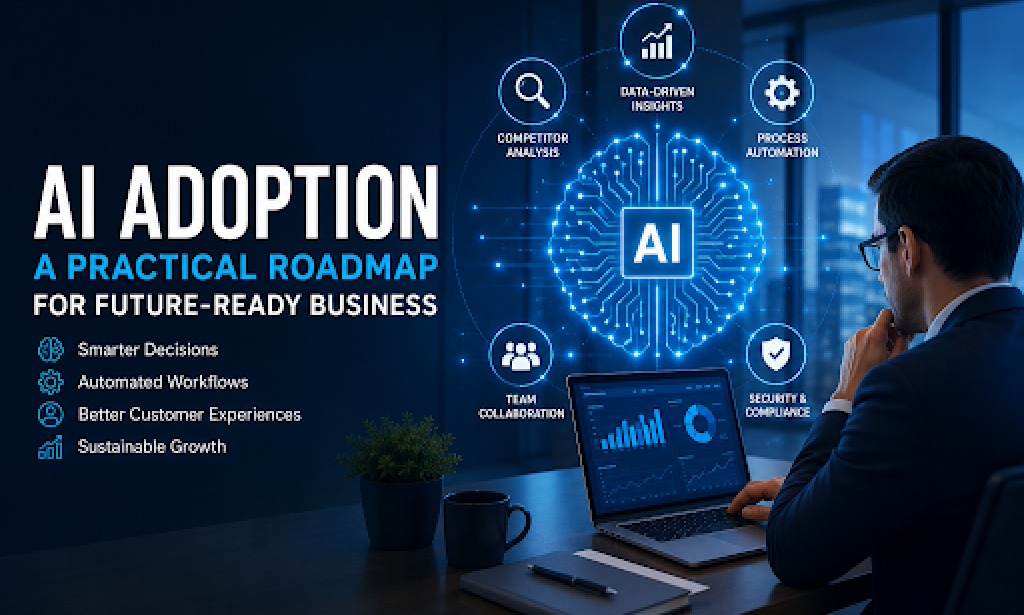
Artificial intelligence has moved from being a futuristic buzzword to a daily operational reality for organizations of every size. Yet despite widespread enthusiasm, many companies still struggle to translate AI experimentation into measurable business value. The gap between "using AI" and "successfully adopting AI" is wide, and bridging it requires more than just installing a new tool — it demands a structured, thoughtful approach that touches strategy, people, and process. This article outlines a practical roadmap that businesses can follow to move from curiosity to competence when integrating intelligent systems into their daily operations.
Understanding Why AI Initiatives Often Stall
Before looking at solutions, it's worth understanding why so many AI projects fail to deliver lasting impact. Research across industries consistently points to three recurring issues: unclear objectives, lack of employee buy-in, and poor integration with existing workflows. Teams often rush to deploy a new AI system because a competitor is doing the same, without first defining what success actually looks like. Without a clear problem statement — whether it's reducing customer response time, automating repetitive data entry, or improving forecasting accuracy — even the most sophisticated technology will underdeliver.
Another common pitfall is treating AI as a one-time IT project rather than an ongoing organizational shift. Successful implementation requires continuous learning, iteration, and a willingness to adjust workflows as the technology and the business evolve together.
Step 1: Start With a Clear Business Problem, Not a Trendy Technology
The most successful organizations begin their AI journey by identifying a specific, high-value problem rather than chasing the latest trend. This could be anything from shortening sales cycles to improving inventory forecasting. Once the problem is defined, teams can evaluate which type of AI solution — whether generative, predictive, or automation-based — actually fits the need.
This disciplined approach also makes it easier to measure return on investment. When a company knows exactly what metric it wants to move, such as reducing manual reporting hours by 30%, it becomes far easier to evaluate whether the chosen technology is delivering results.
Step 2: Build Internal Awareness and Skills
Technology alone rarely drives transformation — people do. Companies that see the strongest results from their AI initiatives invest early in training programs that help employees understand not just how to use new tools, but why they matter. This might include workshops on prompt writing, internal documentation on approved AI tools, or cross-functional working groups that share best practices.
A phased approach to AI adoption tends to work best: start with a small pilot team, gather feedback, refine the workflow, and only then scale across departments. This reduces resistance and builds internal champions who can help others get comfortable with the change.
Step 3: Choose the Right Tools for the Right Job
With thousands of AI-powered platforms available, choosing the right combination of tools is one of the most consequential decisions a business will make. For companies looking to understand their market position, a competitor analysis tool powered by AI can automatically track pricing changes, marketing campaigns, product launches, and customer sentiment across rival brands. Instead of manually compiling spreadsheets, teams receive real-time insights that would otherwise take days to gather manually. This kind of intelligence allows leadership to make faster, more informed strategic decisions rather than reacting after the fact.
Marketing and strategy teams are increasingly relying on these platforms not just for monitoring, but for identifying gaps in the market that competitors have overlooked Investing a critical advantage in saturated industries.
Step 4: Empower Non-Technical Teams to Build Their Own Solutions
One of the most significant shifts in the AI landscape over the past two years has been the rise of no-code and low-code platforms that let non-developers create functional applications. An AI App Builder allows product managers, operations leads, and even marketing teams to design custom internal tools — such as approval workflows, customer intake forms, or automated reporting dashboards — without waiting weeks for engineering resources. This democratization of software development reduces bottlenecks and allows departments to solve their own problems quickly, freeing technical teams to focus on more complex, high-value engineering work.
Organizations that combine this kind of tool with clear governance policies (such as data privacy guidelines and approval workflows) tend to scale their internal AI usage far more safely and effectively than those that allow uncontrolled experimentation.
Step 5: Establish Governance and Data Practices Early
As AI tools become embedded in daily operations, governance cannot be an afterthought. Businesses need clear policies covering data privacy, model accuracy checks, and human oversight for high-stakes decisions. This is especially important in regulated industries like finance, healthcare, and education, where errors can carry legal or reputational consequences.
A simple but effective governance framework includes:
Data classification — determining which data can be used with external AI tools and which must remain internal
Approval workflows — requiring human review for outputs used in customer-facing or financial decisions
Audit trails — logging how AI tools are used across departments to identify risks early
Regular model reviews — checking for accuracy drift, bias, or outdated training data
Step 6: Measure, Iterate, and Scale
Once initial pilots show promising results, businesses should formalize a measurement framework tied to the original objectives set in Step 1. This includes tracking efficiency gains, cost savings, error reduction, and employee satisfaction with new workflows. Regularly revisiting these metrics helps leadership decide where to expand AI usage and where to pull back.
Scaling should be gradual and department-specific rather than a single company-wide rollout. What works for a sales team may not translate directly to finance or HR, so each function should have the flexibility to adapt tools to its unique workflow while still adhering to central governance standards.
The Human Element Remains Central
Despite all the technological advancement, the organizations that adopt AI most successfully are those that keep people at the center of the process. Technology should augment human judgment, not replace it entirely. Employees who feel involved in shaping how AI is used — rather than having it imposed on them — are far more likely to embrace new tools and contribute ideas for further improvement.
Final Thoughts
The path to meaningful AI integration is rarely linear, and there is no single formula that works for every organization. However, businesses that approach the process with clear objectives, thoughtful tool selection, strong governance, and genuine employee involvement consistently outperform those that treat AI as a quick technological fix. As tools continue to evolve in sophistication and accessibility, the companies that succeed will be those that treat this transformation as an ongoing journey of learning and adaptation, rather than a one-time deployment.

You must be logged in to post a comment.