
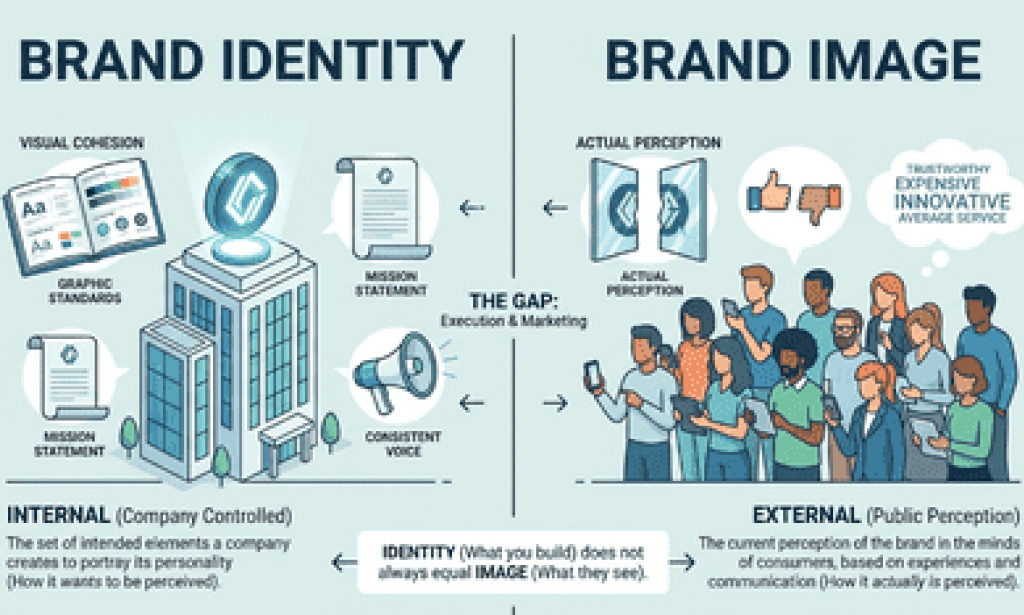
Ask five business owners to explain the difference between brand identity and brand image, and you'll probably get five different answers. Some will say they're the same thing. Others will confuse both with a logo, tagline, or visual design elements. This mix-up isn't just a semantics problem. It's one of the biggest reasons many rebrands fail to create a meaningful shift in customer perception.
The conversation around brand identity vs brand image matters because these two concepts represent two very different sides of branding. Brand identity is what a company intentionally creates and communicates, while brand image is how customers actually perceive and interpret that brand.
I've worked with founders who spent thousands on a slick new visual identity, only to realize six months later that customers still viewed the brand exactly the same way as before. That gap between what you built and what people actually believe about you is precisely the space between brand identity and brand image.
Understanding this difference helps businesses make smarter marketing decisions. A strong brand isn't just about creating the right visuals or messaging; it's about making sure the identity you build matches the image your audience experiences.
By the end of this article, you'll know exactly what separates brand identity from brand image, why the distinction matters for your marketing strategy, and how to start closing the gap between how you present your brand and how the market actually perceives it.
What Is Brand Identity?
Brand identity is everything you deliberately create to represent your business. It's the sum of your choices: your logo, color palette, typography, tone of voice, packaging, website design, and the values you choose to communicate. Think of it as the outfit and personality you've designed for your brand to wear in public.
Brand identity is internal and intentional. It lives in your brand guidelines document, your marketing strategy, and the creative briefs you hand to designers. You control it. If you decide your brand should feel premium, minimalist, and trustworthy, you build a visual and verbal identity around those three ideas.
A few practical examples of brand identity elements:
- Logo design and brand colors
- Voice and tone in your copywriting (formal vs. casual, playful vs. serious)
- Visual style across your website, packaging, and social media
- Core values and mission statement you communicate publicly
- Brand name and tagline
If you're currently building or refreshing these elements, this is usually where a brand style guide becomes essential, since it's the internal reference that keeps every touchpoint consistent.
What Is Brand Image?
Brand image is the flip side of the coin. It's how customers, prospects, and the general public actually perceive your business, regardless of what you intended. It forms in people's minds based on their experiences, word of mouth, reviews, customer service interactions, and even things completely outside your control, like a viral social media comment or a competitor's marketing.
Brand image is external and often unpredictable. You can design the most elegant identity in the world, but if your customer support is slow or your product doesn't deliver on its promise, the image people carry around will reflect that reality instead of your intended one.
Here's a simple way to remember it: identity is what you say about yourself; image is what others say about you when you're not in the room.
Brand Identity vs Brand Image: The Core Differences
To make this concrete, here's how the two compare side by side:
| Aspect | Brand Identity | Brand Image |
|---|---|---|
| Who controls it | The business | The audience/market |
| Nature | Intentional and designed | Perceived and often organic |
| Where it lives | Brand guidelines, design assets | Customer minds, reviews, conversations |
| Changes when | You update your strategy | Experiences and perceptions shift |
| Measured by | Design audits, brand consistency checks | Surveys, sentiment analysis, reviews |
A useful test: if you can point to a document or asset and say "this is what we built," that's identity. If you have to ask customers what they think of you, that's image.
Why This Difference Actually Matters for Your Business
This isn't just an academic distinction. Businesses that only focus on identity (logos, colors, taglines) while ignoring image often end up with a beautiful brand that nobody trusts. On the other hand, businesses that ignore identity entirely tend to have an inconsistent, forgettable presence even if their reputation is solid.
Common pain point: A company rebrands with a fresh, modern identity, but customer reviews still mention the same complaints about service or product quality from years ago. The identity changed. The image didn't. This happens because image is built through repeated experience, not a single design refresh.
Another common scenario: A small business has no formal brand identity at all (no consistent colors, inconsistent tone across platforms) yet has a strong positive image locally because of genuinely excellent service and word of mouth. This shows that a strong image can exist even without a polished identity, though it becomes harder to scale without one.
The real goal isn't choosing between the two. It's aligning them. When your intended identity and your actual image match, you get brand consistency that customers trust and remember.
How to Close the Gap Between Identity and Image
1. Audit your current brand image honestly: Read your reviews, social mentions, and customer feedback without defensiveness. What words do people actually use to describe you? Compare that list to the words in your brand guidelines.
2. Identify where experience breaks the promise: If your identity promises "fast and friendly service" but response times are slow, no amount of design work will fix the perception gap. Fix the operational issue first.
3. Make your identity consistent everywhere: Inconsistent visuals or tone across your website, social media, and packaging confuse customers and slow down how quickly a coherent image can form. This is where a documented brand guidelines checklist helps teams stay aligned.
4. Train every customer-facing touchpoint: Your identity is only as strong as its weakest interaction. Customer service reps, sales calls, and even email auto-responses all shape image, whether or not they were part of the original design brief.
5. Track image over time, not just identity metrics: Brand tracking surveys, review sentiment, and social listening tools give you a real read on how perception is shifting, separate from whether your latest campaign "looked good."
Key Takeaways
Brand identity is what you build. Brand image is what sticks in people's minds afterward. Neither one replaces the other. They work together, and the strongest brands are the ones where both are intentionally managed rather than left to chance.
If you're working on a rebrand or trying to figure out why your current branding doesn't seem to match how customers actually see you, start by auditing both sides honestly. And if you want a structured way to align your visual identity with real customer perception, our guide on building a complete brand strategy is a good next step to work through.

You must be logged in to post a comment.