
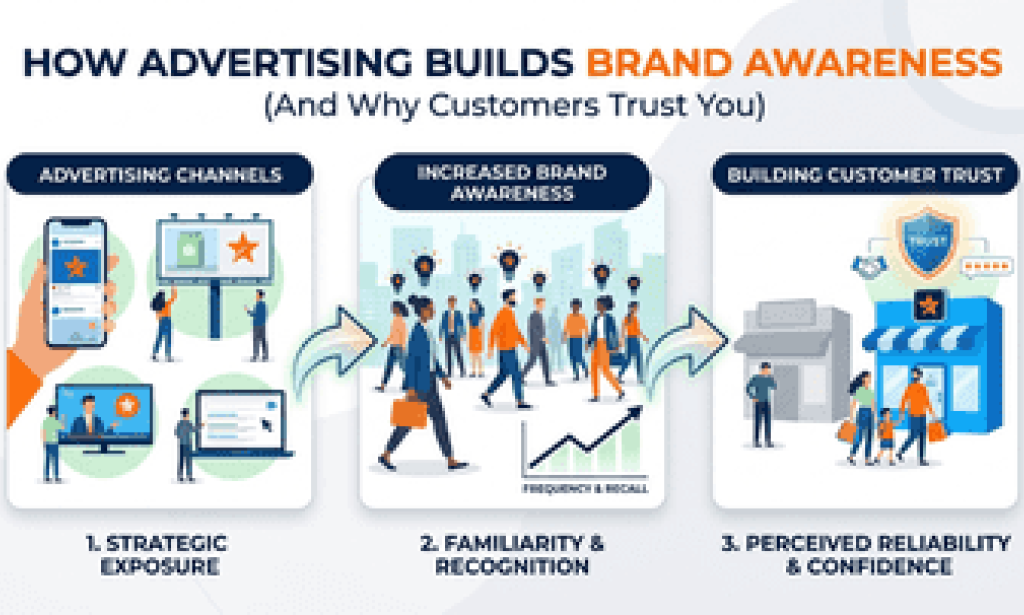
I've watched a lot of small business owners burn through ad budgets chasing "brand awareness" without ever defining what that actually means for their business. They run a campaign, see some impressions, feel good for a week, and then wonder why sales didn't move. If that sounds familiar, you're not doing anything wrong. You're just missing the connection between visibility and trust.
Brand awareness isn't just about being seen. It's about being remembered, and eventually, being trusted enough that someone chooses you over a competitor without much deliberation. Advertising is the tool that gets you there, but only when it's used with intention. In this guide, I'll walk through how advertising actually builds awareness, why corporate brand identity plays a bigger role than most people realize, and what you can do differently starting this week.
What Brand Awareness Really Means (And Why Most Businesses Get It Wrong)
Brand awareness is the degree to which people recognize and recall your brand when they think about a product category or a problem they need solved. It sounds simple, but there's a common mistake I see constantly: businesses treat awareness as the end goal instead of the starting point.
Being known isn't the same as being chosen. A person can recognize your logo and still buy from a competitor because they don't trust you yet, or because they simply forgot why they should care. Real brand awareness works in two stages:
- Recognition: people see your name or logo and know it's familiar
- Recall: people think of your brand specifically when they have a relevant need
If your advertising only builds recognition, you're spending money to be forgettable. Good campaigns build recall by consistently tying your brand to a specific benefit or feeling.
How Advertising Actually Builds Awareness Over Time
Advertising works cumulatively, not instantly. This is the part that frustrates a lot of business owners, especially ones used to performance marketing where every click is tracked and every dollar is justified within days.
Here's what I've seen work in practice:
Repetition with variation: Running the same ad once won't build awareness. Running it 20 times without any variation will build annoyance. The sweet spot is repeating your core message while changing the format, visuals, or angle. Think of it like meeting someone at a few different events before you actually remember their name.
Consistency across channels: If your social ads look playful but your website feels corporate and stiff, people notice the mismatch even if they can't articulate it. Consistency is what makes advertising feel trustworthy rather than random.
Emotional or memorable hooks: Facts and features rarely stick. A specific story, an unusual visual, or a clear point of view sticks far more than a list of benefits.
A common objection I hear here is, "But we don't have a huge ad budget for repetition." You don't need a huge budget. You need a focused one. Five ad placements running consistently for three months will usually outperform fifty scattered placements running for two weeks.
The Role of Corporate Brand Identity in Making Ads Work
This is where a lot of advertising falls flat, and it's rarely the ad copy's fault. It's a corporate brand identity problem.
Corporate brand identity is the collection of visual and verbal elements that make your business instantly recognizable: your logo, color palette, tone of voice, typography, and even the kind of language you use in customer communication. When this identity is inconsistent or undefined, every ad you run has to start from zero because nothing about it feels familiar to the viewer.
Why does this matter for awareness specifically?
Because the human brain relies on pattern recognition to build trust. When your ads, website, packaging, and customer service all "feel" like the same brand, people's brains file you as consistent and reliable, even subconsciously. When they don't match, it creates friction, even if the person can't explain why they hesitated.
If you're not sure whether your identity is solid, ask yourself:
- Could someone recognize your brand without seeing your logo, just from your colors or tone?
- Do your ads look like they belong to the same company as your website?
- Would a new employee know how to "sound" like your brand in a social post?
If the answer is no to any of these, that's worth addressing before spending more on advertising. (This is a good spot to link to an internal guide on building a brand style guide or brand identity framework.)
Choosing the Right Advertising Channels for Awareness Goals
Not every platform builds awareness the same way, and this is where budgets often get wasted.
Search ads are excellent for capturing demand that already exists, but they're weak for building awareness because people only see them when actively searching. They're a bottom of funnel tool.
Social media ads (especially video based ones) are strong for awareness because they interrupt browsing and can be shown to people who don't yet know they need your product.
Display and programmatic ads are useful for repetition at scale but can feel invisible if the creative isn't distinctive. Banner blindness is real.
Local and community advertising, such as sponsorships, local publications, and radio, still works well for regional businesses because trust builds faster within a defined community.
A practical approach I recommend: use awareness focused channels (social video, display) for the top of your funnel, and reserve search ads for people who are already close to a buying decision. Trying to make one channel do both jobs usually dilutes results.
Measuring Brand Awareness Without Guessing
This is where a lot of business owners get stuck, because awareness doesn't convert as neatly as a purchase does. Still, there are practical ways to measure it:
- Branded search volume: are more people searching your business name over time?
- Direct traffic: are more visitors typing your URL directly instead of arriving through search or ads?
- Social mentions and tags: are people referencing your brand organically?
- Surveys: simple post-purchase questions like "How did you first hear about us?" reveal a lot over time.
None of these are perfect on their own, but tracked together over a few months, they paint an honest picture of whether your advertising is building real recognition or just spending money into the void.
Common Mistakes That Quietly Undermine Brand Trust
A few patterns I see repeatedly:
Changing messaging too often: Rebranding your tone or visuals every few months resets awareness back to zero. Consistency compounds; constant change doesn't.
Overpromising in ads: Exaggerated claims might get a click, but they damage trust the moment reality doesn't match expectations. Trust, once lost, is expensive to rebuild.
Ignoring post-click experience: If your ad feels premium but your landing page feels rushed or outdated, the mismatch undoes the trust you just built.
Key Takeaways
Building brand awareness through advertising isn't about spending more. It's about being consistent, recognizable, and honest across every touchpoint. A strong corporate brand identity makes your advertising work harder because people don't have to relearn who you are every time they see your ad. Focus on repetition with purpose, match your identity across channels, and measure awareness with real signals rather than vanity metrics.
If you're not sure where your brand identity currently stands, a good next step is auditing your existing ads, website, and social presence side by side. If that feels like a lot to tackle alone, it's worth talking to a brand or marketing specialist who can walk through it with you. Sometimes an outside perspective catches inconsistencies you've stopped noticing.

You must be logged in to post a comment.