
India's film industry produces more theatrical releases than any other country in the world. Across Hindi, Tamil, Telugu, Malayalam, Kannada, Bengali, Marathi, Gujarati, and other regional languages, several hundred films reach commercial release each year, supported by an OTT ecosystem that has reshaped the economics of Indian entertainment since 2020. On May 19, 2026, Google is expected to announce Gemini Omni, a new generation of unified multimodal AI video model that, based on materials leaked across April and May, generates synchronized video, voice, on-screen text, and background music from a single written prompt.
The implications for India's film and streaming industries are not as immediate as some commentary suggests — but they are real, and they deserve careful attention from producers, directors, OTT executives, and the broader film industry workforce.
What Gemini Omni Actually Does
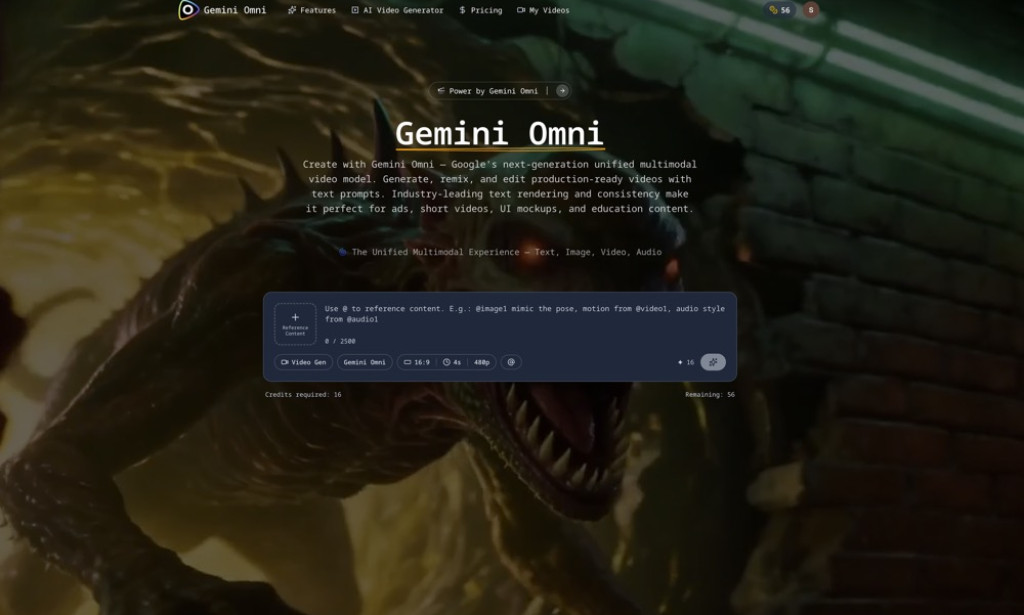
In practical terms, Gemini Omni is reported to generate complete short videos from text prompts — synchronized visuals, voice narration, on-screen text, and music produced together rather than stitched from separate generation passes.
For film and streaming industry professionals, the immediate question is not whether this technology will replace traditional production. The honest answer is that it will not, at least not in the near term. The quality threshold for theatrical and premium OTT content remains well above what AI generation produces. What is changing is the economics of specific content categories where AI generation has reached a usable quality threshold.
Implications for Bollywood and Hindi Film Production
The Hindi film industry has been adjusting to multiple structural shifts over the past five years — the rise of OTT premieres, the contraction of mid-budget theatrical releases, the consolidation of star-driven productions, and the increasing influence of regional industries on the broader market. AI video tools introduce another shift worth thinking carefully about.
Promotional content production becomes substantially less expensive. Behind-the-scenes featurettes, character-introduction videos for ensemble casts, promotional content tied to specific film themes, and the increasing volume of social media content that streaming platforms require to support releases — all of this becomes feasible to produce at higher volume with smaller production budgets.
Pre-production visualization improves significantly. Concept videos for pitching projects to studios, mood reels for cinematographers and production designers, location previews before scouting trips, and animatic-style sequences for complex action choreography all become faster to produce. For Mumbai-based production teams pitching projects to OTT executives, the ability to communicate vision through generated video rather than written treatments alone is a meaningful competitive advantage.
Junior production workforce roles face workflow consolidation. Assistant editors, motion graphics designers, and post-production trainees handling routine cutting and visual cleanup face the same workflow pressures discussed in global AI workforce analyses. The career ladder from junior to senior editorial roles — historically passing through years of routine work — is being foreshortened, with implications for how the next cohort of mid-career editors enters the industry.
Implications for Tamil, Telugu, and Other Regional Film Industries
The regional film industries in Chennai, Hyderabad, Trivandrum, Bengaluru, and Kolkata face different competitive dynamics than the Hindi market and respond differently to AI tooling.
Tamil and Telugu film industries — operating at production scales increasingly comparable to Bollywood — face similar economic pressures around promotional content, pre-production visualization, and junior workforce roles. The substantial pan-Indian releases that have become standard for major Tamil and Telugu productions involve complex multilingual marketing campaigns that benefit substantially from AI tools that handle script regeneration across languages.
Malayalam cinema — known for its disproportionate influence on Indian art cinema and OTT-friendly content — faces a more nuanced situation. The smaller production budgets characteristic of Malayalam cinema make any tool that reduces marketing and pre-production costs particularly valuable. The artistic sensibility of Malayalam directors is, however, often resistant to AI-generated content in ways that other industries are not.
Bengali, Marathi, Gujarati, and Kannada film industries — operating at smaller scales — may benefit most from AI video tools at the marketing and content-adaptation stages. The ability to produce promotional content for limited theatrical releases and the OTT-only releases that have become a significant revenue source provides meaningful economic relief for industries with persistently constrained production budgets.
What This Means for OTT Platforms
India's OTT ecosystem — including JioCinema, Hotstar, SonyLIV, ZEE5, Aha, and the international platforms operating in India — faces strategic questions from the launch.
The first is content acquisition economics. AI video tools do not threaten the premium content that defines OTT competitive positioning. They do affect the substantial volume of supplementary content — promotional videos, character intros, behind-the-scenes material, regional language adaptations — that OTT platforms produce at scale around their core releases. If supplementary content production costs fall meaningfully, OTT economics improve in ways that affect competitive positioning.
The second is internationalization. India's OTT platforms have struggled with the cost of localizing content for international markets where significant Indian diaspora audiences exist. AI tools that handle subtitle generation, voice dubbing, and regional content adaptation reduce the cost of serving these markets, potentially expanding the addressable audience for Indian OTT content materially.
The third is competition with international platforms. Netflix, Amazon Prime Video, and Apple TV+ operate in India with substantially larger global content libraries and international production budgets. Indian OTT platforms competing against these international players benefit from any tool that reduces the cost advantage international players have historically held in supplementary content production.
The Workforce Question
The most significant question for India's film industry workforce is what this technology means for entry-level roles and the career ladders that have historically supported the industry's labor pipeline.
Stock footage providers, voice-over artists working at lower-budget tiers, junior video editors at production houses, motion graphics designers handling routine work, and small-business marketing content producers serving the film industry's ecosystem all face direct workflow pressures.
The honest assessment, based on global workforce analyses of similar AI capability shifts, is that the impact is real but unevenly distributed. Senior editorial roles, established cinematographers, professional voice talent with brand-relationship value, and production designers contributing creative judgment retain their economic value. The middle of the workforce — particularly the entry-level positions through which the next cohort of senior creative professionals would historically have entered the industry — faces the most uncertainty.
Industry organizations and craft unions should anticipate that the next generation of Indian film industry workers will reach mid-career positions through paths different from those of the current senior cohort. Workforce planning, professional development, and craft training should adapt to this transition rather than assume that historical career patterns will continue.
What to Watch on May 19
Several specific signals during the Google I/O 2026 keynote will indicate how meaningfully Gemini Omni will affect India's film and streaming industries over the next eighteen months.
The first is multilingual support at launch. If Hindi, Tamil, Telugu, and other major Indian languages are announced as supported on day one, the practical utility for Indian industries accelerates significantly. Limited language support means longer wait times before the technology meaningfully serves Indian industries.
The second is enterprise API pricing for production companies and OTT platforms. Consumer-tier pricing matters less for industries that will integrate the technology through enterprise contracts. The economics of enterprise access through Google Cloud's Vertex AI platform will shape adoption patterns substantially.
The third is the timing of features specific to film industry use cases — particularly lip-sync capabilities for dubbing, voice cloning for promotional content featuring recognizable actors, and style controls that match the aesthetic standards of professional production.
A Practical Conclusion for Indian Film Industry Readers
The most useful approach for film industry professionals across India is patient, careful evaluation. The first month after any major AI launch is typically the worst time to commit to specific tools or workflow changes. The first six to twelve months are when realistic evaluation becomes possible.
For producers, directors, and studio executives, the practical recommendation is to identify two or three specific content needs that AI tools could realistically address, test them carefully against the quality standards that Indian audiences expect, and integrate them gradually rather than attempting broad workflow changes immediately.
For workforce professionals, the practical recommendation is to think clearly about which specific work categories face direct workflow pressure and to develop the kinds of differentiated expertise that AI tools do not threaten. Senior creative judgment, established craft, and relationship-driven work retain their value. The work that AI tools displace most readily is the routine production labor that has historically been the entry point for industry careers — and adapting professional development around this reality matters more than wishing the technology away.
The technology will continue improving. The Indian film industry has navigated multiple structural shifts over its century-long history and will navigate this one as well. The question is not whether to engage with the technology but how to do so thoughtfully — preserving what is valuable in current production practices while adapting to the genuine opportunities and challenges the technology represents.
Further documentation, post-launch capability tracking, and ongoing reference material related to Google's Gemini Omni release are aggregated at gemini-omni.ai, an independent reference compiled from publicly available leaks and developer reports.

You must be logged in to post a comment.