
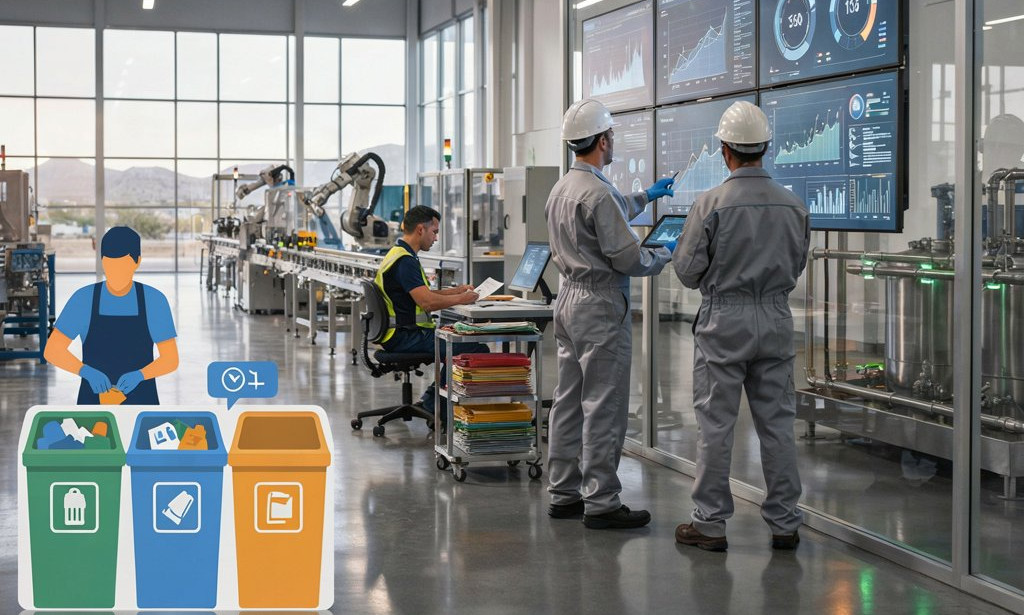
Mexico has become a cornerstone of North American manufacturing, offering companies a strategic location, established industrial clusters, and strong trade integration. As nearshoring continues to reshape global supply chains, manufacturers operating in Mexico face increasing expectations from regulators, multinational customers, investors, and consumers regarding environmental responsibility. Today, environmental compliance is no longer viewed as a standalone operational function. Instead, it has become a strategic business issue that influences supplier selection, operational resilience, corporate governance, and long-term competitiveness.
For executives overseeing manufacturing operations, procurement, supply chain management, or strategic sourcing, understanding Mexico's environmental regulatory landscape is essential. Companies that proactively manage environmental obligations are generally better positioned to reduce operational risks, strengthen customer relationships, and adapt to evolving sustainability expectations. This guide examines the regulatory framework, key compliance requirements, and governance practices that manufacturing leaders should understand when operating in or sourcing from Mexico.
Understanding Mexico's Environmental Regulatory Landscape
Mexico has established a comprehensive environmental governance framework designed to promote industrial development while protecting natural resources and public health. Manufacturing organizations are expected to comply with environmental legislation that addresses emissions, water management, hazardous waste, environmental impact, and resource conservation.
The principal authority responsible for environmental policy is the Secretariat of Environment and Natural Resources (SEMARNAT). The agency develops environmental regulations, administers permitting programs, establishes sustainability policies, and oversees national environmental management initiatives affecting industrial operations.
Environmental enforcement is carried out by the Federal Attorney for Environmental Protection (PROFEPA), which conducts inspections, investigates violations, and verifies compliance with federal environmental legislation.
Industrial water use and wastewater management fall under the authority of the National Water Commission (CONAGUA), which regulates water extraction, discharge permits, and sustainable water resource management.
Manufacturers may also be subject to Normas Oficiales Mexicanas (NOMs), or Mexican Official Standards, which establish technical environmental requirements for industrial activities. Depending on production processes, these standards may address emissions control, wastewater treatment, hazardous materials management, industrial pollutants, and environmental monitoring.
Executives should recognize that environmental compliance often involves both federal requirements and additional obligations imposed by state or municipal authorities.
Why Environmental Compliance Has Become a Boardroom Issue
Environmental compliance has evolved beyond regulatory administration to become an important component of business strategy and corporate governance.
Global OEMs increasingly evaluate suppliers based on environmental performance alongside quality systems, production capability, cybersecurity, and financial stability. Environmental issues can directly affect operational continuity, customer confidence, brand reputation, and long-term supplier relationships.
Executive leadership therefore plays an important role in establishing environmental priorities across manufacturing organizations. Strategic decisions regarding capital investment, facility expansion, equipment modernization, and operational planning increasingly incorporate sustainability considerations.
Environmental performance also influences broader enterprise risk management. Regulatory enforcement, permitting delays, environmental incidents, or non-compliance issues can disrupt production schedules, affect customer commitments, and create reputational challenges.
As sustainability expectations continue expanding throughout international supply chains, environmental governance has become an executive responsibility rather than solely an operational function.
Core Compliance Responsibilities for Manufacturing Organizations
Manufacturers operating in Mexico must establish structured processes that support ongoing environmental compliance throughout facility operations.
Environmental permitting represents one of the foundational compliance responsibilities. Depending on manufacturing activities, organizations may require authorizations related to emissions, wastewater discharge, hazardous waste generation, or environmental impact before beginning new projects or expanding production.
Air emissions management requires facilities to monitor applicable pollutants, maintain pollution control equipment, and comply with technical environmental standards where relevant.
Water management has also become increasingly important. Manufacturing facilities may need systems for monitoring water consumption, operating wastewater treatment processes, maintaining discharge permits, and supporting responsible resource management.
Hazardous waste management requires organizations to establish documented procedures covering waste identification, storage, transportation, treatment, and disposal according to applicable regulations.
Manufacturers are also expected to maintain comprehensive environmental documentation, including permits, monitoring records, inspection reports, employee training documentation, emergency response procedures, and corrective action records.
Strong documentation supports both regulatory inspections and customer sustainability assessments.
Sustainability Compliance Extends Beyond Legal Requirements
Many multinational organizations now expect suppliers to demonstrate environmental performance beyond minimum legal compliance.
International customers increasingly integrate sustainability objectives into procurement programs, supplier scorecards, and sourcing decisions. As a result, manufacturers frequently adopt broader environmental initiatives that support continuous improvement and operational efficiency.
Energy efficiency remains a common priority. Organizations continue investing in modern equipment, optimized production processes, and energy management systems that reduce resource consumption while improving productivity.
Water stewardship initiatives include improved monitoring, recycling technologies, wastewater reuse, and conservation strategies that support responsible resource utilization.
Waste reduction programs increasingly focus on minimizing material consumption, expanding recycling efforts, improving hazardous waste management, and supporting circular economy principles where practical.
Many manufacturers also implement structured environmental management systems using International Organization for Standardization's ISO 14001 framework. Although certification is voluntary for most facilities, the framework provides organizations with systematic processes for identifying environmental risks, maintaining regulatory compliance, conducting internal audits, and driving continual improvement.
These initiatives help manufacturers strengthen operational resilience while meeting evolving customer expectations.
Governance Strategies for Executive Leadership
Environmental compliance is most effective when supported by strong organizational governance.
Executive leadership should establish clear accountability for environmental performance across operations, engineering, maintenance, quality, procurement, and senior management. Environmental objectives should align with broader corporate strategy rather than operating independently.
Organizations benefit from integrating environmental risk assessments into enterprise decision-making, particularly when evaluating facility expansions, supplier selection, equipment investments, and operational improvements.
Periodic internal environmental audits help organizations verify compliance, identify improvement opportunities, and prepare for customer or regulatory inspections.
Executive teams should also encourage cross-functional collaboration by ensuring employees understand their environmental responsibilities through ongoing education and communication.
Digital technologies further strengthen governance by supporting emissions monitoring, energy management, regulatory reporting, environmental analytics, and operational transparency.
An integrated governance approach enables organizations to respond more effectively to changing regulations while supporting long-term business objectives.
What Procurement and Supply Chain Leaders Should Evaluate
For organizations sourcing from Mexico, environmental compliance has become an important component of supplier qualification and ongoing supplier management.
Rather than relying solely on sustainability statements or certifications, procurement teams should evaluate objective evidence demonstrating environmental governance and operational discipline.
Key areas worth reviewing include:
-
Environmental permits and regulatory compliance records.
-
Internal environmental audit programs.
-
Waste management procedures.
-
Water management and conservation initiatives.
-
Employee environmental training.
-
Environmental monitoring systems.
-
Continuous improvement processes.
Suppliers with mature environmental management systems often demonstrate stronger documentation, better operational controls, and greater readiness for customer audits.
Environmental governance should therefore be viewed alongside traditional supplier evaluation criteria such as quality management, production capability, delivery performance, and financial stability.
This broader perspective supports more resilient sourcing decisions while reducing long-term operational risk.
Conclusion
Environmental regulation and sustainability compliance have become strategic priorities for manufacturing organizations operating in Mexico. Strong environmental governance supports regulatory compliance, operational resilience, customer confidence, and long-term competitiveness. For executives, procurement leaders, and supply chain professionals, understanding Mexico's environmental framework is essential for evaluating manufacturing partners and managing business risks in an increasingly sustainability-focused marketplace. Organizations that integrate environmental responsibility into their broader business strategy will be better prepared to adapt as regulatory expectations and global supply chain requirements continue to evolve.

You must be logged in to post a comment.