

A blue whale's tongue alone can weigh as much as an elephant—its heart as much as an automobile.
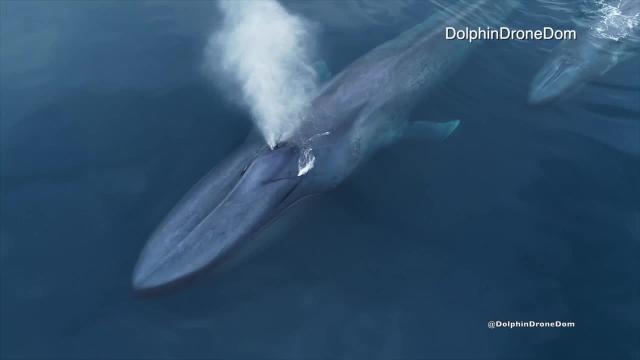
COMMON NAME: Blue Whale
SCIENTIFIC NAME: Balaenoptera musculus
TYPE: Mammals
DIET: Carnivore
GROUP NAME: Pod
AVERAGE LIFE SPAN IN THE WILD: 80 to 90 years
SIZE: 82 to 105 feet
WEIGHT: Up to 200 tons

SIZE RELATIVE TO A BUS
What is a blue whale:
Blue whales are the largest animals that have ever lived on Earth. These magnificent marine mammals rule the oceans at lengths of up to 100 feet and over 200 tons. Their tongues alone can weigh as much as an elephant. Their heart, just like a car.

How much does a blue whale weight?
Female blue whales weigh more (190,000kg) than males (150,000kg). At around 2,700kg newborn blue whale weighs about the same as an adult hippopotamus. The heart of a blue whale can weigh 450kg.
What does a blue whale eat?
Krill diet Blue whales reach these staggering sizes on a diet composed almost entirely of tiny shrimp-like animals called krill. At certain times of the year, one adult blue whale consumes about 4 tons of krill per day.
Blue whales are baleen whales, meaning they have fringed plates of a nail-like material called baleen on their upper jaws. The giant animals feed by first swallowing a huge mouthful of water, spreading the folded skin on the throat and belly to scoop it up inside. Then the whale's massive tongue forces the water out through the thin, overlapping sheets of baleen. Thousands of krill are left behind – and then swallowed.
Blue whales are baleen whales, meaning they have fringed plates of a nail-like material called baleen on their upper jaws. The giant animals feed by first swallowing a huge mouthful of water, spreading the folded skin on the throat and belly to scoop it up inside. Then the whale's massive tongue forces the water out through the thin, overlapping sheets of baleen. Thousands of krill are left behind – and then swallowed.

Color and appearance:
Blue whales look really blue underwater, but on the surface their coloring is more of a mottled blue-grey. Their underbellies take on a yellowish hue from the millions of microorganisms that settle in their skin. The blue whale has a broad, flat head and a long, tapered body that ends in broad, triangular flukes.

Vocalization and behavior:
Blue whales live in all the world's oceans except the Arctic, sometimes swimming in small groups but usually alone or in pairs. They often spend the summers feeding in polar waters, and with the onset of winter, make long migrations towards the equator.
These graceful swimmers cruise the ocean at more than five miles per hour, but when agitated, accelerate to more than 20 miles per hour. Blue whales are among the loudest animals on the planet. They emit a series of pulses, moans and groans, and it is thought that under good conditions, blue whales can hear each other up to 1,000 miles away. Scientists believe they use these vocalizations not only to communicate, but along with their excellent hearing to navigate the lightless ocean depths with sonar.
Blue whale Calves are entering the world now and are among the largest creatures on the planet. After about a year in the mother's womb, a baby blue whale emerges weighing up to 3 tons and stretching up to 25 feet. He swallows nothing but breast milk and gains about 200 pounds every day for the first year.
Longevity:
Blue whales are among the longest living animals on Earth. Scientists have found that by counting the layers of wax plugs in the ears of a deceased whale, they can get an accurate estimate of the animal's age. The oldest blue whale found using this method was determined to be around 110 years old. The average lifespan is estimated at 80 to 90 years.
Conservation Aggressive hunting in the 1900s by whalers in search of whale oil brought them to the brink of extinction. About 360,000 blue whales were killed between 1900 and the mid-1960s. They eventually came under the protection of the International Whaling Commission in 1966, but have only managed to recover marginally since then.
Blue whales have few predators, but are known to be victims of shark and killer whale attacks, and many are injured or killed each year in collisions with large ships.

You must be logged in to post a comment.