

On January 3, 2023, China said the restrictions were discriminatory and threatened to take retaliatory countermeasures in response to numerous nations, notably India, tightening restrictions on Chinese travellers during the severe COVID outbreak in the nation.
Prior to boarding their flights, travellers from China are required to take the COVID-19 test in the U.S., Australia, Canada, India, Israel, Malaysia, Morocco, Qatar, South Korea, Taiwan, Japan, and several EU nations. Morocco, which draws a lot of Chinese tourists, even forbids Chinese visitors from entering the country.
When asked about the travel restrictions on Chinese nationals at a press conference held in this location, spokesperson for the foreign ministry Mao Ning went on the attack, saying, "We do not believe the entry restriction measures certain countries have taken against China are science-based."
"Some of these actions are simply out of scale and inappropriate. We vehemently oppose utilising COVID measures for political ends and will implement reciprocity to hold each other accountable for our actions "She stated without further explanation.
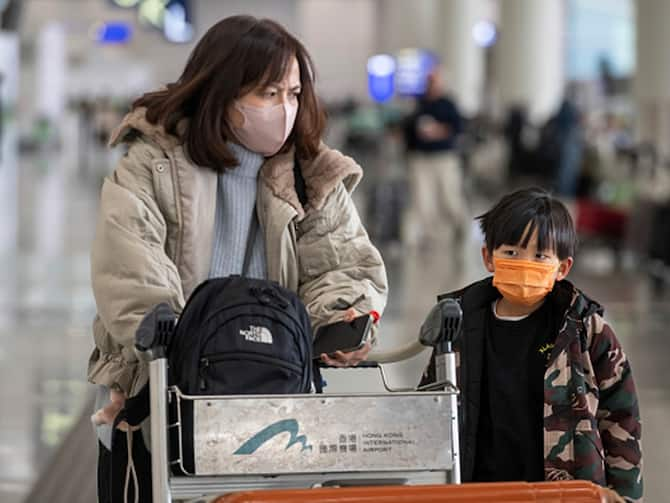
"Health experts from many countries have said that the main variant now spreading in China has previously been found elsewhere already, and that a new variant can emerge anywhere on the planet, which means entry restrictions targeting China are unnecessary," she said.
"China always believes that for all countries, COVID response measures need to be science-based and proportionate. They should not be used for political manipulation, there should not be discriminatory measures against certain countries, and measures should not affect normal travel and people-to-people exchange and cooperation," she said.
China will virtually end its three-year-old strict zero-Covid policy and its international isolation beginning on January 8 by completely opening its airports and ports for travel and trade, despite the nation currently experiencing a massive coronavirus outbreak.
The revelation comes as the Xi Jinping regime eased its strict zero-Covid policy in response to a surge of anti-government protests, leading to a dramatic spike in infections caused by the Omicron strains.
Although the announcement to abolish all quarantine regulations was warmly received at home, the opening's timing also stoked worries abroad because it occurs just before the nation's important Spring Festival on January 22, when millions of Chinese will travel to locations throughout the globe.
Travels made by Chinese during the spring festival in 2020, especially from Wuhan, were mostly to blame for the coronavirus's tremendous global spread, which resulted in unheard-before levels of death and destruction.
Given that they won't have to go through quarantine when they return from their extended spring festival vacation, the travel-starved Chinese are already preparing to embark on massive overseas expeditions.
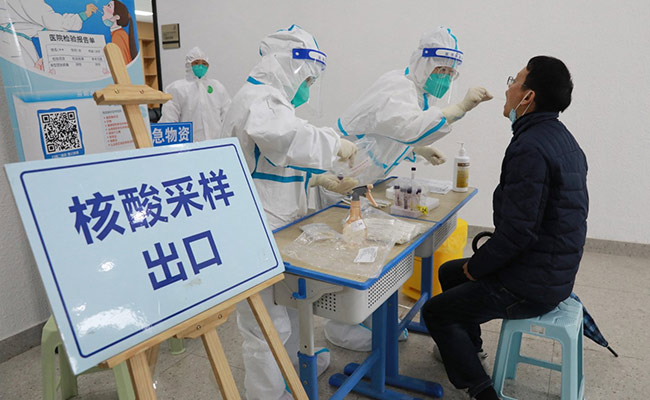)
Prior to being gradually decreased to five days with three days of home surveillance, people arriving from abroad were required to spend more than two weeks in quarantine at government facilities.
At least 30 known Omicron sub-variants have recently been found in Shanghai, according to the government-run Global Times.
In addition to the BA.5.2 variant spreading in southern China and the BF.7 variant spreading in the northern region, these samples randomly taken from COVID-19 patients in Shanghai between November 23 and December 22 in 2022 revealed the presence of Omicron subvariants BQ.1 and XBB, which are widely distributed in some foreign countries, in Shanghai.
Several cities, including Beijing, had a severe Omicron wave last month that affected millions of people. Although Omicron was thought to be less damaging than Delta, there was still overpopulation in hospitals and cemeteries, according to official records.
On Saturday, President Xi Jinping admitted that the COVID-19 outbreak now affecting the nation has "reached a new phase" and that "difficult obstacles remain."
In his address to the nation on the first day of the new year, Xi stated, "We have now entered a new phase of COVID-19 response where tough tasks remain. It has not been an easy trip" because the nation must deal with "extraordinary difficulties and challenges."
Following repeated requests from the World Health Organization (WHO), China this week agreed to let its health officials communicate with UN health agency experts.
In a statement following the meeting, WHO stated that it had "again requested regular sharing of precise and real-time data on the epidemiological situation, including more genetic sequencing data, statistics on disease impact, including hospitalisations, critical care unit admissions, and ICU admissions, fatalities, and information on immunisations administered and vaccination status, particularly for elderly and vulnerable individuals.
Despite video reports of mortuaries bursting at the seams with dead, particularly those of unvaccinated elderly people, China has not been disclosing any information on the virus or the deaths occurring throughout the nation.

You must be logged in to post a comment.