
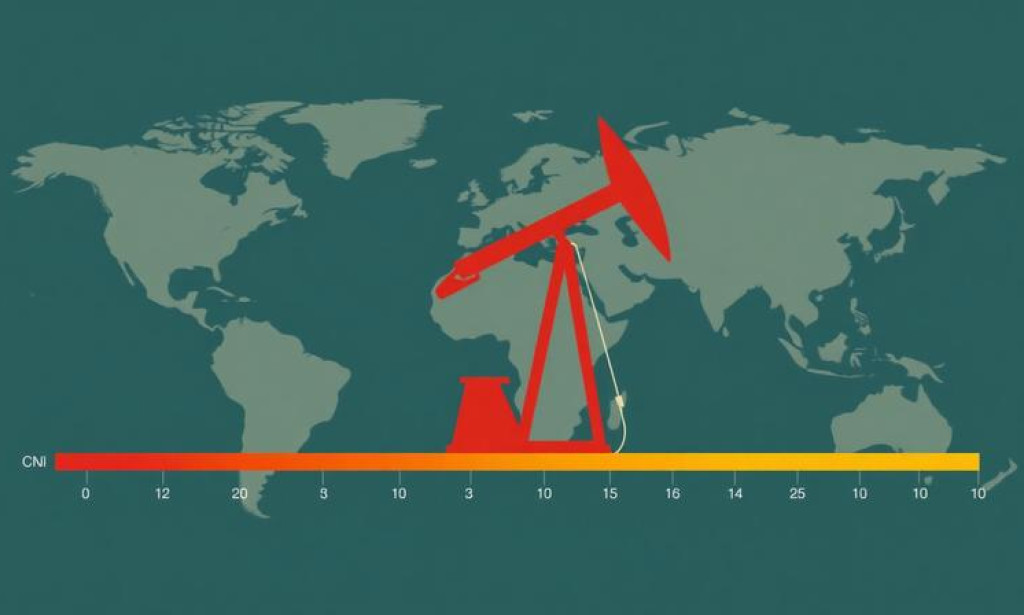
Introduction to Brent Crude Oil and Its Strategic Importance
Brent crude oil is one of the most influential benchmarks in the global energy market, used to price a large share of internationally traded crude oil. It originates from the North Sea and is classified as a light and sweet crude, which means it contains low sulfur levels and is easier to refine into high-value petroleum products. These characteristics make Brent crude oil a preferred reference point for global pricing systems.
In 2026, Brent crude oil continues to trade within a range of approximately 81 to 89 US dollars per barrel. This range reflects a market that is relatively balanced but still highly sensitive to global economic and political developments. Even minor disruptions in supply or demand expectations can lead to quick price fluctuations, making Brent crude oil a key indicator of global economic sentiment.
Why Brent Crude Oil Remains the Global Pricing Benchmark
Refining Advantage, Liquidity, and Global Acceptance
Brent crude oil holds its benchmark status due to its consistent quality and refining efficiency. Its low sulfur content allows refiners to produce a higher yield of valuable fuels such as gasoline, diesel, and aviation fuel. This makes it more attractive compared to heavier crude varieties that require more complex processing.
Another major reason for its importance is its strong global trading network. Brent crude oil is widely traded in international markets, particularly across Europe, Asia, and Africa. Over time, it has become a trusted pricing reference for governments, energy companies, and financial institutions, ensuring transparency and stability in global oil valuation.
Global Supply and Demand Dynamics in 2026
Consumption Growth and Production Management
The pricing of Brent crude oil is heavily influenced by global supply and demand conditions. In 2026, worldwide oil consumption is estimated at around 103 million barrels per day, driven by transportation needs, industrial activity, and continued economic expansion in emerging markets.
On the supply side, major oil-producing nations continue to carefully manage production levels to maintain market stability. When demand increases faster than supply, prices rise. When supply exceeds demand, prices fall. This constant adjustment mechanism keeps Brent crude oil highly responsive to shifts in the global economy and energy consumption patterns.
Geopolitical Risks and Market Volatility
Uncertainty, Conflict, and Supply Disruption
Geopolitical tensions remain one of the strongest drivers of Brent crude oil price volatility. Conflicts in key oil-producing regions, sanctions, and trade disruptions can quickly affect supply chains and create uncertainty in global markets. In early 2026, geopolitical instability briefly pushed Brent crude oil prices close to 88 US dollars per barrel.
Markets react strongly to such developments because even the possibility of supply disruption can influence trading behavior. Brent crude oil therefore acts as a real-time reflection of global risk, often responding before broader economic effects become visible.
Influence of OPEC and Global Production Strategies
Coordinated Supply Control and Market Stability
The Organization of the Petroleum Exporting Countries and its partners continue to play a central role in shaping Brent crude oil prices. In 2026, OPEC+ production strategies are focused on maintaining a stable balance between supply and demand.
Production cuts are used during periods of weak demand to support prices, while controlled increases are implemented when global consumption rises. These coordinated decisions significantly influence Brent crude oil pricing and help reduce extreme market volatility.
Economic Effects of Brent Crude Oil
Inflation, Costs, and Global Financial Pressure
Brent crude oil has a direct and powerful impact on global economies. When oil prices rise, transportation costs, manufacturing expenses, and logistics charges also increase. This leads to higher inflation levels across both developed and developing economies. In 2026, rising energy costs have contributed noticeably to inflationary pressure in several regions.
Oil-exporting countries benefit from increased revenue, strengthening national budgets and economic growth. However, oil-importing nations face higher costs that can slow down economic activity. This imbalance highlights the critical role of Brent crude oil in shaping global financial conditions.
Technological Change and Energy Transition Trends
Shale Expansion and Renewable Energy Growth
Technological advancements have significantly reshaped the global oil industry. The expansion of shale oil production has increased global supply diversity and reduced dependence on traditional oil-producing regions. This has introduced new flexibility into the Brent crude oil market.
At the same time, the global shift toward renewable energy is accelerating. Investments in solar, wind, and electric mobility are gradually transforming long-term energy demand patterns. Despite this transition, Brent crude oil remains essential for meeting current global energy requirements and supporting industrial development.
Future Outlook for Brent Crude Oil
Balancing Growth, Stability, and Energy Transition
The future of Brent crude oil will depend on how global energy demand evolves alongside sustainability efforts. Industrial growth, population expansion, and transportation needs will continue to support oil consumption, particularly in emerging economies.
In the short to medium term, Brent crude oil prices are expected to remain within a range of 75 to 95 US dollars per barrel. Over the long term, renewable energy adoption may gradually reduce reliance on fossil fuels. However, Brent crude oil is expected to remain a core component of the global energy system due to its established infrastructure and consistent demand.
Conclusion
Brent crude oil continues to serve as a foundational benchmark in the global energy market, influencing pricing systems, inflation trends, and international trade flows. Its importance is built on quality, liquidity, and long-term market trust. In 2026, it reflects the complex interaction between supply conditions, geopolitical risks, and technological transformation.
Understanding Brent crude oil provides valuable insight into global economic behavior and energy market structure. Even as the world moves toward cleaner energy solutions, Brent crude oil will remain a key pillar of the global energy system for years to come.

You must be logged in to post a comment.