
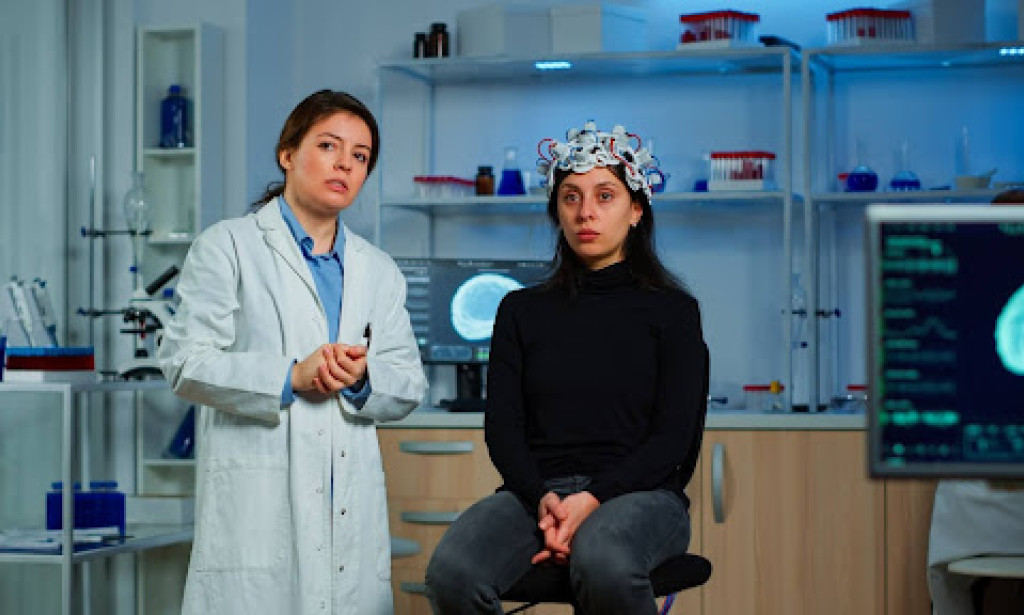
The term “awake brain surgery” is more of a science fiction novel or a high-stakes TV drama than a medical procedure. Just the idea of being awake as a neurosurgeon works on the brain of an awake patient can trigger many patients to start feeling anxious. You're not alone in wondering: How is this possible? Is it painful? And why would a surgeon want to use this method over the conventional general anesthesia?
The key is the remarkable complexity of the human neuroanatomy and an innovative surgical technique called awake craniotomy.
The answers lie in the incredible complexity of human neuroanatomy and a groundbreaking surgical approach known as awake craniotomy. Far from being a clinical gimmick, awake brain surgery, a technique also frequently utilized by a neurologistto precisely implant deep brain stimulation leads for movement disorders, is one of the most sophisticated, safety-focused methods available in modern neurosurgery. It is deployed with a very specific, crucial goal in mind: maximizing the removal of a brain tumor while fiercely protecting your ability to speak, move, and think.
The Biological Loophole: Why the Brain Feels No Pain
The first hurdle to clear when understanding this procedure is the fear of physical pain. To the surprise of many, the human brain tissue itself doesn't have a single pain receptor. The brain is responsible for interpreting pain from all areas of the body, and cannot sense a single sensation on its own surface.
Long-acting local blocks (Patient Asleep) - numbed completely with long-acting blocks.
[Brain Surface Mapping] ➔ Brain tissue does not contain any pain receptors (Patient Awake)
At the time of awake craniotomy, the surgeon will employ sophisticated long-acting local anesthetics to anesthetize the scalp, muscle, and bone of the skull completely. While under general sedation, you are completely asleep as the surgeon makes the first incision and safely opens a small window in the skull (craniotomy).
Once the sensitive outer tissues are bypassed and the surface of the brain is exposed, the neurosedation is gently eased, and you are woken up. At this stage, you are fully awake, comfortable, and alert, ready to collaborate directly with your neurosurgeon and the rest of your surgical team.
The Core Technique: What is Brain Mapping?
Every individual’s brain is unique. The boundaries of eloquent brain tissue (regions of the brain that control movement or speech) are not as precise as outlined in general medical textbooks, however, and can differ slightly from person to person. In addition, aggressive tumors, such as gliomas, may physically push, deform or fuse into these critical pathways.
Neurosurgeons use a real-time monitoring system, known as cortical and subcortical brain mapping, to navigate this terrain successfully, without harming the brain permanently.
During awake surgery, a very small probe (like a pen) is inserted into the scalp of the patient, and a small, harmless electric current is passed through specific areas of the brain just around the tumor. For a small amount of time, this micro-electrical pulse temporarily suspends the activity of that precise location for a few seconds.
At the same time, a neurophysiologist or speech-language pathologist is seated at your eye level, asking you to do a few simple exercises. They may make you count from one to ten, point to photos on a tablet, or caress your fingers.
If you speak and move normally: The surgeon is aware that the area being probed is not important for speech or movement and is OK for surgery.
The surgeon gets an instant live alert if he or she hesitates, slurs the word, or freezes a hand movement: The surgeon touches a critical pathway within the nervous system. They immediately put on a small sterile paper tag and know not to touch that very area, thus keeping that function forever preserved.
Comparing Open Brain Surgery Protocols
|
Surgical Attribute |
Traditional Craniotomy (Asleep) |
Awake Craniotomy (Brain Mapping) |
|
Anesthesia Protocol |
Complete general anesthesia throughout the entire procedure. |
Sedated for skull entry/closure; fully awake for tumor removal. |
|
Real-Time Assessment |
Relies on pre-operative scans and passive electronic nerve monitors. |
Live, active verbal and physical feedback directly from the patient. |
|
Tumor Resection Goal |
Conservative boundaries may be left behind to avoid risking unknown tissue. |
Maximizes safe removal right up to the true, live functional border. |
|
Primary Indication |
Tumors located in deep, non-eloquent structural zones. |
Tumors sitting inside or directly adjacent to speech, vision, or movement centers. |
Maximizing the "Safe Resection Boundary"
In the case of a complex brain tumor, the goal for treatment is always "maximum safe resection. Research has always established that the greater amount of tumor mass that can be safely removed, the better the patient is going to do.
With conventional general anesthesia, if a patient is completely asleep, the surgeon working near speech centers or near movement centers must be very cautious, and even if it is not the exact location of the tumor, there are cases in which the surgeon has left a part of the tumor to avoid accidentally causing a stroke or paralysis in the patient. With awake brain surgery, all of this is eliminated. The surgeon can confidently push the limits of tumor removal even further than ever before, as the unique functional borders are mapped in real time, while visualizing the exact location.
Reclaiming Peace of Mind
The notion of staying conscious while undergoing a craniotomy may seem quite frightening at first impression. But, when performed regularly, patients say it's a tranquil, well-managed, and very reassuring process. You are not alone; a team of anaesthesiologists, techs, and doctors are talking to you through every step.
Awake brain surgery demystifies the brain anatomy by allowing the operating room to become a live space in which the surgeon and the patient's brain are in constant collaboration. It stands as a pinnacle of modern medical engineering, a technique that honors your unique identity by directly utilizing your voice to safeguard your future.

You must be logged in to post a comment.