

We have all heard of autoimmune diseases at some point, and most of us know someone who has one, such as diabetes, psoriasis, thyroiditis, or arthritis. There are more than 80 categorized autoimmune diseases, but do we know what an autoimmune disease is?
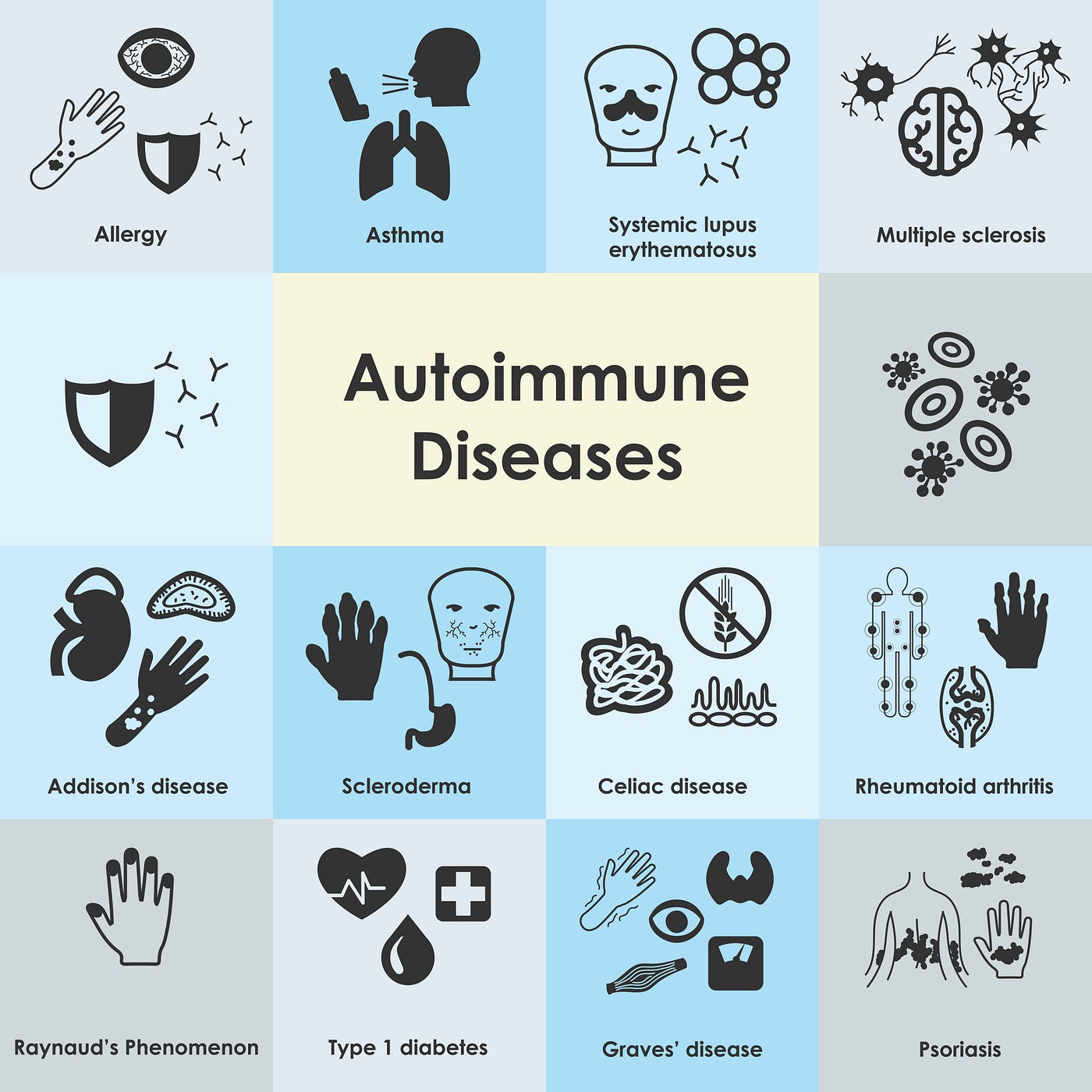
It is a condition in which the body's immune system attacks healthy tissues because it confuses them with foreign tissues. It can attack any organ, which determines its severity. Most autoimmune diseases cause inflammation and nonspecific symptoms such as fatigue, muscle pain, skin problems, and digestive issues. Some are very serious, while others are not as severe.
According to a 2018 study, almost 14% of the 55-64-year-old population in our country has an autoimmune disease, and they are more common in women. It is believed that this is because women experience three endocrine transitions during their lifetime: adolescence, pregnancy, and menopause—too many opportunities for imbalance. It is also common for autoimmune diseases to occur in multiple members of the same family. I
s there a genetic component?
It is the plague of our times, or one of them. Why does our body go haywire and attack our own organs? What triggers it? Why do they say that they always come in threes or even more? Can we do anything to prevent it?
There are some common factors in autoimmune diseases: chronic inflammation, oxidative stress, and loss of self-tolerance. There is a dysfunction of the immune system that leads to a loss of tolerance to self-antigens, with an increased amount of autoantibodies and inflammation mediators.
What triggers an autoimmune disease?
-
Genetic predisposition: There are genetically characterized autoimmune diseases, some with more than 100 genes involved, and in some cases, they are common. This would explain why once you have one, you are more likely to develop more throughout your life.
-
Environmental factors: Pollution, heavy metals, pesticides—all of these increase oxidative stress.
-
Previous infections (Epstein-Barr virus, Herpes virus...): It seems that having had these types of infections is a predisposing factor. That is why doctors sometimes request serology tests for these virus antibodies. Some of them remain latent in our body. The Epstein-Barr virus is associated with autoimmune hepatitis, and the herpes virus is linked to Hashimoto's disease. There are already several studies on this topic.
-
Diet: Excess consumption of processed foods, sugars, foods with a high glycemic index, salt, and gluten. Many scientists are advocating for a more natural and Mediterranean diet, not only for autoimmune diseases but for everything.
-
Intestinal dysbiosis: problems with intestinal permeability, intolerances.
-
Lack of quality sleep, stress: A study of 85,000 people highlights the increased risk of autoimmune diseases significantly in people with sleep problems. Reduction in sleep time and fatigue are clearly linked to a pro-inflammatory component.
What can we do?
-
Identify the triggers and keep them under control, especially if we know we have a genetic predisposition. We don't need a genetic test; we can suspect it if there are more cases in our family or if we already have a diagnosis of an autoimmune disease. And we know that it is common to develop more than one, so we need to take action.
-
Identify food intolerances: There are often problems with gluten, even with lactose. We need to know this in order to take appropriate measures.
-
Identify intestinal dysbiosis: Parameters such as microbiota analysis, intestinal permeability, calprotectin, and zonulin would be interesting to know if we experience any related symptoms. If not, taking quality prebiotics and probiotics for a period of time can help.
-
Serology for silent viruses: such as Herpes or Epstein-Barr.
-
Biochemical markers: such as antinuclear antibodies (ANA), cortisol, ACTH, anti-thyroglobulin antibodies, anti-TPO (microsomal), metal allergies, CD3, and other specific parameters detected through blood tests.
Treatment for autoimmune diseases
-
As prescribed by a doctor. If the autoimmune disease is already established, there is still a lot we can do to live with it in the best possible way and try to prevent the development of other autoimmune diseases.
-
Lack of sleep, stress—everything is closely related: Knowing techniques for proper rest, mindfulness, yoga, meditation... There is an interesting study on the impact of mind-body intervention in 72 people with rheumatoid arthritis and depression. These individuals practiced yoga for 8 weeks and their systemic anti-inflammatory markers improved, with parameters such as interleukin-6, C-reactive protein, IL17, and TNF (tumor necrosis factor) decreasing. There is also another study on multiple sclerosis patients that concludes it improves their quality of life.
-
Physical activity: It has been proven to be safe for most autoimmune diseases and has been shown to improve laboratory parameters.
-
Avoid diets with processed foods, sugars, trans fats in autoimmune diseases such as Hashimoto's thyroiditis. For example, a diet rich in certain nutrients or supplementation with vitamins D, A, B, C, minerals such as zinc, iron, magnesium, selenium, and iodine is very beneficial.
Supplementation Eating healthily, exercising, sleeping well, being relaxed... sometimes all of that is impossible. The lives we lead don't allow it, so supplementation is needed to achieve it:
-
Vitamin D: The hormone vitamin related to immunity. Almost everyone needs supplementation. Nowadays, there are self-tests available to measure our vitamin D levels and determine if daily supplementation, preferably with K2 and magnesium, is necessary. Daily supplementation seems to have better results than monthly massive supplementation.
-
Omega-3: It has been proven that 1 gram per day has anti-inflammatory effects among many other benefits (see omega-3).
-
Selenium: Very important in Hashimoto's thyroiditis as it significantly reduces thyroid autoantibody levels.
-
Antioxidants, vitamin A, zinc, green tea.
-
Anti-inflammatory plants such as turmeric and boswellia.
-
Fiber such as resistant starch, prebiotics, probiotics, and glutamine: all of these improve intestinal permeability.
-
Supplements to improve nighttime rest with melatonin, valerian, passionflower, and lemon balm.
-
Adaptogenic plants for daily stress control such as rhodiola or ashwagandha.
Autoimmune diseases cannot be cured, but they can be medically treated and controlled. The more we do to modify our habits, the better. Exercise, rest, relaxation, and good nutrition are the best aids. But the change is for life; these are chronic diseases that we will live with, and we must modify our lifestyle to minimize their impact. And we must avoid being surprised later with another autoimmune disease that we did not expect.
Stay calm, eat good food... and if you have any doubts about supplementation, come see us.

You must be logged in to post a comment.