

Voltage Controlled Crystal Oscillator (VCXO) Guide: Principles, Performance, Applications, and How to Choose the Right One
A Voltage Controlled Crystal Oscillator (VCXO) is a quartz-based clock source that fine-tunes its output frequency by varying an input control voltage. Designers rely on VCXOs when they need the stability of a crystal oscillator plus a practical way to “trim” frequency for synchronization, jitter cleanup, or clock alignment. From wireless infrastructure to precision instruments, VCXOs help systems stay locked, accurate, and resilient under real-world conditions.
This in-depth guide explains how VCXOs work, what makes them valuable, where engineers use them most, and how to select the right part for your design.
What Is a VCXO and Why It Matters in Clock Design
A VCXO sits between two common timing options:
Standard crystal oscillators (XO): very stable but fixed-frequency.
Voltage-controlled oscillators (VCO): wide tuning range but typically noisier and less stable.
A VCXO combines crystal vco stability with voltage-controlled frequency adjustment. That makes it a preferred clock source for applications that require tight timing, low jitter, and a controlled tuning range for phase-locked loops (PLLs) or synchronization circuits.
VCXO Technical Principles: How Voltage Tunes a Quartz Crystal
Quartz crystals vibrate at a highly stable resonant frequency due to the piezoelectric effect—when voltage is applied, the crystal mechanically deforms; when it deforms, it generates an electric signal. This electromechanical behavior creates an extremely precise resonant “time base.”
A VCXO adds a tuning mechanism to this resonant system. Instead of trying to force the crystal far from its natural resonance (which quartz resists), the oscillator changes the effective load conditions seen by the crystal.
The Core Idea: Load Capacitance Tuning
In most VCXO designs, an external control voltage drives a varactor diode (a voltage-controlled capacitor). As the control voltage changes, the varactor’s capacitance changes. That, in turn, shifts the load capacitance in the crystal network and slightly adjusts the oscillation frequency.
Because the tuning works around the crystal’s resonance rather than replacing it, the VCXO maintains excellent stability while still offering controlled adjustability.
What “Tuning Range” Really Means
VCXOs typically provide a small but precise pull range—often expressed in ppm (parts per million). This is enough for:
trimming production tolerances,
tracking temperature or aging drift,
and steering frequency in PLL-based synchronization.
Key VCXO Performance Characteristics (What to Evaluate)
Choosing a VCXO is mostly about balancing frequency, output format, noise, power, size, and environmental robustness. The most important performance characteristics include the following.
1) Low Phase Noise and Low Jitter for Cleaner Signals
One of the strongest reasons to use a VCXO is its low phase noise, which translates directly into low jitter. Low jitter improves:
bit-error rate (BER) in high-speed links,
modulation accuracy in RF systems,
resolution and repeatability in measurement equipment,
and clock recovery performance in telecom networks.
When your system depends on clean edges and precise timing—especially at high frequencies—VCXOs often outperform broader-range oscillators.
2) High-Frequency Output Options (CMOS, LVDS, HCSL)
Modern VCXOs support multiple output standards so they can drop into many clock-tree architectures:
CMOS output: common, cost-effective, and widely compatible; often used in general digital systems. Typical implementations reach up to ~245 MHz.
LVDS (Low-Voltage Differential Signaling): differential output with strong noise immunity for high-speed designs; can support up to ~2.1 GHz depending on the device family.
HCSL (High-Speed Current Steering Logic): popular for PCIe and other high-speed clock distribution; often supports up to ~700 MHz.
Output mode selection affects signal integrity, EMI performance, power consumption, and compatibility with your receiver or clock distribution chip.
3) Miniaturization and Low Power for Modern Electronics
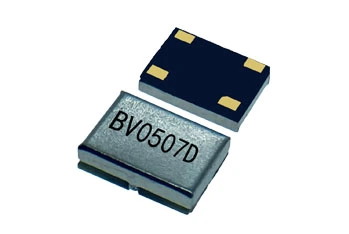
VCXO packaging has shrunk dramatically to support compact designs and dense PCBs. Many modern parts come in footprints as small as 2.5 × 2. mm, enabling use in:
portable instruments,
embedded modules,
compact radios,
and high-density networking equipment.
Designers also prioritize lower power rails and reduced current draw. VCXOs commonly operate from supplies as low as 1.8 V, helping you meet system power budgets while maintaining precise timing.
Where VCXOs Are Used: High-Value Applications
Because VCXOs deliver controlled tuning with crystal-grade stability, they appear in systems that require synchronization, clean timing, and strong performance under stress.
Military Electronics: Communications, Navigation, and Radar
Military systems often face temperature extremes, vibration, and electromagnetic interference. VCXOs support:
stable frequency references for radios,
precise timing for navigation subsystems,
reliable clocking in radar signal chains,
and synchronization across distributed equipment.
Their combination of stability and tune capability makes them well-suited to disciplined clocks and timing architectures.
5G Infrastructure and Wireless Communications
In 5G base stations, fronthaul/backhaul links, and wireless network timing, clocks must stay aligned to stringent synchronization requirements. VCXOs often play a key role in:
PLL-based frequency synthesis,
jitter cleanup and clock conditioning,
stable references for high-speed data paths,
and maintaining link reliability under changing load and temperature.
As data rates rise and margins shrink, low-noise clock sources become even more critical.
Precision Instruments and Smart Monitoring Systems
In test and measurement devices, industrial monitoring, and precision sensing, timing errors show up as measurement errors. VCXOs improve:
sampling clock integrity in ADC/DAC systems,
measurement repeatability,
sensor fusion timing alignment,
and overall system stability during long operating periods.
If the application depends on consistent frequency over time, a VCXO can provide the tuning needed to keep the system calibrated and locked.
VCXO Selection Guide: How to Choose the Right Part
Selecting a VCXO becomes easier when you focus on a few parameters that directly map to system requirements.
1) Center Frequency (Nominal Frequency)
Start with the required nominal frequency (for example, the reference frequency for a PLL or the system clock). Choose a VCXO whose center frequency matches your target so the tuning voltage can steer it without hitting limits.
2) Output Type (CMOS vs. LVDS vs. HCSL)
Match the VCXO output standard to your design:
Choose CMOS for broad compatibility and simpler routing at moderate frequencies.
Choose LVDS for differential signaling, lower noise susceptibility, and high-speed links.
Choose HCSL when your platform expects current-steering logic (often in PCIe ecosystems).
Also verify output amplitude, rise/fall time, and load requirements to avoid signal integrity surprises.
3) Supply Voltage and Power Budget
Confirm the VCXO supports your rail (commonly 1.8 V, 2.5 V, or 3.3 V). Then check current consumption under typical operating conditions—especially if you build battery-powered or thermally constrained devices.
4) Tuning (Control) Range and Frequency Stability
Two specs matter here:
Pull range / control range (ppm): How far the VCXO can tune with the control voltage.
Stability metrics: How well it holds frequency across temperature, time (aging), and supply variation.
A wider tuning range sounds attractive, but it can come with tradeoffs. In many designs, you want “wide enough” tuning while preserving low phase noise and stability.
5) Operating Temperature Range for Real Environments
Always match the temperature rating to the deployment conditions:
commercial indoor electronics,
outdoor wireless infrastructure,
industrial cabinets,
or harsh-defense environments.
The correct temperature grade helps prevent drift, lock issues, and intermittent failures under thermal stress.
Final Thoughts: When a VCXO Is the Best Clock Choice
If your system needs a clock that stays exceptionally stable yet still allows precise frequency steering, a Voltage Controlled Crystal Oscillator offers a proven solution. With low phase noise, flexible output
XtalTQ is a leading global manufacturer of high-performance time-frequency control products and services. We were founded in 2009, located in Tianfu Software Park, Chengdu High-tech Zone, is engaged in the design and development of time-frequency products, these oscillators ensure optimal performance in industry, aerospace, communications, LoT, all kinds of equipment and more.

You must be logged in to post a comment.